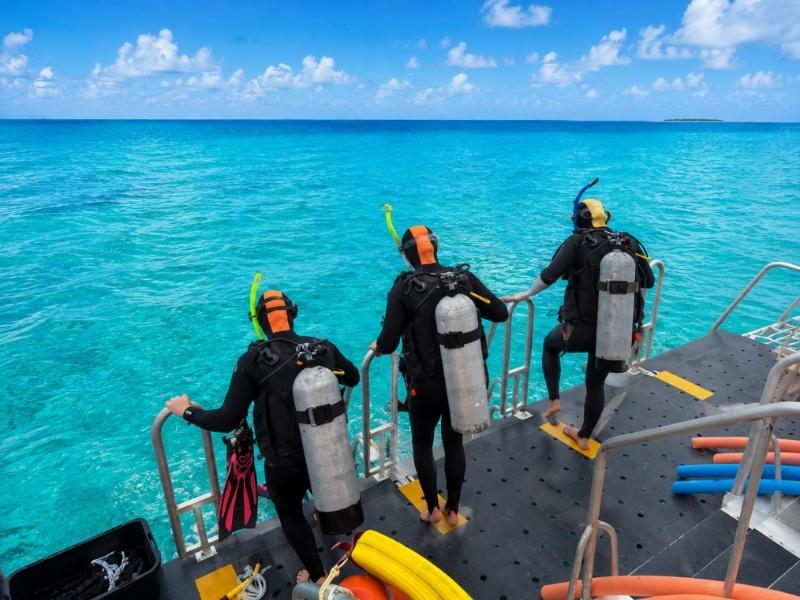
From Port Douglas: Outer Great Barrier Reef Snorkeling & Diving Experience
- 565+ booked
- 7 hours
From $223 per person
Check availability →Next step: see exact departure times, live prices and real traveller photos on GetYourGuide.
This full-day snorkeling adventure takes you to three incredible sites on the Great Barrier Reef. After a safety briefing, explore vibrant coral gardens and abundant marine life, including turtles, stingrays, clownfish, and colorful parrotfish. Enjoy a delicious buffet lunch on board, morning and afternoon tea, and relaxing breaks between snorkel sessions. Optional guided snorkel tours and reef talks are available.
Overview
The pristine, deep-water drop-offs of Opal Reef and the vibrant coral shelves of the Agincourt ribbons serve as the setting for this highly active 7.5-hour marine exploration cruise. Managed by Calypso Snorkel & Dive, an elite eco-certified operator, this premium "Outer Barrier Reef Snorkel and Dive Options" expedition departs from the upscale docks of Port Douglas, transitioning your group into an immersive traversal of three separate reef formations. Unlike static platform trips, you spend your day on a modern, high-speed catamaran that dynamically hunts for the clear water and optimal visibility logs, experiencing an environment where raw aquatic biodiversity and a personalized, guide-led approach to open-water tracking define the day. Because safely executing multiple deep-reef transitions requires a high standard of naval comfort and marine expertise, securing a boarding slot on this spacious vessel is essential for a definitive standard of Tropical North Queensland wilderness exploration.
What's Included
- Premium Masks, Snorkels, Fins, and Prescription Masks
- Full Use of Thermal Wetsuits and Lycra Stinger Suits
- Guide-Led Snorkel Tours & Interpretive Marine Biology Talks
- Freshly Sourced Hot and Cold Tropical Buffet Lunch
- Morning Tea, Afternoon Tea, and Local Snack Platters
- International Flights & Out-of-Zone Resort Transport
- Professional Onboard Underwater Photography Packs
- Advanced Diving Upgrades (Introductory or Certified Tracks)
- Onboard Bar Extras & Premium Soft Drink Purchases
- Personal Beach Towel, Swimwear, and Spending Cash
Itinerary
- The expedition launches at the Crystalbrook Superyacht Marina counter in Port Douglas. After clearing your manifest files, you board the luxury catamaran to settle into the air-conditioned cabins or wide exterior sun decks. The crew conducts an outline of the day alongside a vital safety briefing—a necessity for a high standard of group open-water coordination—as the vessel clears the harbor gates for a 90-minute high-speed sprint to the outer shelf edge.
- The core of the journey unrolls across three distinct, highly optimized reef locations selected by the captain to match the day's exact current and wind patterns. Site 1 (Agincourt or Opal Margins): You gear up with provided masks, fins, and protective lycra suits to step straight into the clear blue waters for 60 minutes of self-guided or guide-monitored snorkeling, followed by local morning tea snacks.
- Site 2 (The Central Coral Gardens): The ship moves to a fresh mooring where a generous tropical buffet lunch is served onboard. You can join an interpretive reef talk or a guided snorkel tour to float effortlessly over massive brain corals, charting schools of playful clownfish, giant clams, stingrays, and green sea turtles.
- Site 3 (The Deep Wall Shelf): The final 70-minute tracking block offers experienced divers and snorkelers a chance to explore deep coral walls, encounter massive Maori Wrasse, or simply relax across the sun decks as afternoon tea is prepared.
- The afternoon phase transitions your group out of the salt water into the freshwater on-deck showers to rinse off. The catamaran turns back toward the mainland coast, executing a relaxing 90-minute return cruise across the continental shelf while you review your camera logs. The journey concludes with a final drop-off back at the Port Douglas marina docks by late afternoon.
From Port Douglas, this 7.5-hour outer reef trip run by Calypso Snorkel & Dive visits three separate reef sites on the Agincourt Ribbon Reefs and Opal Reef, with snorkel gear, wetsuits, stinger suits, buffet lunch and reef talks included. It rates 4.9 on GetYourGuide with 565-plus bookings, from $223 per person, departing the Crystalbrook Superyacht Marina.
What This Trip Is
Most reef days out of Port Douglas involve a compromise. Either you sit on a pontoon bolted to one patch of reef for six hours, or you join a boat that gives you a single mooring and a timetable that exists regardless of what the water is doing. This trip takes a third approach. It is a high-speed catamaran day, roughly 7.5 hours door to door, run by Calypso Snorkel & Dive, an eco-certified operator based in Port Douglas, and the central promise is movement: three separate reef sites in one day, chosen by the captain on the morning itself.
The listing calls it the Outer Barrier Reef Snorkel and Dive Options expedition, which is a mouthful, but the substance is simple. You check in at the Crystalbrook Superyacht Marina, ride a fast catamaran out to the outer edge of the Great Barrier Reef Marine Park, and rotate through three snorkel or dive stops across the Agincourt Ribbon Reefs and Opal Reef. Between swims there is a hot and cold tropical buffet lunch, morning and afternoon tea, and interpretive reef talks from the crew. Introductory and certified diving upgrades exist for people who want to go below the surface with an instructor rather than float above it. The GetYourGuide listing shows a 4.9 rating and more than 565 bookings, with prices starting at $223 per person.
Two things distinguish it from the pontoon products that dominate the Port Douglas departure boards. First, because the vessel moves three times, you are not gambling your entire day on one site. If the current has pushed turbid water over the first mooring, or the turtles are napping through your first swim, there are two more locations to find them. Second, the trip is deliberately active. There is no fixed platform, no Waterside walkway, no sealed observation deck. You step straight off a moving vessel into open water, which is exactly what some travellers want and exactly the wrong fit for others. This section of the page will not pretend otherwise: if you have serious mobility limitations, the operator states plainly that this trip is not suitable, and that constraint is covered in full below.
For everyone else, the format rewards you. Three sites, a guide-led approach, and a crew that the reviews consistently describe as professional and attentive to first-time snorkelers. One traveller named Martine, quoted in the listing, describes swimming over the outer moorings as stepping into a living aquarium, with hundreds of species visible a couple of metres beneath the surface. That is the standard pitch for every reef tour in Tropical North Queensland, but the three-site rotation gives this one a structural reason to deliver on it.
Where It Goes
The destination is the outer edge of the Great Barrier Reef, not the inshore patches closer to the coast. From Port Douglas, the relevant names are the Agincourt Ribbon Reefs, a chain of narrow reef strips running along the outer continental shelf, and Opal Reef, a deep-water formation known for its drop-offs. Both sit on the very edge of the Marine Park, where the reef meets open ocean, and that position matters for what you see.
Outer reef sites differ from inshore reefs in water clarity and in the mix of marine life. The Agincourt Reefs in particular are famous for their ribbon structure: long, thin reef bodies separated by deep blue channels, which means the coral sits adjacent to serious depth rather than shallow sand flats. Pelagic species ride those channels. On a good day at the shelf edge you can encounter reef sharks, Maori Wrasse the size of a small person, cod, and cruising turtles, alongside the reliable shallow-water cast of clownfish, parrotfish and giant clams in the coral gardens.
The trip's three stops are deliberately varied rather than three interchangeable patches. Based on the itinerary, the pattern looks like this:
- Site one: Agincourt or Opal margins, roughly 60 minutes of guided or independent snorkeling, followed by morning tea.
- Site two: the central coral gardens, where the buffet lunch is served and guided tours float over brain corals, giant clams, stingrays and green sea turtles.
- Site three: a deep wall shelf, the final 70-minute block, where divers explore the coral walls and snorkelers can look for Maori Wrasse or simply rest on deck.
The captain selects the exact moorings on the day according to wind and current, which is the practical benefit of a boat with multiple options. It is worth being clear about what this does not mean: no operator guarantees specific marine life at specific sites, and any review claiming a guaranteed turtle encounter is describing a good day rather than a contractual promise. What the three-site structure does is raise the odds. One mooring is a lottery. Three is a portfolio.
For context on how the Port Douglas departure ports compare with other gateways, the Agincourt system is the same reef network reached from Cairns only after a much longer transit. This is covered in more depth in our comparison of Cairns, Port Douglas and the Whitsundays.
The Day, Hour By Hour
Check-In At Crystalbrook Superyacht Marina
The day begins at the Crystalbrook Superyacht Marina in Port Douglas, the main departure point for outer reef trips from the town. Check in at the counter, and note that the operator enforces a strict cancellation window: changes or cancellations require 24 hours advance notice. Once manifests are cleared, passengers board the catamaran and claim space in the air-conditioned cabins or on the exterior sun decks. Self-driving guests check in directly at the marina; resort transport is a separate booking tier and is not in the base price.
The Outward Crossing
The vessel clears the harbour and settles into a 90-minute high-speed run out to the outer shelf. During this window the crew runs the safety briefing, which on a trip where everyone steps off a moving boat into open water is not a formality. This is also when the day's site selection is communicated and when you should ask for a prescription mask if you wear glasses, which the operator provides at no extra cost within the base fare. The crossing itself deserves honest treatment: 90 minutes of open ocean means real swells, and the operator's own guidance is to speak to a local pharmacist about motion-sickness preventatives before your travel day. Taking something before boarding is far more effective than waiting for symptoms.
Site One: The First Hour In The Water
At the first mooring, somewhere on the Agincourt or Opal margins, the crew hands out masks, snorkels, fins and lycra stinger suits. The first swim block runs about 60 minutes and can be self-guided or guide-monitored, depending on your comfort in the water. First-timers are paired close with crew, and the reviews repeatedly single out how the staff handle nervous swimmers. Back on board, morning tea and snack platters appear before the boat shifts to the second site.
Site Two: Lunch Over The Coral Gardens
The second stop is the coral gardens: shallower coral shelves where the biodiversity concentrates. A hot and cold tropical buffet lunch is served on board, and the swim block here pairs naturally with an interpretive reef talk or a guided snorkel tour. The listing describes massive brain corals, schools of clownfish, giant clams, stingrays and green sea turtles as the resident cast. Guided tours are worth joining even for confident swimmers, because the guides know which bommies hold the interesting residents and which coral heads to hover over rather than swim past.
Site Three: The Deep Wall
The final site is the deep wall shelf, and the last 70-minute block is where the trip distinguishes itself for divers. Introductory divers, those who have never dived before but want to try, and certified divers both use this window for the deep coral walls, where the Maori Wrasse and larger residents patrol the drop-off. Snorkelers who still have energy can work the wall's upper edge; everyone else can take the afternoon tea and the sun deck. The trade-off at this site is current: the itinerary notes that staying within visual range of your guide is a required safety rule at the wall, not a suggestion.
The Return Leg
Rinse off in the freshwater on-deck showers, dry out, and the catamaran turns for a relaxed 90-minute cruise back across the continental shelf. The operator describes this as a wind-down stretch for reviewing photos, which in practice means the bar and the upper decks. Arrival back at the Port Douglas marina docks is late afternoon, roughly 7.5 hours after departure. Onboard photography packs are sold separately, and the bar operates on a cash or card basis for extras.
What Is Included And What Is Not
The inclusions on this trip are generous by Port Douglas standards, and the exclusions are worth reading carefully before you assume the price covers everything. From the operator's own list:
Included
- Masks, snorkels, fins, and prescription masks for guests who need optical correction.
- Full use of thermal wetsuits and lycra stinger suits, at no charge, on request.
- Guide-led snorkel tours and interpretive marine biology talks.
- A freshly prepared hot and cold tropical buffet lunch.
- Morning tea, afternoon tea, and local snack platters.
Not Included
- International flights and out-of-zone resort transport; hotel pickup is a separate booking tier, not part of the base price.
- Advanced diving upgrades, both introductory and certified tracks, which are paid options selected at booking.
- Onboard bar purchases and premium soft drinks.
- Personal beach towel, swimwear, and spending cash for photographs or extras.
- Professional onboard underwater photography packs.
Two practical notes. The prescription masks are a genuine differentiator: if you wear strong glasses and have struggled with blurry reef experiences before, ask for the powered masks during the outward crossing rather than at the first site, so the crew can fit you before you are halfway through the day. Second, the wetsuits are worth taking even in warm water. Multiple long swim blocks will cool your core faster than a single one-hour swim, and the crew keeps thick suits available precisely for this reason. The broader question of what a reef tour really costs once you add everything up is covered in a separate breakdown.
Who This Trip Suits
The trip suits active travellers, competent swimmers, families with confident older children, and anyone whose priority is seeing varied reef rather than a single location. The three-site rotation, guide-led options and interpretive talks make it strong for curious first-timers, and the crew specialises in keeping nervous snorkelers comfortable, a point echoed across the listing's traveller reviews. Introductory divers are well served: the option pairs a complete pre-dive instructor briefing with the day's schedule, so you can sample scuba without a certification or a separate dedicated dive trip. People deciding between surface-only and tank-based experiences should read our snorkeling versus scuba comparison before paying for the upgrade.
Who it does not suit is equally important. Because the vessel has no fixed platform and everyone steps directly from a moving catamaran into open ocean, the operator is explicit that it is not suitable for people with mobility impairments. There is no glass bottom boat as a dry alternative on this trip, which some pontoon-based competitors offer; the platform pontoon products from Port Douglas are the better fit for non-swimmers who still want to see the reef. Anyone prone to seasickness should weigh the two 90-minute open-ocean crossings seriously, and pregnant travellers or people with medical conditions affecting swimming should raise it with the operator directly before booking.
Between those poles sit most travellers. If you can swim, are happy to be in the water for three separate blocks totalling over two hours, and want the outer reef specifically rather than the closer inshore sites, this is one of the best-reviewed options from Port Douglas, and its 4.9 rating across the GetYourGuide listing reflects that fit being well matched.
Getting There And Pickup
Port Douglas sits about an hour's drive north of Cairns along the Captain Cook Highway, and most travellers reach it via Cairns Airport. Getting to the region from Sydney or Brisbane and then to Port Douglas is its own logistics question, covered in detail in our guide to reaching the reef from Sydney.
For the departure itself: check-in is at the Crystalbrook Superyacht Marina, at the northern end of the Port Douglas waterfront, a walkable distance from most central accommodation. Self-drivers park at the marina. Hotel pickup from resorts in and around Port Douglas is available as an optional booking tier but is not bundled into the base price, so confirm at checkout which tier you have selected. Guests staying outside the standard pickup zone should plan their own transport to the marina, since out-of-zone resort transport is excluded. Given the operator's 24-hour cancellation policy, arriving late is not a recoverable mistake: the boat will not wait, and the fare is unlikely to be refunded.
What To Bring
The operator's own recommendations are short and sensible: sunglasses, a sun hat, swimwear, a personal beach towel, an underwater camera, and spending cash or a card for photographs and onboard purchases. Around that list, a few additions earn their place in the bag.
- Reef-safe, water-resistant sunscreen. The itinerary's own sun-deck guidance flags intense marine UV as the real risk of the day. Apply before boarding and reapply after every rinse-off, not just once in the morning.
- Motion-sickness remedy taken before boarding. The operator recommends a pharmacist consult before the travel day. Two 90-minute blue-water crossings are unforgiving if you get it wrong.
- A towel. Not provided; this catches out a surprising number of guests on boat trips generally.
- A light cover-up. Air-conditioned cabins plus wind on the outer decks can feel cold after two hours in the water, even in the tropics.
- Prescription details if you need optical masks. Ask the crew on the outward leg so fitting happens before the first site.
Leave behind the big bags. The operator's restrictions are firm: no pets, no smoking, and no large luggage inside the vessel cabins, for space and safety reasons.
How Long Is The Boat Ride From Port Douglas To The Reef?
The ride from Port Douglas to the outer reef takes about 90 minutes each way on this trip's high-speed catamaran, which is consistent with the general claim that Port Douglas offers some of the quickest access to the outer edge of the Great Barrier Reef, typically a 60- to 90-minute ride from the Crystalbrook Superyacht Marina. The crossing is genuine open ocean: the vessel runs out across the continental shelf to the ribbon reef system on the very edge of the Marine Park, so expect swells rather than sheltered bay water. Plan the day as roughly 7.5 hours total, with two 90-minute transits bracketing around four hours at the reef sites, plus three swim blocks, lunch and tea service in between.
Two practical consequences follow from the 90-minute figure. First, the day starts early and the boat leaves on time, so the 24-hour cancellation policy and the marina check-in both deserve respect. Second, the transit is a real part of the experience: it is long enough that motion-sickness preparation matters, and it is short enough, by reef trip standards, that Port Douglas departures reach the outer shelf faster than most Cairns-based equivalents can. Whether one long day on the water is enough reef time for you is a separate question, addressed in our piece on whether the Great Barrier Reef is worth it.
How Far Is The Reef From Port Douglas?
The outer reef sites this trip visits, the Agincourt Ribbon Reefs and Opal Reef, sit on the outer continental shelf at the eastern edge of the Great Barrier Reef Marine Park, reached by a 90-minute high-speed run from Port Douglas. Operators do not publish precise nautical distances on their listings, and this page will not invent one, but the honest framing is straightforward: the outer ribbon reefs are far enough offshore that the crossing is a real sea passage with real swells, and close enough, relative to other Queensland departure ports, that Port Douglas is regularly described as offering some of the quickest and most pristine access to the outer reef edge anywhere on the coast.
That distance is the whole point. Travellers sometimes ask whether there is reef "closer" they could swim at instead, and the answer is that inshore patches exist but are not what this product sells. The water clarity, the drop-offs, the pelagic species riding the shelf edge channels, all of it exists because the reef here faces open ocean rather than the siltier coastal waters. The Agincourt system's structure, long narrow ribbons flanked by deep channels, is a direct product of sitting on the shelf margin, which is the subject of the next section.
Why The Agincourt Ribbon Reefs Are Different
The Agincourt Reefs are not a single reef but a chain of narrow ribbon formations, the famous Ribbon Reefs, running along the outer edge of the continental shelf north of Port Douglas. Their geometry is what makes them unusual. Where a classic reef might be a broad platform of coral with shallow water across its top, a ribbon reef is a thin strip, sometimes only a few hundred metres wide, with deep ocean on one side. The coral wall effectively starts at the edge of open sea.
That shape changes three things for a visitor. The first is water quality. Water arriving at the outer edge comes from the open Coral Sea, not from the coast, which is why operators consistently report the clearest visibility on the outer reef and why this trip's captain hunts for the day's best clarity across three sites. The second is the vertical structure. This trip's final site, the deep wall shelf, exists because the Agincourt system has genuine drop-offs: coral walls descending into blue, patrolled by Maori Wrasse, cod and reef sharks, species that live along edges rather than across flats. The third is the concentration of life. Currents sweeping along the shelf edge carry nutrients, and the resident populations of turtles, wrasse, clams and reef fish gather where that food supply meets hard coral structure. The listing's promise of hundreds of marine species a couple of metres beneath the surface is a description of exactly this ecology.
There is an honest caveat. Outer reef trips, including this one, are sold partly on the reef being pristine, and the broader question of what condition the Great Barrier Reef is actually in, what bleaching has done, and where the healthiest coral remains, deserves a straight answer rather than marketing gloss. That is covered in our assessment of the reef's real condition. What can be said here is that the Agincourt system's exposure to clean oceanic water is precisely why operators target it, and why the deep-water drop-offs of Opal Reef and the Agincourt ribbons have become the signature outer reef experience for Port Douglas departures.
For snorkelers, the ribbon structure translates into a day with genuine variety. The shallow coral gardens of the second site, with brain corals, clownfish and giant clams, feel like an aquarium. The wall at the third site feels like a different ocean entirely, darker, bigger, with larger animals. Few single-day trips from any Queensland port give you both in one fare, and the three-mooring format is the reason this one does. For those weighing all the options, from pontoon trips to dedicated dive boats, our guide to choosing the right reef tour sets out the trade-offs, and questions about stingers, sharks and safety are covered in our reef safety guide.
Frequently Asked Questions
Which Is Better For Visiting The Great Barrier Reef, Cairns Or Port Douglas?
Port Douglas sits closer to the outer ribbon reefs, giving it the shorter transit to the premium Agincourt sites, while Cairns offers more operators, cheaper departures and easier flight access. The honest answer depends on budget and priorities, and we compare the two ports, plus the Whitsundays, in our full port comparison.
When Not To Travel To Port Douglas?
The main timing considerations are the summer stinger season, when lycra suits are required, and the wet season's heat, humidity and variable water clarity. The details of which months suit which travellers are laid out in our reef tour timing guide.
How Long Is The Boat Ride From Port Douglas To The Great Barrier Reef?
About 90 minutes each way on this trip's high-speed catamaran, in line with the general 60 to 90 minute range for outer reef trips from the Crystalbrook Superyacht Marina. The crossing is open ocean, so motion-sickness preparation is worth taking before boarding.
Which Is Better For Snorkeling, Cairns Or Port Douglas?
Port Douglas departures reach the outer Agincourt and Opal sites faster, which usually means more time at premium reef and clearer water for the fare. Cairns wins on price and variety, though, and the snorkeling-specific comparison lives in our port comparison guide.
What Is The Best Month To Snorkel The Great Barrier Reef?
Winter months, roughly June through August, bring cooler, clear water, no stingers and reliable conditions, which is why many operators call them peak season. We break down the month-by-month trade-offs, including stinger season and visibility, in our timing guide.
Can I Take A Day Trip To The Great Barrier Reef From Port Douglas?
Yes, and it is one of the best places in Queensland to do it. This Calypso trip runs about 7.5 hours round trip from the marina and visits three outer reef sites with all snorkel gear and lunch included. Whether one day is enough reef time is a fairer question, addressed in our piece on whether the reef is worth it.
Book From Port Douglas: Outer Great Barrier Reef Snorkeling & Diving Experience
Next step: see exact departure times, live prices and real traveller photos on GetYourGuide, then pick your date.
★ 4.9 on GetYourGuide · Read more reviews