From Port Douglas: Quicksilver Great Barrier Reef Snorkeling Adventure
- 8,265+ booked
- 8 hours
From $241 per person
Check availability →Next step: see exact departure times, live prices and real traveller photos on Viator.
This full-day luxury catamaran cruise takes you to the pristine Agincourt Reef on the outer Great Barrier Reef. Snorkel in vibrant coral gardens, feed fish, explore via semi-submersible, or try the unique Ocean Walker helmet dive. Enjoy a delicious buffet lunch and optional scuba diving for beginners or certified divers. All snorkeling equipment is provided.
Overview
The ribbon reef walls of the outer continental shelf and the highly protected pelagic corridors of the Coral Sea serve as the stage for this 8-hour high-impact marine expedition. Provided by Quicksilver Cruises, the largest and most established premium operator in the region, this flagship voyage departs from the luxury docks of the Crystalbrook Superyacht Marina, transitioning your group into an immersive ecosystem traversal. You move from an educational snorkeling demonstration to an active in-water session tracking native wildlife from a massive, permanently moored activity pontoon, experiencing an environment where raw aquatic biodiversity and a high operational standard of high-speed naval design define the energy. Because accessing the outer reef drop-offs with absolute stability and choice requires specialized marine infrastructure, securing a boarding space on this wave-piercing catamaran is a necessity for a definitive standard of Port Douglas wilderness exploration.
What's Included
- Premium Mask, Snorkel, and Fin Equipment Arrays
- Full Use of Lycra Stinger Suits and Buoyancy Vests
- Semi-Submersible Reef Discovery Tours with Commentary
- Freshly Sourced Hot and Cold Tropical Buffet Lunch
- Environmental Management Charges & Marine Taxes
- International Airfare & Regional Hotel Coach Transfers
- Onboard Bar Purchases (Cold soft drinks and alcohol)
- Optional GoPro Video Rentals (Keep your own memory card)
- Advanced Upgrades (Ocean Walker Helmet Dives, Helicopter Flights)
- Mandatory A$10.00 Fuel Surcharge & Personal Swimwear
Itinerary
- The expedition begins with a prompt 09:00 AM registration at the Crystalbrook Superyacht Marina counter. After clearing your manifest file, you perform an initial transition onto the wide multi-level decks of the luxury catamaran. Your crew serves fresh morning tea and hosts a practical technical demonstration—a necessity for a high standard of water safety—as the vessel clears the harbor gates at 10:00 AM sharp to execute a 90-minute blue-water sprint directly to the outer ribbon reefs.
- The core of the journey unfolds across a 3.5-hour window anchored beside the pristine coral gardens of Agincourt Reef. You move from the catamaran to a full-service moored pontoon, utilizing a submerged stepping platform to transition straight into the water to map out coral shelves filled with tropical fish, green sea turtles, and giant clams. Guests looking to stay dry can track the marine life via the enclosed underwater observatory or by boarding the included semi-submersible submarine tours running continuous loops with expert narration. Midday features a hot and cold tropical buffet lunch served in the main cabin.
- The afternoon phase transitions your group out of the water blocks back onto the catamaran decks for afternoon tea. You enjoy a relaxing return cruise across the continental shelf while reviewing your camera logs. The ship completes its return transit back to the mainland coast, concluding with a final drop-off at the Port Douglas marina docks by approximately 05:00 PM.
The Quicksilver Great Barrier Reef cruise is a full-day, 8-hour catamaran trip from Port Douglas out to Agincourt Reef on the outer ribbon reefs, rated 4.6 on Viator with more than 8,265 bookings, from about $241 per person. Snorkeling gear, lycra stinger suits, semi-submersible tours and a tropical buffet lunch are included; the pontoon setup suits swimmers and non-swimmers alike.
What This Trip Is
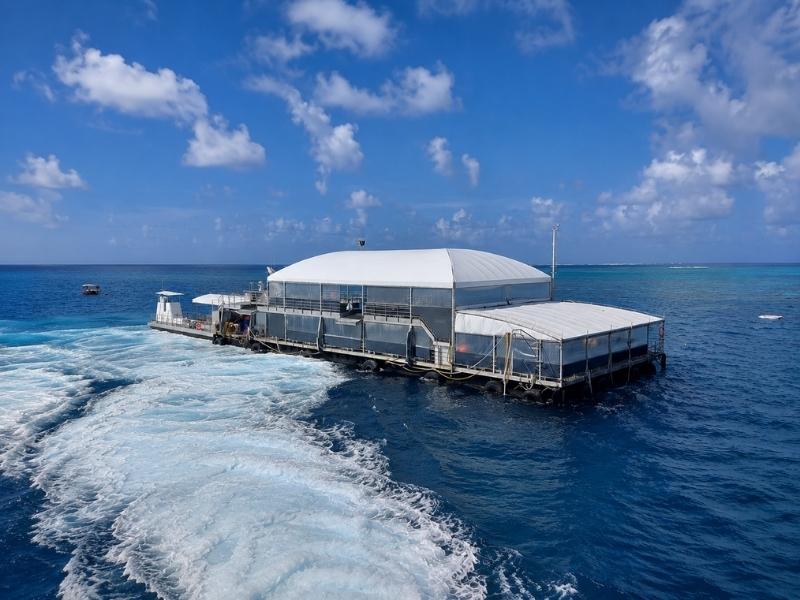
This is the flagship outer reef day trip run by Quicksilver Cruises, the largest and longest established premium operator working out of Port Douglas. The vessel is a wave-piercing catamaran built for the open-water crossing to the outer continental shelf, and the day is anchored around a massive permanently moored activity pontoon sitting directly over the coral at Agincourt Reef. You get roughly three and a half hours on that pontoon, split between snorkeling, a semi-submersible submarine ride with commentary, an underwater observatory, and a hot and cold tropical buffet lunch served in the main cabin.
The product is aimed squarely at people who want the outer reef experience without needing to be confident swimmers, certified divers, or even particularly fit. Every activity tier on the pontoon, from the submerged stepping platform to the enclosed observatory, is designed so that a mixed family or a nervous first-timer gets a genuine reef encounter rather than a compromised one. That is the core of what Quicksilver has built its reputation on, and it is why the trip consistently pulls strong Quicksilver great barrier reef cruise reviews numbers: the listing shows a 4.6 rating on Viator across more than 8,265 bookings.
What you are paying for, structurally, is marine infrastructure. Reaching the outer ribbon reefs in comfort and stability requires a large catamaran and a permanent pontoon, and that is expensive hardware that smaller operators simply do not have. The trade-off is that you share it: this is not an intimate six-person boat. Crowds are part of the deal, and we cover how to manage them further down the page.
Where It Goes
The destination is Agincourt Reef, a ribbon reef system on the very edge of the outer Great Barrier Reef where the continental shelf drops away into the Coral Sea. Ribbon reefs are long, narrow structures that fringe the outer edge of the reef matrix, and they are widely regarded as the best of what the region offers: the water is clearer out here than on inner reefs closer to the mainland, the coral walls are dramatic, and the pelagic corridors beyond the drop-off draw larger marine life.
Agincourt is a reef of coral shelves and swim-through channels populated by tropical fish, green sea turtles and giant clams. The pontoon sits in a calm basin that the ribbon reef structure itself helps to protect, shielding the moored platform from open-sea swells. That combination, clear outer-reef water plus a sheltered swimming area, is unusual and it is the main geographic reason this specific cruise earns its premium positioning among Quicksilver Cruises Cairns and Port Douglas options.
The crossing out takes about 90 minutes each way, which is worth knowing when you picture the day: more than an hour and a half of open blue water between Port Douglas and the reef. Some passengers love that transit as part of the adventure; others find it long. Morning tea and a snorkeling demonstration fill the outbound leg, so the time is used, but if you are prone to seasickness the crossing is the part of the day to plan around.
The Day, Hour By Hour
The schedule below reflects the times the operator and its Viator listing specify. Treat them as firm rather than approximate; the manifest clearance and coach connections run on strict time slots.
- 09:00 Registration at the Crystalbrook Superyacht Marina counter in Port Douglas. This is a hard arrival time, not a target. The operator itself stresses that a prompt 09:00 appearance at the Wharf Street harbor gates is necessary to avoid missing the cruise entirely.
- Morning boarding Guests move onto the wide multi-level decks of the catamaran. Fresh morning tea is served, and the crew runs a practical snorkeling and water-safety demonstration before departure.
- 10:00 The vessel clears the harbor gates on schedule and begins the 90-minute blue-water sprint to the outer ribbon reefs.
- Approximately 11:30 Arrival at Agincourt Reef and transfer to the moored activity pontoon. Guests enter the water via a submerged stepping platform. The pontoon window runs about 3.5 hours.
- Midday Hot and cold tropical buffet lunch served in the main cabin. The semi-submersible submarine tours run continuous loops with expert narration throughout the pontoon window, and the underwater observatory is open the whole time for anyone staying dry.
- Afternoon Guests re-board the catamaran, afternoon tea is served, and the vessel begins the return cruise across the continental shelf.
- Approximately 17:00 Final drop-off back at the Port Douglas marina docks.
One practical note worth flagging early: the operator's own advice, echoed by booking desks in Cairns and Port Douglas, is to book your reef day for your first full available vacation day in the region. If the weather turns, you can then adjust your travel date at no additional cost and still have remaining days to re-schedule. It is simple advice that saves trips.
What Is Included And What Is Not
The inclusions are generous for a day trip at this price point, and the exclusions are mostly small and predictable, with one notable gap around transfers.
Included
- Premium mask, snorkel and fin equipment
- Full use of lycra stinger suits and buoyancy vests
- Semi-submersible reef discovery tours with commentary
- Hot and cold tropical buffet lunch, freshly sourced
- Environmental Management Charges and marine taxes
- Underwater observatory access from the pontoon
- Prescription powered snorkel masks for guests who need them, included in the base fare
Not Included
- International airfare and regional hotel coach transfers. Ground transport from resorts is excluded, which matters and is covered in the pickup section below.
- Onboard bar purchases, including cold soft drinks and alcohol. Bring a credit or debit card.
- Optional GoPro video rentals. The one genuinely appealing detail here: you keep the physical memory card at the end of the day, so your footage goes home with you.
- Advanced upgrades: the Ocean Walker helmet dive and optional helicopter flights.
- A mandatory A$10.00 per-person fuel surcharge, collected by the operator at check-in on the day.
- Personal swimwear and a towel.
Optional scuba diving sits in between: introductory dives for beginners and dives for certified divers are coordinated by the crew on the day rather than being part of the base fare. All optional underwater tracks, including introductory scuba and the Ocean Walker Helmet Dive, carry a strict minimum age of 12 and a maximum age of 70, plus a mandatory health questionnaire. Anyone in your group planning to dive should read those limits before booking rather than on the dock.
The fuel surcharge catches some people off guard, so treat the quoted fare plus A$10 as the real walk-up cost. The same honesty applies to drinks: there is no need to buy anything beyond the surcharge, but most people do want a cold drink on a tropical afternoon.
Who This Trip Suits
This cruise earns its place as the default family reef day out of Port Douglas. The pontoon design means non-swimmers are genuinely catered for rather than tolerated: the underwater observatory and the semi-submersible give dry, glassed-in views of the coral, and buoyancy vests let weak swimmers float the reef edges in the sheltered basin. Crew brief passengers that all generations find an activity tier matched to their comfort level, and the structure of the day backs that claim up.
It also suits cautious first-time snorkelers. The transition from the catamaran to the pontoon, then from the pontoon's submerged platform into shallow water, is a gentle staircase rather than a leap. The enclosed basin means no open-ocean swimming is required to see coral, fish and turtles.
Experienced divers are the group most likely to outgrow it. Introductory scuba is available and well run, but a certified diver who wants wall dives at multiple sites with a small group will get more from a dedicated dive boat. Snorkelers weighing up which style of trip fits them should read our guide to snorkeling versus scuba diving on the Great Barrier Reef before committing.
Finally, it suits anyone sensitive to crowds less well. A large catamaran with a full manifest means busy decks and a busy pontoon, particularly around the lunch service and the semi-submersible boarding queue. The workaround, covered below, is timing: hit the submarine in the early morning blocks and swim toward the outer markers when the steps are crowded.
Getting There And Pickup
Hotel pickup is not included in the base pricing tier. Ground coach transit from regional resorts is excluded, so you either self-drive to the marina or coordinate a local shuttle addition separately. That is the single most common complaint pattern on big-operator reef days, and it is worth sorting the night before rather than the morning of.
Departure is from the Crystalbrook Superyacht Marina in Port Douglas, with registration at the counter from 09:00. For anyone staying in Cairns rather than Port Douglas, that means factoring in the drive north; the operator maintains booking desks in both Cairns and Port Douglas for date changes, but the vessel itself leaves from Port Douglas. Travellers weighing the two bases against each other, or considering the Whitsundays instead, should read our comparison of Cairns, Port Douglas and the Whitsundays for a reef trip before choosing where to stay.
Arriving late is not recoverable. The catamaran clears the harbor gates at 10:00 sharp, and with coach connections and manifest clearances running on strict slots, the operator is explicit that the 09:00 registration is a necessity. If you are driving in from a distant resort, build in a buffer.
For visitors starting further afield, a reef day like this slots into a longer Queensland itinerary rather than replacing one. Anyone planning the journey up from New South Wales should read how to get to the Great Barrier Reef from Sydney for flights and routing.
What To Bring
- Swimwear, worn under your clothes, and a beach towel. Both are your own responsibility.
- High-SPF sunscreen. The tropical sun on an outer reef pontoon is intense and reflected off the water.
- A sun hat and sunglasses for the open decks during the 90-minute crossings.
- A credit or debit card for onboard beverage purchases; bar drinks and soft drinks are paid on the day.
- A$10 cash or card for the mandatory per-person fuel surcharge collected at check-in.
- Sea-sickness medication taken in advance if the open crossing worries you; the outbound leg is a genuine blue-water transit.
Two pieces of gear advice from the operator are worth passing on. First, if you wear high-index eyeglasses, skip the standard goggles and ask the crew during the outward crossing for the specialized powered prescription snorkel masks. They are included in the base fare and make a real difference to what you actually see across the coral flats. Second, if you want footage, rent the GoPro from the dive locker: you keep the memory card, which is not the norm for rental camera setups.
What Reef Does Quicksilver Go To?
Quicksilver goes to Agincourt Reef, part of the ribbon reef chain that runs along the outer edge of the Great Barrier Reef where it meets the Coral Sea. This is the defining fact of the whole product, and it deserves a proper explanation because it separates this trip from most of the competition.
The Great Barrier Reef is not one reef. It is a vast system of around 3,000 individual reefs stretching along the Queensland coast, and their quality varies enormously depending on where they sit. Inner reefs, closer to the mainland, are cheaper and quicker to reach, but they cop the runoff, the murkier water and the heavier sediment that comes with coastal proximity. Visibility suffers, and the coral reflects it. Outer ribbon reefs sit at the far edge of the continental shelf, bathed in clear Coral Sea water. This is where the postcard reef lives: the vivid coral gardens, the turtles, the giant clams, the drop-offs into deep pelagic blue.
Agincourt sits in that outer zone. It is a reef of long coral shelves and channels, permanently moored infrastructure in place, which is what allows the pontoon to offer a sheltered basin for swimming even though the open ocean lies just beyond the ribbon wall. The practical consequence for a visitor is a rare combination: genuine outer-reef clarity and biodiversity, delivered in water calm enough for a nervous non-swimmer. The reef wall margins beyond the snorkel markers let you look down past the ribbon edge into deep blue, one of the more striking sights a snorkeler can have, while the steps and shallows stay protected.
The honest caveat is ecological and structural at once. A permanently moored pontoon serves thousands of guests, and outer reefs across the region have faced serious pressure in recent years, which is a bigger question than any single operator. For the state of the reef system itself, read our guide on whether the Great Barrier Reef is dying and what bleaching has done. Within a day-trip frame, what Agincourt offers is about as good as the format gets.
It also explains the 90-minute crossing. Many operators advertise "outer reef" trips that reach mid-shelf systems after an hour; Agincourt is the real edge, and the transit time is the price of admission. If the idea of a long open-water catamaran ride sounds unpleasant rather than exciting, that is the honest trade you are being asked to make.
What A Pontoon Day Is Really Like
The pontoon is the part of the day that most first-timers have trouble picturing, and it is where the trip either wins you over or loses you. So here is the unvarnished version.
You arrive at a large platform fixed over the coral, with a submerged stepping platform for water entry, a semi-submersible boarding point, an enclosed underwater observatory, and a main cabin for the buffet lunch. The three and a half hours on the pontoon are yours to structure. There is no forced rotation and no single guide herding you through stations; you snorkel when you want, eat when the buffet opens, and queue for the submarine when it suits you.
The snorkeling itself is excellent by day-trip standards. Coral shelves filled with tropical fish, green sea turtles and giant clams sit within a short swim of the steps. Feeding sessions draw dense schools of neon damsels and curious anemone fish into the shallows in full sunlight, which is the classic reef moment most visitors came for. Head toward the outer snorkel markers and the character changes: the shelf ends and the water goes deep and blue along the ribbon edge. The operator's guidance is to keep your buoyancy vest adjusted tight for a smooth, low-effort drift along that line, and it is good advice, because the wall margin is exposed to open ocean even on calm days.
Density is the real trade-off. The stepping platform and shallows get crowded at peak times, and the semi-submersible has a limited number of window seats. The fix for both is sequencing. Board the submarine during the early morning blocks, when most guests are still in the water or eating, and you get premium window positions with room to move. When the steps get busy, swim out: adjusting your lane toward the outer markers opens up personal space and gets you the better coral anyway.
The dry options are not an afterthought. The underwater observatory gives a genuine aquarium-floor view of the reef, and the semi-submersible runs continuous loops with expert narration, so a passenger who never touches water still sees brain corals, fish and the reef wall through glass. For families split between confident swimmers and nervous ones, that flexibility is the whole point of the format.
The lunch is a proper hot and cold tropical buffet rather than sandwiches in a box, served in the main cabin in shifts. Afternoon tea follows on the catamaran during the return leg, which turns the transit back into a wind-down: decks, tea, and people reviewing the day's photos. By the time the vessel docks around 17:00, most guests report a full but not exhausted day, largely because the pontoon lets you rest in place rather than swimming from a moving boat.
How Much Does A Great Barrier Reef Cruise Cost?
This specific trip starts from about $241 per person, per the Viator listing, with a mandatory A$10 per-person fuel surcharge collected at check-in. Coach transfers are excluded, optional dives, helicopter flights, Ocean Walker helmet dives, GoPro rentals and bar drinks are extra, and a realistic all-in budget sits noticeably above the base fare once a family adds any of those.
Day-trip pricing across the whole reef spans a wide band depending on operator size, reef distance and inclusions, and a longer itinerary such as a 7 day Great Barrier Reef cruise or a Great Barrier Reef cruise from Sydney operates on an entirely different cost structure. For a full breakdown of what reef trips cost at every tier, read what a Great Barrier Reef tour really costs.
Frequently Asked Questions
What Is The Best Tour Company For Visiting The Great Barrier Reef?
There is no single best operator; it depends on your base, budget and confidence in the water. Quicksilver Cruises is the largest and most established premium operator in the Port Douglas region, with a 4.6 rating across more than 8,265 bookings on its Viator listing, which makes it a safe default for families and non-swimmers. Smaller boats suit divers and travellers wanting intimate groups. Our guide to choosing the right reef tour compares the categories properly.
What Is The Best Month To Visit The Great Barrier Reef?
Conditions vary widely through the year, including a stinger season that affects what you wear in the water, and lycra suits are included on this trip for exactly that reason. The trade-offs by month are covered in our guide to picking when and how to visit the reef.
How Many Days Are Enough For Great Barrier Reef?
One well-chosen day trip gives you a genuine outer-reef encounter, and for most visitors that is the core experience. Two or more days let you combine a pontoon day with a dive-specific or island day. For the fuller argument on whether one day is enough, see is the Great Barrier Reef worth it.
Is A Cruise A Good Way To See The Great Barrier Reef?
For the majority of visitors, yes. A cruise solves the hardest part of the problem, which is reaching the outer reef safely, and the pontoon format lets everyone from divers to non-swimmers share one day. The compromise is size and shared space. Whether that trade suits you is unpacked in our reef tour comparison guide.
When Not To Visit The Great Barrier Reef?
Stinger season and periods of heavy summer rain are the main windows to treat with caution, and weather can close outer-reef trips on short notice, which is why booking your first available vacation day with the option to shift dates is smart. The timing question in full, including months to avoid, is covered in when to visit the Great Barrier Reef.
What Is The Biggest Problem In The Great Barrier Reef?
Coral bleaching driven by marine heatwaves is the most serious threat facing the reef system as a whole. It is a system-wide problem far bigger than any single operator or tour. For the state of play, read our guide on whether the Great Barrier Reef is dying; for wildlife risks like sharks, stingers and crocodiles, see is the Great Barrier Reef safe.
Book From Port Douglas: Quicksilver Great Barrier Reef Snorkeling Adventure
Next step: see exact departure times, live prices and real traveller photos on Viator, then pick your date.
★ 4.6 on Viator · Read more reviews