Snorkeling Vs Scuba Diving On The Great Barrier Reef: Which Should You Choose
Snorkeling and scuba diving put you on the same reef but not in the same water. One keeps you at the surface with nothing but a mask and a tube; the other takes training, gear, and a few hundred extra dollars to reach what's below.
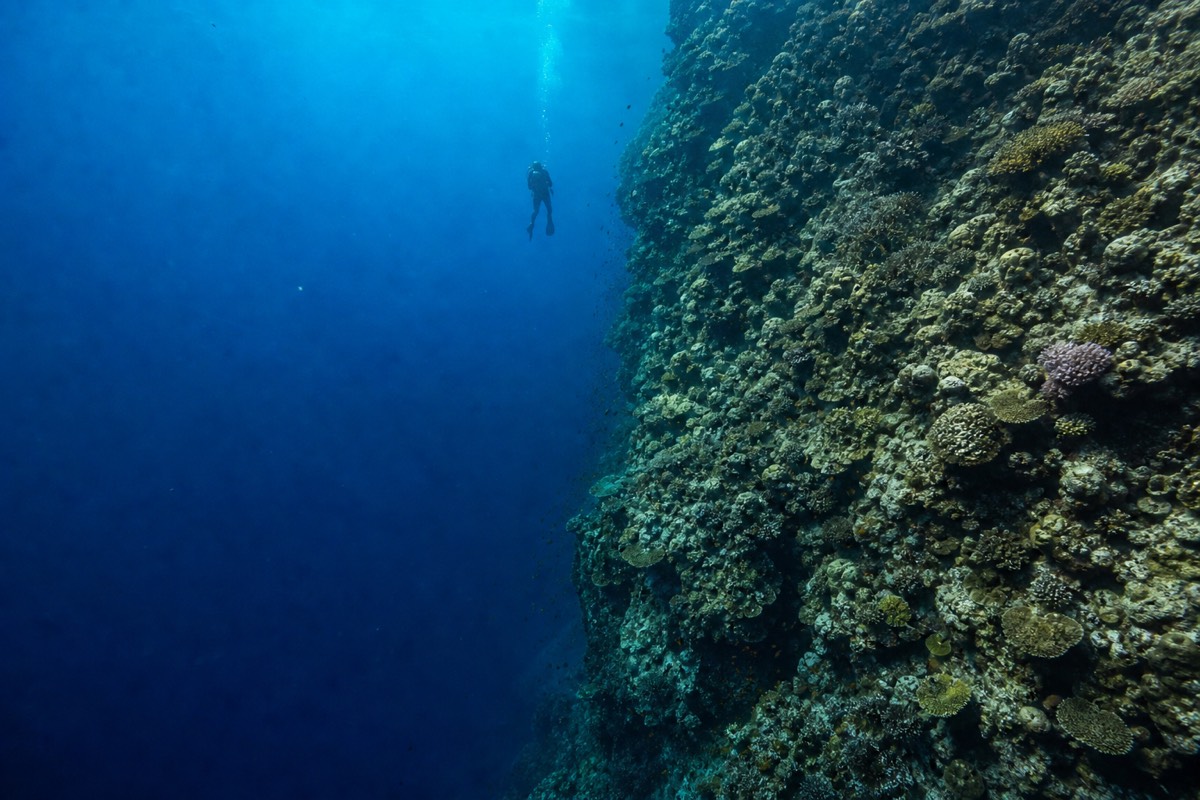
Snorkeling needs no training, costs from about $89 for a shore-based Green Island trip, and shows you reef flats, coral gardens, turtles and rays from the surface. Scuba diving costs more, requires either certification or a supervised introductory session, and takes you down reef walls and drop-offs that a snorkeler never reaches. Which one suits you depends on budget, comfort in the water, and how much of the reef's vertical structure you want to see.
Price tables and review counts in the original comparison are historical examples, not live quotes or safety evidence. Use the booking options below for current totals, inclusions and restrictions.
Snorkeling Or Scuba Diving The Great Barrier Reef?
The choice sounds simple until you are standing on a boat deck with a wetsuit in one hand and a price list in the other. Both activities put you in the water above the same coral. The gap between them, in cost, training, and what actually passes in front of your mask, is bigger than most first-time visitors expect.
Here is the quick framing. Snorkeling keeps you at or near the surface with a mask, snorkel and fins, breathing normally the whole time. Scuba diving uses a compressed-air tank and regulator to take you down along reef walls and deeper structure, and it requires training before you are allowed to do it unsupervised. Given the reef's actual scale, as detailed in the marine park authority's own facts about the reef, no single day trip covers more than a sliver of it regardless of which option you pick.
Snorkeling is available to almost anyone with no training, costs less, and covers the shallow reef flats and coral gardens most day tours are built around. Diving costs more, takes either certification or a supervised intro session, and opens up reef walls and drop-offs snorkeling cannot reach.
That framing holds regardless of experience level. Even confident swimmers who could technically handle a scuba regulator often spend a full day snorkeling simply because the shallows hold plenty of coral and fish activity on their own, without needing a tank to make the day worthwhile. Flip it around and the same logic applies to divers: someone already certified is unlikely to be satisfied looking down at a wall from the surface when they could be swimming along it.
One thing worth settling early: this is not a ranking. Neither activity is the "real" way to see the reef, despite what confident voices on both sides claim. The operators themselves run mixed trips where snorkelers and divers share the same boat, the same sites and often the same lunch table, precisely because the overlap between the two experiences is large. The right question is not which one is better. It is which one matches your budget, your comfort in water, and the specific reef you have in your head.
What The Price Gap Actually Looks Like
The five tours below span the range most Cairns and Port Douglas visitors actually book. All five include snorkeling. The scuba, semi-submersible and helmet-dive options appear as add-ons or built-in choices on the higher-priced trips. Figures come from each tour's own GetYourGuide or Viator listing.
| Tour | Price (USD) | Snorkel/Dive Options |
|---|---|---|
| Green Island Snorkelling | $89 | snorkel only, shore entry |
| From Cairns Full-Day Adventure | $196 | snorkel or scuba, guest's choice |
| Outer GBR & Coral Cay Tour | $202 | drift snorkel, optional dive |
| Port Douglas Outer GBR Experience | $223 | snorkeling and diving |
| Quicksilver Port Douglas | $241 | scuba, semi-sub, Ocean Walker |
Notice what the numbers do not say. There is no flat "diving surcharge" across the board. The $89 to $241 spread is roughly a factor of two and a half, but it is not purely a snorkel-versus-dive gap. Green Island's $89 price reflects a shorter, shore-based format close to Cairns. The Quicksilver trip's $241 reflects a longer offshore run to a permanent pontoon on Agincourt Reef, with several extra in-water options built into the day. The $196 Cairns trip includes a buffet lunch and hot showers on board alongside the activity choice. Comparing tours on price alone misses what is bundled into each number.
A concrete example makes the point. Two travelers book the Outer GBR & Coral Cay Tour at $202 and the Port Douglas Outer GBR Experience at $223. Twenty-one dollars apart. But the first includes a drift snorkel with the dive as an optional add-on, while the second is built from the start as a snorkeling and diving experience with guided reef talks. Depending on whether the dive is included or added, the real gap between those two days can widen past the sticker difference or vanish entirely. The only way to know is to read what each listing actually includes.
The full cost picture, including transfers, lunch, gear rental and the reef tax at each price tier, is broken down separately in the guide to what a Great Barrier Reef tour really costs.
How The Two Activities Structure Your Day
The two options differ in how much of the day they take up, and this catches people by surprise more often than the price does. A snorkel session tends to run continuously for the duration a boat is anchored at a site, with guests moving in and out of the water at their own pace. If the boat sits at a reef for ninety minutes, the water is open to you for ninety minutes. You can swim for ten, climb the ladder, warm up, and go back in.
A dive, intro or certified, is a scheduled block within the day: briefed, timed, and run one small group at a time so an instructor can stay with each diver. Your dive has a start time. Before it, there is a briefing covering hand signals, equalizing and what to expect. There is an equipment fitting. There is a wait while the group ahead of you is underwater. The dive itself runs on the instructor's clock, not yours.
That structure is part of why dive add-ons cost more. They take dedicated staff time on top of the boat's standard crew. It is also why most operators cap how many guests can take the dive option on any given trip, rather than opening it to everyone on board at once. If you are booking a dive-inclusive tour late in high season, that cap matters: the snorkel spots are effectively unlimited, the dive spots are not.
What Snorkeling The Reef Is Actually Like
Snorkeling the Great Barrier Reef is not a watered-down version of diving. It is its own experience, and on many reef sites it delivers the majority of what a day visitor comes to see.
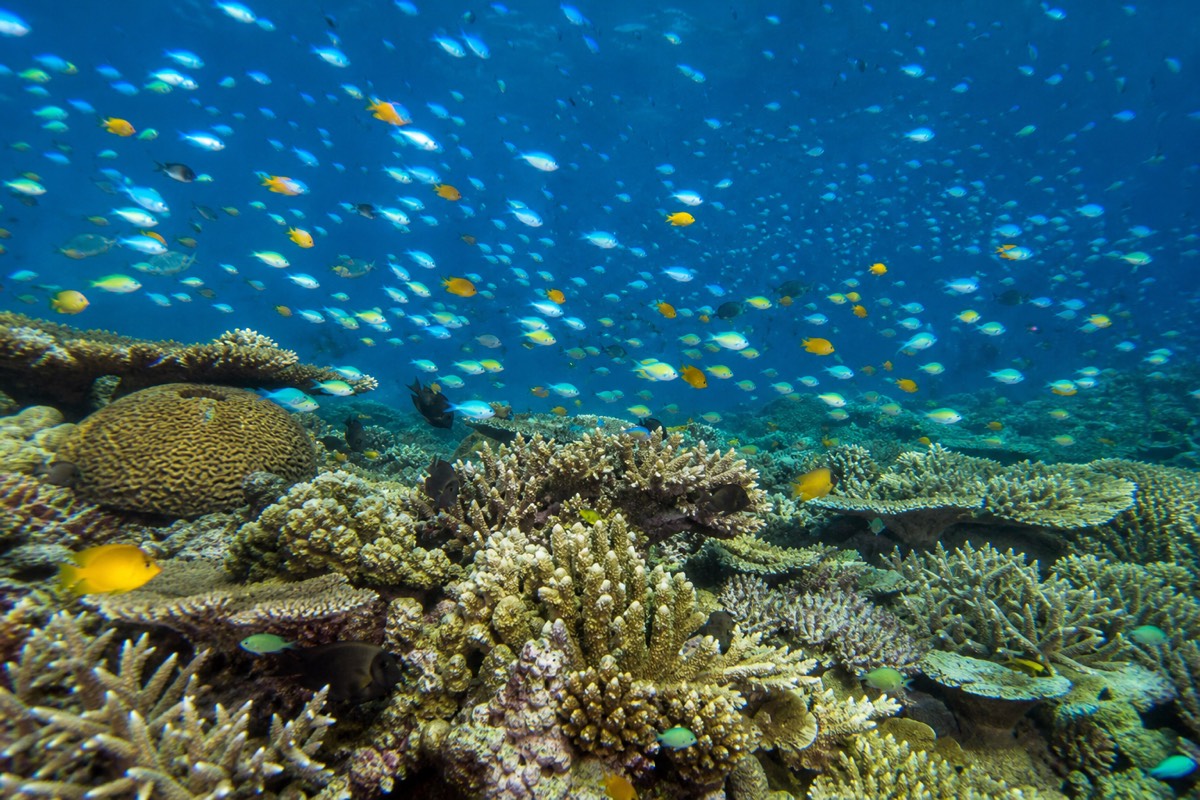
You stay at or near the surface with a mask, snorkel and fins, breathing through the tube the whole time. No tank, no regulator, no briefing beyond a safety talk and gear fitting. Below you, on the sites day tours visit, are reef flats, coral gardens and shallow structure holding turtles, rays and reef fish. On the From Cairns Full-Day Adventure, snorkelers are commonly shown sea turtles, stingrays and Maori wrasse at the same reef sites divers use. Norman, Saxon and Hastings reefs feature in the rotation.
That last point matters more than most people realise before their first trip. The difference between snorkeling and diving on the same site is often proximity and duration at depth, not which species show up. Sea turtles and stingrays turn up on the highlights for snorkel-only and dive-inclusive trips alike. A turtle feeding on a shallow reef flat at two metres is just as visible from the surface as it would be from below, sometimes more so, because the surface light is brighter and the animal is silhouetted against the sand.
Maori wrasse make the same argument. These are large, approachable, curiously unbothered fish that cruise the shallows around moored boats, and they feature on the highlight lists for both snorkelers and divers on the mixed trips. A snorkeler does not need to descend to meet one. It comes up to meet them.
The Honest Limitations
What snorkeling does not give you is the vertical dimension. The reef's structure continues well below what a snorkeler on the surface can see. Reef walls, drop-offs, and the species that pass along them at depth stay out of reach. On a wall site, a snorkeler sees the top few metres of coral and whatever swims up past it. A diver on the same site descends along the wall itself and sees the structure continue downward into blue water.
Free-diving down a few metres closes some of that gap, and confident snorkelers do it constantly. But it closes it only in bursts: a breath-hold descent is a visit, not a stay, and the reef's deeper structure rewards the sustained time that only a tank allows. If your mental image of the reef is a sheer coral face dropping away into open blue water, that image is a diver's image, and it is honest to say so.
Visibility also behaves differently for the two groups. A snorkeler shooting from the surface works with reflections, chop, and the angle of light hitting the water from above. A diver at depth is shooting from within the same plane as the coral and fish, with generally steadier light and a more level angle once below the surface layer, particularly during the dry season months when visibility runs clearer. Neither is better for every photo. But if underwater photography is a real part of why you are choosing between the two, it is a genuine practical difference.
There is a subtler limitation too, one that reviews of snorkeling trips rarely mention because it is invisible in the moment. A snorkeler's world is bounded by the surface itself. Looking down through two metres of clear water is extraordinary on the first hour and ordinary by the third, for some people, because the view never changes angle. Divers move through a full three-dimensional space, and that variation is part of what keeps a multi-dive day engaging. Snorkelers who want variety within their own activity should pick tours with multiple sites in the rotation rather than a single anchorage, for exactly this reason.
Who Snorkeling Suits Best
Snorkeling asks the least of you physically. Comfort floating and breathing through a tube is most of it. Flotation aids are available for beginners on these tours, and guides are in the water for snorkel sessions. The reef is generally treated as beginner and family friendly across the board.
- Anyone who has never dived and has no time to learn before the trip. No certification, no prior experience, no problem.
- Travelers who want flexibility within the day. You get in and out of the water at your own pace rather than on a scheduled block.
- Anyone prone to ear or sinus issues that make equalizing difficult. Snorkeling skips that entirely.
- Anyone short on time. Snorkeling generally needs less setup than a dive briefing and equipment fitting.
- Groups with children or nervous swimmers, since flotation support and guide supervision are standard.
Whichever you choose, standard reef etiquette applies both in and out of the water: no touching coral, no chasing marine life, as covered in the marine park authority's responsible reef practices. For a broader rundown of what shows up across sites regardless of activity, the marine life guide covers turtles, giant clams, Maori wrasse and the rest site by site.
Reviews: What Snorkel-Only Guests Actually Report
Reading across the snorkeling-versus-diving reviews on the major reef tours, a consistent pattern shows up, and it cuts against the assumption that snorkelers settle. Guests who booked snorkel-only days on the mixed boats frequently describe seeing the same headline animals as the divers on their trip: the turtles, the rays, the wrasse. The disappointment pattern, where it appears, is almost never "I wish I had a tank." It is "the water was choppy that day" or "I got cold and came out early."
Those are surface problems, not depth problems, and they have surface solutions: a well-fitting wetsuit, a flotation aid, and choosing a tour with sheltered sites in the rotation. The distinction matters when you are reading reviews to make your own call. A one-star review that says "couldn't see much" may describe a rough-weather day that would have spoiled a dive just as thoroughly. A five-star review from a snorkeler who saw three turtles at Norman Reef tells you what the shallow sites deliver, not what you would miss by staying up top.
Read dive reviews the same way. Divers on the same boats tend to rave about the wall sections and the sensation of being inside the reef, and to note honestly that the wildlife overlap with the surface is high. Both sets of reviews, taken together, confirm what the operators' own itineraries suggest: on the sites these day trips can reach, the two activities are variations on a shared day, not two different reefs.
What Scuba Diving Adds, And What It Costs
Diving's real advantage is access. A compressed-air tank and regulator let you descend along reef walls and drop-offs where the coral structure continues well below what a snorkeler can see. You are inside the water column rather than looking down at it, moving through the same plane as the fish, with a better vantage point for spotting species passing by below the surface layer.
On the reef sites these tours visit, that difference plays out concretely. The shallow coral gardens hold the turtles, stingrays and Maori wrasse both groups see. The wall itself, and the open-water sightings along it, belong to the divers. If your mental image of the reef is a sheer coral face dropping away into blue water, that image is a diver's image. Snorkeling simply cannot reach it.
There is also a difference in the texture of the encounter. A snorkeler watches the reef. A diver is part of the scene: fish react to you differently when you are among them than when you are a silhouette overhead, and the sustained time at depth lets the environment continue revealing itself rather than presenting a single fixed view. Whether that texture is worth the extra money and training is the whole decision, but it is what the money buys.
What Diving Takes: Training And Time
The cost is not only money. Diving takes either an existing open-water certification, such as PADI or an equivalent standard, or a supervised introductory session before you are allowed in the water with a tank at all.
| Activity | Certification Needed | Who It Suits |
|---|---|---|
| Snorkeling | none | anyone comfortable in water |
| Introductory/"discover" scuba dive | none, instructor-supervised | first-timers trying diving for the first time |
| Certified scuba dive | existing open-water certification (PADI or equivalent) | certified divers only |
| Ocean Walker helmet dive | none | non-swimmers or non-divers wanting to reach the reef floor without training |
A dive is also a scheduled block within the day rather than an open session. It runs briefed, timed, and one small group at a time so an instructor stays with each diver. Operators cap how many guests can take the dive option per trip because each dive consumes dedicated staff time beyond the boat's standard crew. If you are the sort of traveler who wants to set your own pace, that structure is worth knowing in advance.
Cairns, it should be said, is one of the easiest places in the world to act on that structure. Scuba diving from Cairns is an entire category, with dive-inclusive day boats running from the marina to the outer reefs year-round, which is why the intro dive as a format is so well developed here. Most reef operators offering dive add-ons structure their days specifically so first-timers are not shut out: you do not need a course booked in advance to try scuba once on the boat. That is not true of every dive destination on earth, and it shapes the local market. The comparison of which boats suit which travelers sits in the broader guide to choosing the right Great Barrier Reef tour.
What Diving Costs In Dollars
There is no single diving surcharge. The From Cairns Full-Day Adventure at $196 includes the choice between snorkeling and intro or certified scuba in the same booking, which makes it the cleanest comparison point on the list: the same boat, the same lunch, the same sites, with the activity as the variable. The Outer GBR & Coral Cay Tour at $202 includes a drift snorkel with the dive as an optional add-on. The Port Douglas Outer GBR Experience at $223 is built as a snorkeling and diving experience with guided reef talks, and the Quicksilver trip at $241 adds scuba options alongside the semi-submersible and the Ocean Walker helmet dive from its permanent pontoon on Agincourt Reef.
Read those numbers carefully. On some tours the dive is inside the headline price, on others it is a line item on top. Two trips $25 apart can end up further apart once you add the same dive to both, or effectively identical if the cheaper one already includes it. Check what the listing actually includes before comparing sticker prices. The full cost picture, including transfers, lunch, gear rental and the reef tax, is broken down in the guide to what a reef trip really costs.
One honest caveat about the included-dive model. When the dive sits inside the headline price as a guest's choice, you are choosing one activity for the day's structured dive block, not adding a dive on top of a full snorkel session. A guest who wants both, a long surface session plus a dive, may find the mixed tours with a paid dive add-on actually give more total water time, even at a higher final price. The listing wording rarely spells this out, so ask the operator what the dive block replaces before assuming the all-inclusive option is strictly better.
Which Is Harder?
Neither activity on these tours demands athletic fitness, but they are not equally easy.
Snorkeling asks the least. Comfort floating and breathing through a tube is most of it. An intro dive adds equalizing your ears and following an instructor's cues at depth, with the instructor controlling pace, depth and duration throughout. Certified diving assumes you already have that experience and confidence.
| Activity | Physical Demand | What Helps |
|---|---|---|
| Snorkeling | low to moderate | comfortable floating, flotation aids available for beginners |
| Intro scuba dive | low to moderate, instructor-paced | comfortable equalizing ears, staying calm underwater |
| Certified diving | moderate | existing dive experience and confidence at depth |
| Ocean Walker helmet dive | low | walking on a fixed platform, breathing normally through the helmet, no swimming skill needed |
The honest difficulty in scuba is rarely physical. It is psychological: staying calm while breathing underwater, clearing your mask if it fogs, and trusting the regulator. Instructors on intro dives manage everything else. Anyone prone to ear or sinus trouble that makes equalizing difficult should discuss water activities with the operator and consider dry reef viewing.
It is worth breaking that psychological point down, because "harder" is the wrong axis for most people. Snorkeling has a real skill floor: a leaking mask, a snorkel that floods, and a moment of swallowed seawater can rattle a first-timer as much as anything on a dive. What snorkeling has going for it is instant exit. You are never more than a lift of the head from air. Scuba removes that exit, and that removal, not the swimming, not the gear, is what makes the intro dive a genuinely bigger ask than the snorkel session. Some people find the removal liberating: no waves, no chop, no surface. Others find it constraining. Neither reaction is wrong.
One practical distinction worth flagging: snorkeling is a skill you already have or pick up in minutes, while diving, even at intro level, asks you to spend part of your reef day in a briefing and equipment fitting learning a new skill. That is time not spent looking at fish. Some travelers find that trade worthwhile. Others do not, and a full day snorkeling on the same sites is the alternative the same boats usually offer.
The ears deserve their own paragraph, because equalizing is the single most common reason intro dives go wrong. Descending under water pressure squeezes the air spaces in your ears, and relieving that squeeze takes a small technique, usually pinching the nose and gently blowing, done early and often on the way down. Most people manage it fine. A minority cannot, usually because of congestion or a sinus condition, and no amount of instructor patience fixes anatomy on the day. If you already know your ears are trouble on planes or in swimming pools, that is a signal worth taking seriously when choosing between the two activities.
Is It Worth Scuba Diving The Great Barrier Reef?
For most first-time visitors with no certification and one reef day: a supervised intro dive is worth it if you are curious about diving itself, and unnecessary if you are mainly curious about the reef. The shallow sites hold enough life that a dedicated snorkeler sees plenty. What diving adds is the wall, the depth, and the experience of being inside the water column rather than above it. If those three things sound exciting rather than merely nice, the intro dive earns its price.
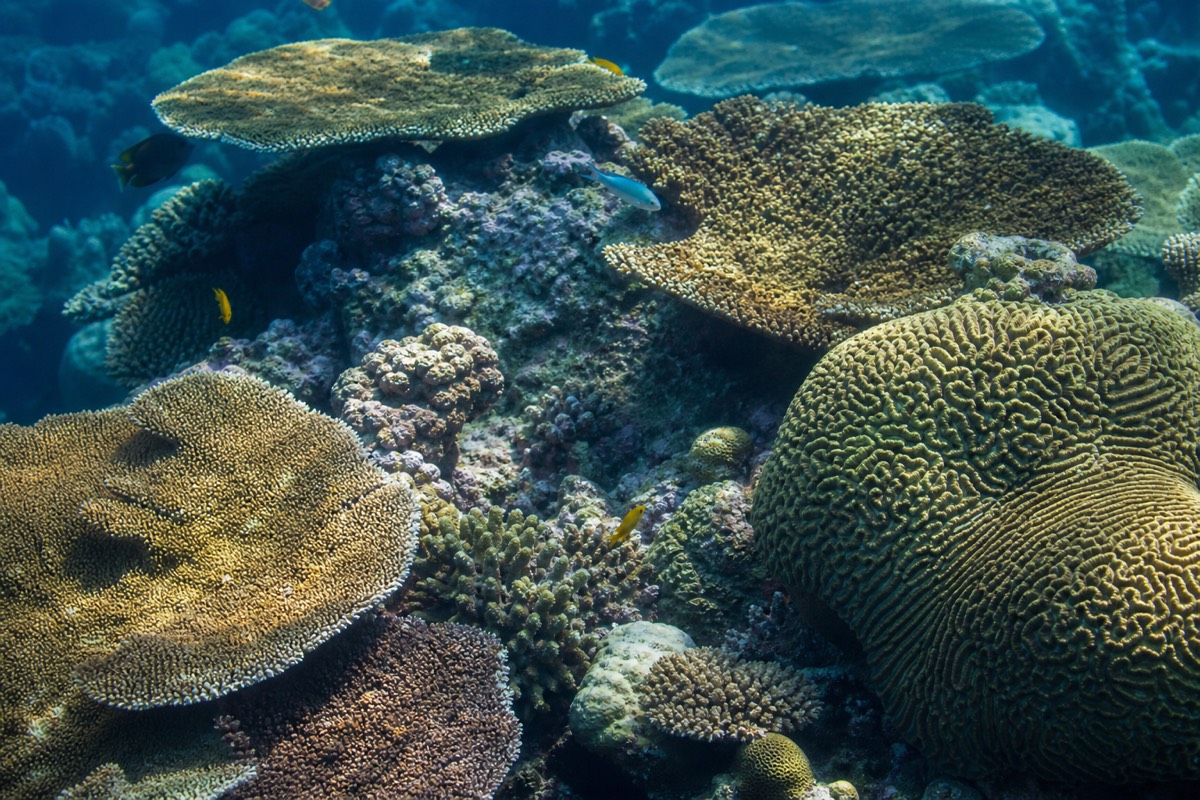
The reef itself does not require a tank to impress. Sea turtles, stingrays and Maori wrasse show up on the surface highlights as reliably as the dive ones. The operators run these mixed trips precisely because the overlap between the two experiences is large.
There is a version of this question that deserves a blunter answer, though, because it gets asked constantly in one form or another: is the reef wasted on a snorkeler? No. The sites day boats can reach are chosen in part because their shallow structure is spectacular, and the moorings sit where the coral gardens are healthiest and most accessible. A diver on those same sites sees more of the underwater terrain, but not a different reef in any meaningful sense. The dramatic differentiation people imagine, snorkelers getting the scraps while divers get the good stuff, does not match how these tours actually allocate their time.
Where diving clearly pulls ahead:
- You want the reef's vertical structure. Walls and drop-offs, and the fish life that patrols them, are a diver's territory.
- You are already certified. Skipping the training question entirely, a certified dive is the most reef you can see in a single day.
- You have more than one reef day. Snorkel one day, dive the next, and compare on your own terms.
- Underwater photography from within the scene matters to you. Steadier light and a level shooting angle below the surface layer make a genuine difference, especially in the dry season.
Where it does not:
- You are nervous underwater. A tense 30 minutes at depth is a worse reef experience than a relaxed two hours on the surface.
- Ear or sinus problems make equalizing painful. This is the most common physical reason intro dives end early.
- You would rather not commit an instructor's attention and a longer briefing to one activity. Snorkeling needs less setup and keeps your day flexible.
A note for certified divers specifically, since their version of the worth-it question is different. If you hold an open-water certification and are choosing between a dedicated dive trip and a mixed snorkel-dive day boat, the calculus changes: the mixed boats cap dive numbers and schedule dives around the broader day, so a certified diver wanting maximum bottom time across multiple sites may find the snorkel-heavy format constraining. For a certified diver traveling with non-diving family, though, the mixed boat is exactly the right answer, because it puts everyone on the same deck at the same lunch.
On whether one reef day is enough time to do the region justice at all, that is a separate question with its own guide covering how many days to allow and what a first trip can realistically include.
Introductory Dives: Who They Suit
An introductory or "discover" scuba dive is run under direct instructor supervision and requires no prior certification. It exists specifically so first-timers are not shut out: you do not need a course booked in advance to try scuba once on the boat, you just need to be comfortable following instructions underwater.
Here is how it typically runs on these tours. It starts with a short briefing on the boat deck covering hand signals, equalizing, and what to expect at depth. Then an instructor accompanies you underwater one-on-one or in a very small group.
Be clear about what an intro dive is not. It is not a shortcut to full certification. The dive is limited to shallower depths than a certified diver would be cleared for, with the instructor controlling pace, depth and duration throughout. Think of it as a guided sample of diving rather than a compressed course, which is exactly why no certification is required to try it. If certification is something you are planning around for a future trip rather than this one, that is a separate booking through a dive school, not something these day tours provide on the spot.
The one-on-one or very-small-group structure is the defining feature, and it is worth understanding why it shapes the whole day. Because the instructor must stay with each diver, the operator cannot run intro dives at snorkel scale. Numbers are capped, the dive blocks are scheduled, and the briefing is not optional. A guest who books an intro dive is, in effect, reserving a slice of a professional's undivided attention. That is the service being paid for as much as the tank and the gear.
Who suits an intro dive well:
- Curious non-divers. People who want to answer the "is this for me?" question with their own lungs rather than by reading about it.
- Comfortable swimmers who stay calm in water. The physical demands are low; the composure demands are real.
- Anyone weighing up a certification course. One supervised dive is the cheapest possible way to find out whether the full course would be money well spent.
- Travelers on mixed boats. On the From Cairns Full-Day Adventure, the intro dive sits inside the same $196 booking as the snorkel option, so a couple can split activities without booking two tours.
Who should skip it:
- Anyone who dislikes having their face covered or breathing through apparatus. No instructor can talk you past that mid-dive.
- People who cannot equalize comfortably. It ends the dive early and it hurts.
- Guests who mainly want to see animals. On the shallow sites, the snorkeler sees nearly the same cast.
Intro dives in Cairns are a well-oiled category, run across most of the dive-inclusive day tours from the marina. If you are comparing the specific boats that offer them, that comparison belongs with the broader question of choosing the right reef tour.
Options For Non-Swimmers
Non-swimmers have more options on the Great Barrier Reef than on almost any other major dive destination in the world, and that is not marketing talk. It is a structural feature of how the top-end tours here are built.
The Shore-Entry Snorkel
The low end is the Green Island snorkelling and glass-bottom boat tour at $89. It is a shore-entry format close to Cairns, built with exactly this situation in mind. You walk into shallow water from the beach rather than stepping off a boat into open ocean, which changes the psychology of the experience completely for nervous swimmers. The glass-bottom boat covers the same reef for anyone who would rather stay entirely dry.
The shore-entry format deserves more attention than it usually gets in the snorkeling-versus-diving conversation, because it reframes the whole comparison for anxious travelers. The hardest moment on any reef day for a non-confident swimmer is not the snorkeling itself. It is the deep-water entry off a boat, the ladder, the sight of open ocean on all sides. Remove that and the activity itself, floating in waist-deep water over coral, becomes approachable. Green Island is also the natural answer to the question of the best island for snorkeling the Great Barrier Reef for beginners, precisely because the reef sits a short walk from dry land rather than a boat ride from the mainland.
The Semi-Submersible
One rung up is the semi-submersible, available on the Quicksilver Great Barrier Reef snorkeling adventure from Port Douglas. You stay dry, seated, and view the reef through underwater windows. It is the option for someone who wants the underwater view without any water contact at all: a grandparent who would rather not get in, a visitor with a medical reason to stay dry, or a small child not ready for the ocean.
In snorkeling-versus-diving terms, the semi-sub is often dismissed as a spectator option, but that undersells what it does for a mixed group. It is the only in-itinerary activity that lets someone experience the underwater reef while contributing zero water time, zero risk and zero skill requirement. On a family day where one member would otherwise sit on the pontoon, it converts a waiting hour into a reef hour. That has real value even if no one would book the trip for it alone.
The Ocean Walker Helmet Dive
The most interesting option for non-swimmers is the Ocean Walker helmet dive. It lowers you onto a fixed underwater platform on the Quicksilver tour, wearing a full-face helmet supplied with air from the surface, letting you walk the reef floor and breathe normally without any swimming or diving training. Because breathing happens through the helmet at a normal, unlabored feel rather than through a mouth-held regulator, it is often positioned as the most approachable underwater option on the boat. No mask clearing, no regulator technique, just walking and looking.
| Option | Training Needed | Depth Reached | Best For |
|---|---|---|---|
| Snorkeling | none | surface | |
| Semi-submersible | none | stays dry, viewed through underwater windows | non-swimmers, anyone wanting to stay completely dry |
| Ocean Walker helmet dive | none | reef floor, deeper than surface snorkeling | non-swimmers or nervous first-timers wanting more than a surface view |
| Scuba (intro or certified) | none for intro, certification for full dives | deepest of the four, along reef walls | confident swimmers ready to commit to real diving |
The helmet dive sits in genuine middle ground between snorkeling and scuba. You go deeper and get closer to the reef structure than a surface snorkel allows, without needing certification or even the ability to swim. For the specific traveler who wants the underwater view but cannot or will not swim, it is not a consolation prize. It is the only option on the reef that does the job.
It also solves the ear problem. Because the helmet keeps your head in an air space throughout, there is no equalizing in the scuba sense, which removes the single most common failure point of the intro dive. Travelers ruled out of scuba by sinus issues but still wanting more than a surface view have a real alternative here, and it is worth asking about directly when booking.
Why The Pontoon Makes It Possible
Both the semi-submersible and the helmet dive run from the operator's permanent pontoon on Agincourt Reef. That setup is part of what makes them practical. A fixed platform means the equipment, the underwater viewing windows for the semi-sub, the air lines and helmets for Ocean Walker, stays anchored in place rather than being set up fresh at a new site each trip. This is why these options show up on larger, permanently based operations rather than smaller day boats that move between sites.
Groups with a wide age range tend to gravitate toward the pontoon-based format for exactly this reason. A grandparent who would rather not get in the water at all can ride the semi-submersible. A nervous teenager can try the helmet dive without any pressure to swim. A confident adult in the same family can book an intro or certified dive off the same platform. All from one trip, rather than three separate bookings at three separate price points.
That last point is the quiet strength of the pontoon model and the reason it wins so many family bookings despite the higher price. Splitting a mixed group across a dive boat, a snorkel boat and a stay-dry alternative means three departure times, three check-ins and three itineraries that may not even visit the same part of the reef. One pontoon day solves the logistics problem the family did not know it had until it tried to book.
What Is The Best Month To Snorkel The Great Barrier Reef?
This page owns the snorkel-versus-dive question, not the calendar one, so this stays brief. Visibility on the reef runs clearer during the dry season months, which matters to snorkelers especially, since surface chop and light angle affect the surface view more than the view from below it. The full month-by-month breakdown, including stinger season and the periods worth avoiding, lives in the guide to choosing the right Great Barrier Reef tour.
Which Of Our Tours Do Both
Two tours in the range let you mix activities within a single booking, and both are the natural picks for groups that cannot agree on one activity.
From Cairns Full-Day Adventure ($196)
This is the cleanest either/or on the list. The same booking includes the choice between snorkeling and intro or certified scuba, so the snorkel-versus-dive decision can be made on the boat deck rather than at checkout. The trip includes a buffet lunch and hot showers on board, and visits the Norman, Saxon and Hastings reef rotation where sea turtles, stingrays and Maori wrasse are commonly shown to both snorkelers and divers.
For a couple or small group genuinely split on the question, this is the boat that dissolves the argument. Nobody books the wrong thing, because the activity choice travels with you to the reef and gets made in daylight, with the actual conditions in front of you. It is also the fairest price comparison on the list for exactly that reason: at $196, whatever the dive costs is already inside the number, so the snorkel-versus-dive decision stops being a financial one and becomes purely a preference.
Quicksilver Port Douglas ($241)
The widest spread of options on any tour here, running out of the permanent pontoon on Agincourt Reef. One booking can cover snorkeling, scuba, the semi-submersible, or the Ocean Walker helmet dive, which makes it the default recommendation for groups spanning the full confidence range, from a non-swimmer to a certified diver. The pontoon base is what allows that spread. Families with grandparents, nervous teens and keen divers can all book the same day out.
If Neither Fits
The remaining three tours on the list each serve a narrower purpose. Green Island at $89 is the shore-entry snorkel for non-swimmers and tight budgets. The Outer GBR & Coral Cay Tour at $202 is the drift-snorkel day with an optional dive for travelers who want the current to do the swimming. The Port Douglas Outer GBR Experience at $223 pairs snorkeling and diving with guided reef talks for visitors who want more interpretation in the day. For comparing these against the wider market, including the question of Cairns versus Port Douglas versus the Whitsundays as a base, the regional comparison guide covers that decision in full.