Is The Great Barrier Reef Safe To Snorkel? Sharks, Stingers, And What Actually Matters
Sharks and stingers are the two questions every operator gets before a booking, more than reef health, more than seasickness. Here's what the actual incident history and marine safety guidance say, without the tourist-brochure spin or the doom-scroll panic.
Snorkeling is an open-water activity with risks that vary with health, swimming ability and conditions. Tell the operator about any limitations before booking, follow the crew’s instructions, and choose a dry viewing option if you cannot swim safely.
Is The Great Barrier Reef Safe?
Ask ten travelers what worries them about the Great Barrier Reef and eight will say sharks, stingers, or both. The other two will ask about crocodiles, which is its own kind of misunderstanding. None of these fears are irrational exactly, they are just aimed at the wrong scale. A viral headline about a shark fatality off North Queensland feels like it describes your upcoming snorkel trip. It usually doesn't.
Split the question the way the people who work on the reef split it. There is personal safety: sharks, jellyfish, crocodiles, currents, and the things a crew manages between the marina and the reef site. Then there is environmental safety: the health of the coral itself, and the small ways a visitor can damage a structure that is already under pressure. Both deserve answers, and they are different answers, so this guide treats them separately. The personal safety side is the one that stops people booking, so it gets the most depth here. The reef health side matters too, and where that story gets long, the fuller account of what is actually happening to the reef lives on its own page.
Snorkeling is an open-water activity with risks that vary with health, swimming ability and conditions. Tell the operator about any limitations before booking, follow the crew’s instructions, and choose a dry viewing option if you cannot swim safely.
When shark or stinger incidents do make headlines out of North Queensland, they trace almost without exception to that different activity or location: spearfishing, an unpatrolled beach, a solo swim off a headland. Not a guided boat tour with a crew watching conditions and guides in the water alongside guests. That distinction gets lost in a scary headline, but it matters enormously for anyone actually deciding whether to book.
It also helps to look at where people go looking for reassurance. Travelers who dig through long forum threads on this question tend to arrive at the same two conclusions: that the fear-inducing headlines almost never involve the kind of tour they are considering, and that the practical precautions, suits, briefings, guides in the water, are boring in the best possible way. The danger stories that circulate online are real events, but they are almost always attached to different water, different activities, or the absence of the basic structure a commercial tour provides. That is the pattern this page examines in detail, section by section.
One framing note before the detail. Everything that follows is written for someone on a standard guided day tour or overnight trip out of Cairns, Port Douglas, the Whitsundays or Cape Tribulation. That covers the vast majority of visitors. If your plan involves swimming off a remote beach at dawn in February, or spearfishing solo over an offshore shoal, you have stepped outside the profile this page describes, and the risk math changes with it.
Is Snorkeling In The Great Barrier Reef Safe?
Snorkeling is an open-water activity with risks that vary with health, swimming ability and conditions. Tell the operator about any limitations before booking, follow the crew’s instructions, and choose a dry viewing option if you cannot swim safely.
There is a structural reason guided tours are safer than independent swimming, and it is worth stating plainly. A group of snorkelers moving together behind a guide presents an entirely different profile to marine life than a lone swimmer or a diver carrying speared fish. Spearfishing in particular is a known attractant to predatory species, because it puts bleeding fish in the water next to a human. A guided snorkel tour creates none of that. Operators also favor sites with established, regular boat traffic, where marine life is accustomed to human presence without being fed or baited. The rare incidents that do occur cluster around remote, lightly visited locations and different activities entirely.
The comparison that sits in most people's heads, often without being said aloud, is the beach holiday. A swim off an unpatrolled tropical beach is an activity with genuinely different variables: no lookout, no signage being read, no suit, no vinegar within reach, and no one counting heads. The reef tour reverses every one of those conditions. Crew brief every guest before entry, station lookouts and in-water guides, restrict activity to the sites they have assessed that morning, and carry the equipment for the one emergency that is plausible in season. That is not luck or marketing. It is the accumulated practice of an industry that runs the same product hundreds of times a year and cannot afford to get it wrong.
None of this means casual swimming anywhere in North Queensland is equivalent. An unpatrolled beach in stinger season, a solo night swim, a headland with no signage: those carry real, documented risk, and the headlines that generate reef fear usually come from them. The commercial tour is a controlled environment by comparison. Briefings before entry, guides in the water, flotation for weak swimmers, head counts before the boat moves, and vinegar on board for the rare sting. For a comparison of how the two in-water experiences differ in what you actually see and do, the snorkeling versus scuba breakdown covers it in detail.
It is worth being clear about what "safe" does and doesn't cover. Safe means the animal risk is managed to a level where other concerns dominate your day: seasickness, sunburn, tired arms, a leaky mask. Snorkeling is physical, and the reef is offshore: a day trip means a boat ride of an hour and a half to two hours each way on most Cairns and Port Douglas departures, and the transit is where a meaningful share of guests have their worst half hour of the trip. The water itself, where all the feared animals supposedly live, is statistically the safest part of the day.
The honest caveats are the ordinary ones. Weak swimmers should say so at booking, because most operators have flotation devices and guided assistance available but need to know in advance. Visibility and conditions vary day to day, and crews will shift sites or delay entry when they are poor, which occasionally means the site you hoped for isn't the one you get. Annoying, not dangerous. Age and fitness matter more than nerves: a reef day is a long day on the water, and it rewards a reasonable level of comfort in the ocean rather than demanding athleticism. If you are weighing whether even a single day on the water delivers enough to justify the effort, that question deserves its own reckoning.
Are There Sharks Around The Great Barrier Reef?
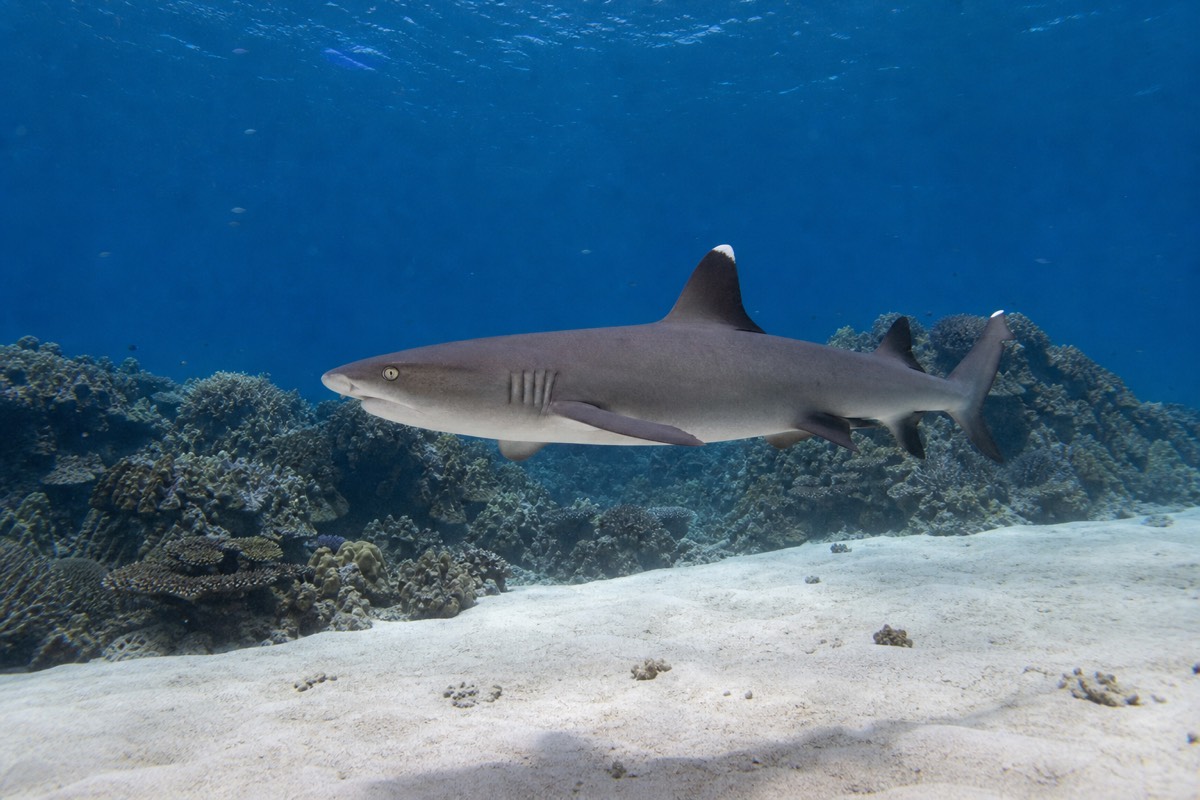
Whitetip, blacktip and grey reef sharks are among the species seen on the reef. They are wild animals: keep your distance, do not feed or pursue them, and follow the guide’s instructions. A guided tour cannot guarantee an encounter or eliminate risk.
These are reef-associated species. They keep to shallow coral structure, resting near ledges or cruising sand flats, rather than patrolling open water. That habitat preference is the core reason outer reef snorkel sites feel safe: the sharks that live there are small, disinterested in people, and habituated to boat traffic. Guides on marine-biologist-led trips point them out deliberately, because a small reef shark cruising past is one of the more memorable sightings of the day rather than something to avoid. On small-group trips like the ABC Reef Safaris snorkel tour, where a biologist-style briefing is part of the format, a whitetip resting under a ledge is treated as a highlight of the site, pointed out to everyone in earshot.
| Species | How Common On Tours | Typical Behavior |
|---|---|---|
| Whitetip reef shark | Most common sighting | Generally harmless, not aggressive to humans |
| Blacktip reef shark | Most common sighting | Generally harmless, not aggressive to humans |
| Grey reef shark | Possible, less frequent | Reef-associated, generally avoids divers |
| Bull shark | Rare on outer reef sites | More associated with river mouths and deeper offshore water; the suspected species in one recent spearfishing fatality |
Whitetip, blacktip and grey reef sharks are among the species seen on the reef. They are wild animals: keep your distance, do not feed or pursue them, and follow the guide’s instructions. A guided tour cannot guarantee an encounter or eliminate risk.
Habituation is the quiet factor underneath all of this. The visited sites, Norman, Hastings and Moore Reef among them, see steady boat traffic year round, and the resident animals have learned that boats mean neither food nor threat. Nothing is chummed, fed or baited at these locations, so the sharks that live there associate people with nothing at all. That is a very different situation from a remote shoal where an animal's first encounter with a human might coincide with a struggling, bleeding fish on a spear. The industry's site selection, favoring established locations with regular traffic, is itself a safety practice, even though nobody sells it that way.
The Incidents That Do Make The News
Documented recent shark fatalities in the region are worth looking at directly, because both involved activities other than guided commercial snorkeling.
Snorkeling is an open-water activity with risks that vary with health, swimming ability and conditions. Tell the operator about any limitations before booking, follow the crew’s instructions, and choose a dry viewing option if you cannot swim safely.
Neither took place on a commercial snorkel or dive tour. The Kennedy Shoal case involved a spearfisherman, which means speared fish in the water, a known attractant that a guided snorkel tour simply doesn't create. The distinction is not a rounding trick. It reflects how differently sharks respond to a group of snorkelers moving together behind a guide versus a lone diver actively fishing. People searching for reassurance on this exact point, whether on forums or by asking outright whether it is safe to snorkel the Great Barrier Reef with sharks around, usually arrive at the same conclusion once they see the incident record: the activity you are booking is not the activity showing up in the headlines.
Geography matters in both cases too. Humpy Island sits in the Keppel Bay Islands National Park, well south of the Cairns-to-Port Douglas day-tour corridor. Kennedy Shoal is an offshore reef south of Cairns, and while the phrase "offshore reef" sounds close to a tour itinerary, the context was spearfishing at a location without the steady boat traffic that characterizes the visited sites. The pattern across the region's incident record is consistent: the places where things go wrong are remote, lightly trafficked, or attached to high-risk activities, sometimes all three.
What About Great Whites?
Great white sharks are associated with cooler southern Australian waters, and the tropical reef systems of North Queensland are not their typical habitat. The species relevant to this region's incident record are reef sharks and, in the case of the spearfishing fatality noted above, a suspected bull shark, a species tied to river mouths and deeper offshore water rather than shallow coral sites. So the answer to whether there are great white sharks in the Great Barrier Reef is, for practical snorkeling purposes, no: not the animal you should be thinking about when you book. The animal you might actually see is a meter-long whitetip resting under a coral ledge, and the correct response is to point at it excitedly, from a respectful distance.
Respectful distance is the operative instruction, and guides give it every trip. None of this means treating any shark casually, reef species or otherwise. Snorkelers are asked not to chase, touch, or crowd the animals, which protects the shark as much as the visitor. The pattern on a well-run tour is consistent: guides point out sightings rather than treating them as something to avoid, and guests finish the day with a story rather than a scare.
Are There Crocodiles In The Great Barrier Reef?
Crocodiles occur in northern Queensland waterways, coastal waters, offshore islands and coral-reef areas. Do not assume an offshore site is crocodile-free. Follow current local warnings, closures and crew instructions.
The misconception is understandable, which is why it persists. Queensland's estuarine crocodile population is real and well documented in rivers, mangroves and coastal waters around Cape York and further south, and the state's tourism imagery mixes rainforest, river and reef so often that visitors reasonably assume the wildlife overlaps too. It mostly doesn't. The Daintree rainforest and its rivers, where crocodile sightings are genuinely part of the experience, sit inland and along the coast. The outer reef sites a day tour visits are a different ecosystem entirely, reached by that long boat ride precisely because the separation is real.
| Zone | Crocodile Presence | Notes |
|---|---|---|
| River mouths and estuaries | Present | Primary estuarine crocodile habitat |
| Coastal beaches near river outlets | Possible | Local signage and closures apply where relevant |
| Inshore islands and cays close to the coast | Possible, low | Occasional reports, not a standard tour concern |
| Outer reef sites, typical day-tour destinations | Negligible | Outside estuarine crocodile range entirely |
It helps to picture the two ecosystems side by side. An estuarine crocodile's world is brackish, murky, tidal and close to shore: river systems, mangrove channels, and the occasional inshore bay. A reef site like Norman or Moore Reef is clear open water over coral structure, far from any freshwater inflow, in conditions crocodiles neither need nor seek. The transit itself is the proof. If crocodiles were a factor at the tour sites, a vessel spending ninety minutes to two hours crossing open water to reach them would be an absurd way to encounter one, and the region's crocodile incident record, such as it is, reflects that: encounters cluster where habitat and people overlap on the coast, not out on a coral bommie.
One subtlety deserves a sentence, because it is the seam where the confusion lives. The Whitsundays and some inshore island areas sit closer to coastal crocodile habitat than the outer ribbon reefs do, and the relevant authorities manage those nearshore waters with signage and seasonal closures where warranted. That is a coastal-water question, not a reef-site question, and standard commercial tours in those areas operate within the managed framework. The distinction matters mainly to travelers planning independent swims off islands rather than booked tours, and it reinforces the same advice: the further your swim is from a river mouth, the less crocodiles belong in your thinking at all.
The one place visitors legitimately do see crocodiles in this region is from the water's edge on purpose: the river cruises on the Daintree and similar waterways, where a licensed operator puts you on a boat with a crew who know the resident animals. That is the correct way to encounter an apex predator, and it is a completely separate activity from a reef day, in a completely separate ecosystem.
If you are deciding which departure town suits your trip, note that all of the main gateways sit on the coast and run boats to the same offshore, crocodile-free zone, and the comparison of Cairns, Port Douglas and the Whitsundays covers the differences that actually matter.
What Is The Deadliest Animal In The Great Barrier Reef?
The honest answer is the box jellyfish, with the Irukandji family of jellyfish as its smaller, stranger companion. The box jellyfish is one of the most venomous animals in the ocean, and Irukandji stings can trigger a delayed syndrome that develops well after the initial contact, which is what makes them genuinely dangerous rather than merely painful. Both are seasonal, predictable, and precisely the reason stinger suits exist. This is a rare case where the deadliest animal in an ecosystem is also one of the easiest to defend against: a thin layer of lycra covering your skin is enough to stop a tentacle from making contact at all.
That context reframes the fear hierarchy most visitors arrive with. Sharks, the animal people worry about most, rank near the bottom of actual danger on a commercial tour: zero documented attacks on tour snorkelers in recent memory. Crocodiles, the animal people worry about second, don't overlap with reef tour sites at all. Jellyfish, the animal most people barely think about before boarding, are the one the entire industry has built formal protocols around: suits, vinegar stations, warning signage, and seasonal swimming restrictions at beach sites. The inversion is striking, and it says something about how risk perception works versus how risk actually works. Big animals with teeth occupy the imagination; transparent animals the size of a thumbnail occupy the safety manual.
It is worth being precise about what "deadliest" means here, because the word gets used loosely. Measured by venom and by the speed at which an untreated sting can become a medical emergency, the box jellyfish is the serious animal in these waters, and it is the reason coastal swimming enclosures, beach signage and vinegar stations exist across the region during season. The Irukandji group matters for a different reason: the animal itself is small, the initial sting can feel minor, and the syndrome, severe pain, rising blood pressure and other delayed symptoms, can arrive some time after the contact. That delay is exactly why crews treat every sting seriously and monitor rather than diagnose, and why the first-aid protocol is the same whether the culprit turns out to be dangerous or not.
Both animals are also, and this is the part that gets underweighted in the fear conversation, extremely rare encounters on the outer reef in practice. The peak-risk window is December through March, the suit is mandatory-standard equipment during that window, and a tentacle needs bare skin to envenomate. Stack those three facts and the effective risk to a suited snorkeler on a commercial tour approaches something very small indeed, which is not the same as zero, but is the reason operators speak about stingers in terms of procedure rather than alarm. The deadliest animal in the reef is real, and the defense against it is a garment you put on in under a minute.
A few honest details keep this grounded. A mild sting from a smaller, non-dangerous jellyfish does happen occasionally, even outside peak season, and it is uncomfortable rather than an emergency. The first response is the same regardless: vinegar, tentacle removal, monitoring for delayed symptoms. Crews default to that routine every time rather than trying to diagnose the species first, because Irukandji syndrome can appear after the initial sting and the safe play is always to treat seriously until proven otherwise. For the longer story of what is actually killing the reef, which is coral bleaching and not any animal, the reef health page owns that answer.
Stinger Season And Why You Wear The Suit
Marine stinger season runs November through May in the Cairns and Port Douglas region, with the highest box jellyfish and Irukandji risk between December and March. June through October is the lowest-risk stretch of the year. That is Surf Life Saving Australia's season guidance, and every operator in the region plans around it.
During season, three things change on a tour. Operators supply full-body lycra stinger suits as standard equipment, at no extra charge on most boats during the November-to-May window. Swimming is restricted to netted or patrolled areas where relevant at beach sites. Vinegar stations and warning signage go up at beach access points. On the outer reef, where day tours actually go, the suit is the main visible precaution, and it works.
A stinger suit is thin, lightweight lycra, not a wetsuit. It is built to stop a jellyfish tentacle from making direct skin contact, not to provide warmth, which is why it adds almost nothing to your swimming load. Most people forget they are wearing one within minutes. Operators also make suits available year-round on request for anyone who would rather wear one regardless of season, and plenty of guests do, partly for sun protection as much as anything. On many boats the suit is actually a two-for-one: stinger defense in season, full-body UV coverage all year, and the second benefit alone explains why some travelers wear one in July without a jellyfish in sight.
| Period | Stinger Risk | What That Means For You |
|---|---|---|
| June to October | Low | Lowest-risk months, suits available but rarely mandatory |
| November | Rising | Season begins, suits become standard on most tours |
| December to March | Peak | Highest box jellyfish and Irukandji risk, suits provided as standard |
| April to May | Tapering | Risk easing but still within the official season window |
Two clarifications about that table prevent most confusion. First, the tiers are qualitative groupings built from Surf Life Saving Australia's season guidance, which runs November to May with highest risk December to March, not measured sting counts; nobody can tell you the exact week risk flips. Second, the suit requirement and the risk do not move in lockstep at the level of an individual boat: a calm day on a sheltered outer reef site in February is a different proposition from a swimming beach near a river mouth the same week, and operators adjust accordingly. What stays constant is the suit. Wearing one during season is the single precaution that does the most work, and it costs you nothing but a slight tan difference.
The other thing worth knowing about stinger season is how much it shapes the region's swimming culture rather than frightening anyone. Local children swim year-round in netted enclosures on the Cairns foreshore. Tours run every day of the season without interruption. Beaches post the same signs in December that they post in June, just with more urgent fine print. The season is treated the way a ski town treats avalanche danger: a known, dated, managed condition that changes what equipment you use, not whether you go out.
There is a useful overlap hiding in that table: June through October is also the dry season with the best visibility on the reef, so the lowest-stinger-risk months and the best-viewing months are largely the same window. If timing your trip around both factors matters to you, that is the stretch to aim for. The trade-offs around season, weather and price for the full year, and when specifically to avoid travelling, are covered in the guide to choosing the right reef tour.
If Someone Gets Stung Anyway
The protocol is short and every reef tour boat carries vinegar for exactly this reason. Vinegar deactivates unfired stinging cells on the tentacles, reducing further venom release, which is why it is the standard first response recommended in Healthdirect's guidance on tropical marine stings.
- Douse the affected area with vinegar for at least 30 seconds.
- Carefully pick off any remaining tentacles, and don't rub the area.
- Call emergency services, 000 in Australia.
- Keep monitoring for delayed symptoms, since Irukandji syndrome can appear after the initial contact.
In practice, most visitors never need any of this. The suits and the seasonal precautions exist specifically to keep that list theoretical for the people wearing them. It is not a substitute for the safety briefing every operator runs before you enter the water; it is what happens in the rare case a sting occurs despite the briefing and the suit you are likely already wearing.
One detail in step four deserves emphasis because it is the least intuitive. Rubbing the sting area, a natural instinct, is actively harmful with tentacle-based stings: it can trigger more stinging cells to fire. Vinegar first, gentle tentacle removal second, and hands off otherwise. The delayed-symptom instruction is equally non-negotiable. Someone who feels fine twenty minutes after a sting is not cleared, because Irukandji syndrome in particular can develop after the initial contact rather than immediately, and monitoring for it is the whole reason crews keep sting cases under observation rather than waving them off. The crew on any reef vessel knows this cold, which is another reason a guided boat is a safer container for an unusual event than a beach with no equipment.
What Operators Do: Briefings, Flotation And Head Counts
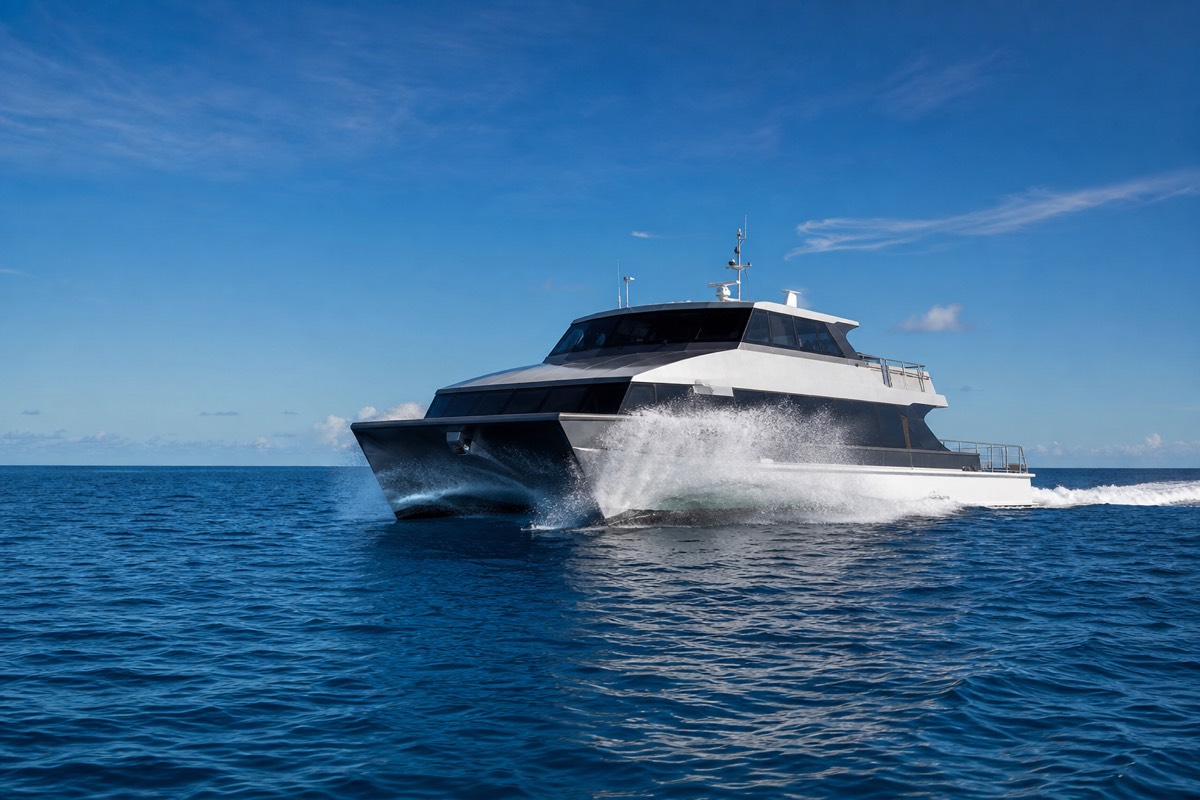
A reef trip should explain entry and exit, swimming boundaries, equipment and emergency procedures before anyone enters the water. In-water guiding and individual assistance differ between products; do not infer them from the presence of a deck briefing.
A typical day looks something like this. Crew check the marine forecast before departure, brief every guest on entry and exit procedure once anchored, station at least one guide in the water throughout each snorkel session, and run a head count before moving to the next site or heading back to shore. Weak and nervous swimmers are looked after too: flotation devices are standard, and guides will swim alongside anyone who asks. None of it is dramatic, which is the point. The goal is a day organized well enough that safety never becomes the story, and on the overwhelming majority of trips, it doesn't.
| Practice | Why It Matters |
|---|---|
| Pre-entry safety briefing | Sets expectations and points out hazards specific to that day's site |
| Guides stationed in the water | Immediate help available, keeps groups from drifting apart |
| Daily condition checks | Operators can shift sites or delay entry if visibility or currents are poor |
| Stinger suits during season | Standard equipment November through May |
| Vinegar and first-aid kits on board | Immediate response to marine stings without waiting for shore |
The briefing deserves more explanation than it usually gets, because guests who have never snorkeled often underestimate how much it covers. Entry and exit procedure, how to clear a mask, what to do if you get water in your snorkel, where the float lines sit, what the site's specific conditions are that day, where not to swim, and what the local wildlife is likely to do. A good briefing is five minutes that converts a nervous first-timer into someone who knows the rules of the water. Guests who skip it or tune out are the ones who end up drinking seawater and panicking forty meters from the boat, which is why crews take attendance seriously.
Flotation is the piece that quietly widens who can participate. A noodle, a buoyancy vest or a trained guide swimming on your shoulder turns a snorkel session from a swim test into a float, and operators are explicit that non-swimmers and weak swimmers can still see the reef. The catch is that crew need to know: flotation gets allocated and briefed at the start of a session, not improvised halfway through when someone realizes the water is deep and they are not. Every reef site is genuinely deep open water off the coral structure, and there is no standing on the bottom, which is exactly why the flotation system exists.
Head counts are the quiet backbone of the whole system. Before any vessel moves, before any site change, crew account for every guest, and a missing head triggers an immediate and well-rehearsed response rather than improvisation. It sounds bureaucratic until you remember that open water and drifting swimmers are the actual hazard profile of a snorkel session, and that the countermeasure is literally counting. This is the unglamorous machinery that makes the incident statistics on commercial tours so low.
The daily condition checks deserve a mention too, because they quietly absorb most of the actual risk of a reef day. Currents, wind against tide and poor visibility are the things that genuinely change plans, and an experienced crew would rather move to a sheltered site or shorten a session than push a marginal call. Weather, not wildlife, is what a skipper is actually managing on any given morning, and the freedom to move sites is the reason a large vessel with multiple snorkel locations can offer a consistent experience in inconsistent conditions. If budget is part of your planning alongside safety, what a reef trip really costs is broken out separately, as is the logistics of reaching the reef from Sydney or Brisbane.
Protecting The Reef From You: Coral And Reef-Safe Sunscreen
Environmental safety runs the other direction: personal safety for visitors, environmental safety for the reef. The reef doesn't bite. Visitors can hurt it, though, and the two ways they do are both easy to avoid.
The first is contact. Coral is a living animal, and a fin kick, a grabbed handhold or a stood-on bommie breaks tissue that took years to grow. Buoyancy control matters more than anything else a snorkeler does in the water: float, don't stand, and keep your distance from the structure rather than cruising over it at touching height. This is the same respectful-distance instruction guides give about sharks and turtles, applied to the coral itself. It protects the reef, and it also protects you, because coral cuts are slow to heal and coral scrapes have ended more reef holidays than any animal has.
The second is sunscreen. Chemical UV filters wash off in the water, and the standard advice in reef destinations is to use a reef-safe formulation and to reduce how much you need in the first place: rash shirt or stinger suit, hat, and zinc on the face rather than a full-body lotion layer. Operators increasingly stock or recommend suitable options, and a stinger suit doubles as full-body sun protection, which is one reason guests wear them even in low-risk months.
The scale point is worth ending on. The single biggest threat to the Great Barrier Reef is not snorkelers or their sunscreen; it is mass coral bleaching driven by marine heatwaves, a story with its own gravity and its own page. Individual behavior on tour matters, but it is a rounding error next to water temperature. Both things are true at once, and an honest answer holds them together: do your small part, wear the suit, don't touch the coral, and understand that the reef's survival is being decided by bigger forces than your fin kicks.