How Much Does A Great Barrier Reef Tour Really Cost? (2026)
We pulled the real listed prices for all nine tours on this site and lined them up side by side. Here's what actually drives the difference between an $89 trip and a $521 one.
Across the nine Great Barrier Reef tours tracked on this site, listed prices run from $89 for a shore-based Green Island trip to $521 for a two-day liveaboard, with most full-day outer reef tours landing between $155 and $250. The headline price is rarely the full story: several operators add an $8 to $10 fuel or marine park surcharge at check-in, and extras like scuba upgrades and photo packages sit on top of that.
Price tables and review counts in the original comparison are historical examples, not live quotes or safety evidence. Use the booking options below for current totals, inclusions and restrictions.
How Much Does A Great Barrier Reef Tour Cost?
Ask five reef operators for a price and you'll get five different numbers, and almost none of them will tell you what's actually included until you dig. So here is the honest version: the listed prices of the nine tours on this site, laid out side by side, with what separates the cheap end from the expensive end.
The short answer is that a Great Barrier Reef tour costs between $89 and $521 per adult depending on boat type, trip length and how far offshore you go. That's a wide enough spread that "how much does a reef tour cost" genuinely doesn't have one answer. An $89 Green Island day is not a discount version of a $456 small-group reef safari. It's a different product entirely, sold in the same waterway, and comparing them as if they were the same thing is where most budgeting mistakes start.
| Tour | Price | Duration | What drives the price |
|---|---|---|---|
| Green Island Snorkelling & Glass Bottom Boat | $89 | 9 hours | Shore-entry, no outer reef crossing |
| Ocean Safari from Cape Tribulation | $155 | 4½ hours | Half-day, shortest trip on the site |
| Frankland Islands All-Inclusive | $186 | 8 to 9 hours | Calm river crossing, kayaks and SUP included |
| From Cairns: Full-Day Adventure | $196 | 8 hours | Two reef sites, snorkel or scuba option |
| Outer Great Barrier Reef & Coral Cay | $202 | 8 to 12 hours | 20m catamaran, coral cay landing, optional dive |
| From Port Douglas: Outer GBR | $223 | 7.5 hours | Three reef sites, smaller operator |
| From Port Douglas: Quicksilver | $241 | 8 hours | Permanent pontoon, helmet dive option |
| ABC Reef Safaris | $456 | 7 hours | Capped at 24 guests, marine-biologist guide |
| 2-Day Snorkeling Experience Twin Share | $521 | 48 hours | Liveaboard cabin, two days of reef access |
The Price Tiers, In Plain Terms
Three distinct tiers emerge from that table. Under $100 sits exactly one tour, the Green Island trip, and it earns that price by never making the outer reef crossing. The island sits close to the Cairns mainland, the boat ride is short, and snorkelling happens from a beach rather than a mooring on the outer reef. That is the single biggest reason it's cheaper than everything else on the list.
The middle tier, roughly $155 to $250, is where nearly every full-day outer reef tour lives. This is the standard product most people picture when they imagine a reef day: a catamaran, two or three reef sites, snorkel gear, lunch, and a few hours of actual in-water time. Within this tier the differences are mostly about boat size and itinerary style rather than the quality of coral. The $223 Port Douglas outer reef tour visits three sites with a smaller operator, while the $241 Quicksilver trip runs to a permanent pontoon, and those are different experiences at similar prices.
Above $400 the product changes again. ABC Reef Safaris at $456 caps passenger numbers at 24 and runs with a marine-biologist guide, and the $521 two-day experience puts you on the OceanQuest catamaran with a twin-share cabin and a night snorkel. You are paying for intimacy and time, not for dramatically different water.
What The Price Buys Per Hour On The Water
Another way to read the table is price per hour of trip time, and it reshuffles the rankings in a way that surprises people. The $89 Green Island trip runs nine hours, which works out to under $10 per hour of the day. The $196 full-day adventure from Cairns works out to roughly $24.50 across its eight hours. The $202 coral cay tour is about $25 per hour at its eight-hour mark, and the $223 Port Douglas trip about $30 across 7.5 hours. The $155 Ocean Safari looks cheap until you divide by its 4½ hours: close to $39 per hour, the highest rate of any tour on the site bar one.
Time aboard is not the same as time snorkeling. Compare the full overnight quote with two day trips plus accommodation, using the same inclusions and party size.
Does Where You Depart From Change The Price?
Yes, and by a lot. Cairns has the widest price range on this site, from $89 to $521, because it's the departure point for both the cheapest shore-based trip and the most expensive liveaboard. Port Douglas departures run narrower, from $223 to $456, reflecting a cluster of established outer reef operators rather than budget shore options. Cape Tribulation has just one tour listed here, the $155 half-day Ocean Safari, which also happens to be the shortest trip of the nine, so it's worth comparing against a full Cairns day tour if you're weighing time against price. For a fuller comparison of the three main departure regions, our Cairns versus Port Douglas versus Whitsundays breakdown covers the trade-offs in detail.
The Per-Person And Per-Day Framing
Plenty of people arrive at this page asking how much a reef tour costs per person or per day, and the honest answer has to separate three numbers. The first is the per-adult fare, which on this site runs from $89 to $521 depending on the product, as the table shows. The second is the per-person total once surcharges and extras land, which adds $10 to $20 in the typical case and more if you dive. The third is the per-day figure, which only really matters for the liveaboard: $521 spread across two days is about $260 per day, which puts it near the top of the day-tour range but with a cabin and a night snorkel folded in. A family of four should multiply whichever number they care about by four before deciding anything, because that is the moment the $202 fare and the $241 fare become a $96 difference rather than a $39 one.
What Is Actually Included In The Price
The frustrating thing about reef tour listings is how rarely they state plainly what the headline number buys. So here it is. Every tour tracked on this site includes snorkel gear, a guide in the water, and either lunch or substantial food, and most include hotel or marina pickup. That baseline matters, because it means the difference between a $186 trip and a $241 trip is not food or equipment. It's the route, the boat and the reef sites.
The Standard Inclusions Across All Nine Tours
- Snorkel gear: mask, snorkel and fins on every tour, with no rental fee on top.
- A guide in the water: on every tour, someone leads or supervises snorkelling.
- Food: lunch or substantial food on every tour, including the half-day Ocean Safari.
- Transfers: hotel or marina pickup on most tours, with the specific arrangements shown on each listing.
That baseline holds all the way from the $89 Green Island trip to the $521 liveaboard, which is worth pausing on. The cheapest product on the site and the most expensive one both hand you a mask, put food in front of you, and put a guide in the water. What separates them is not the presence of those things but their context: beach-entry snorkelling off an island close to shore on one end, and two days of outer reef access with a night snorkel on the other. When a listing you're comparing elsewhere omits any of these four basics, that omission is the price gap, and it should prompt a harder look.
From there, inclusions start to diverge in ways that explain the price gaps. The $186 Frankland Islands trip is labelled all-inclusive for a reason: kayaks and stand-up paddleboards are part of the package, and the journey out runs through a calm river crossing rather than open ocean. If you're travelling with nervous swimmers, that combination of sheltered water and extra water toys justifies its position above the Green Island trip while still sitting below the $200 mark.
The $202 Outer Great Barrier Reef & Coral Cay tour runs on a 20-metre catamaran and includes a coral cay landing, plus an optional dive for those who want to try scuba. The $241 Quicksilver product from Port Douglas centres on a permanent pontoon, which means a stable platform in the water rather than snorkelling from the boat's stern, and a helmet dive option for people who can't swim confidently. These are genuinely different products, not the same day at different prices.
At the top of the ladder, the $521 two-day experience adds a twin-share cabin on the OceanQuest catamaran and a night snorkel, which is why it costs roughly two and a half times a standard day trip. Whether that's worth it depends entirely on whether overnight reef access matters to you, and we cover that trade-off in the liveaboard cost section below.
What "Optional" Actually Means For Your Wallet
A scuba upgrade is the classic example. The $196 full-day adventure from Cairns markets itself as "snorkel or scuba", but the dive is an optional add-on on top of the base fare. Nobody should book that tour expecting to dive for $196. The same applies to the helmet dive on the Quicksilver pontoon trip and the photo packages sold across most of the mid-tier boats. The base price gets you on the water, fed, equipped and guided. Everything beyond that is à la carte, and we quantify those extras in the next section.
The Extras Nobody Quotes You: Reef Tax, Gear, Stinger Suit, Photos
Several tour listings on this site charge an $8 to $10 AUD fuel or marine park surcharge separately at check-in, on top of the booked price. That surcharge is typically how operators pass through the reef's Environmental Management Charge and rising fuel costs without repricing every listing. General information on how the reef is managed and funded, including access charges, is published by the Great Barrier Reef Marine Park Authority. It's a small enough amount not to change your decision, but it's real money per person, and it arrives at the moment you least expect to pay more: standing at the check-in desk with your family in tow.
Realistic Extra Budgets Per Person
- Fuel or marine park surcharge: $8 to $10 AUD on the tours that charge it separately at check-in. Check the listing before booking, because it's usually disclosed in the fine print there.
- Photo package: sold on most mid-tier boats, priced per person, and not included in any of the nine base fares. Budgeting an extra $10 to $20 per person for surcharges plus a photo package is realistic if you want souvenir photos of the day.
- Scuba upgrade: optional on the $196 Cairns full-day trip, the $202 coral cay tour and the $241 Quicksilver pontoon. The dive costs more than the base fare's difference from a snorkel-only tour, so price it as its own line item.
- Helmet dive: an option on the Quicksilver trip, again priced separately from the $241 base fare.
None of this makes reef tours dishonest. It's just how the industry structures pricing, with the headline fare covering the boat and the surcharge covering the park. But a family of four booking the $202 coral cay tour should mentally reprice it at closer to $210 to $240 per person once the surcharge and any photos are counted, and the total day cost roughly doubles from there if two people want an introductory dive.
Run that arithmetic properly and the pattern generalises. A couple paying the $196 Cairns fare, both adding photo packages, with the marine park surcharge on top of each fare, is spending roughly $430 to $440 for the day before any dive upgrade. The same couple on the $89 Green Island trip, with no dive upgrades available to tempt them and the same surcharge pattern where it applies, spends closer to $200 for the day. That is not an argument for the cheaper trip, because the two products deliver different water. It is an argument for pricing the day you will actually take, with the add-ons you will actually buy, rather than the fare you saw in the search listing.
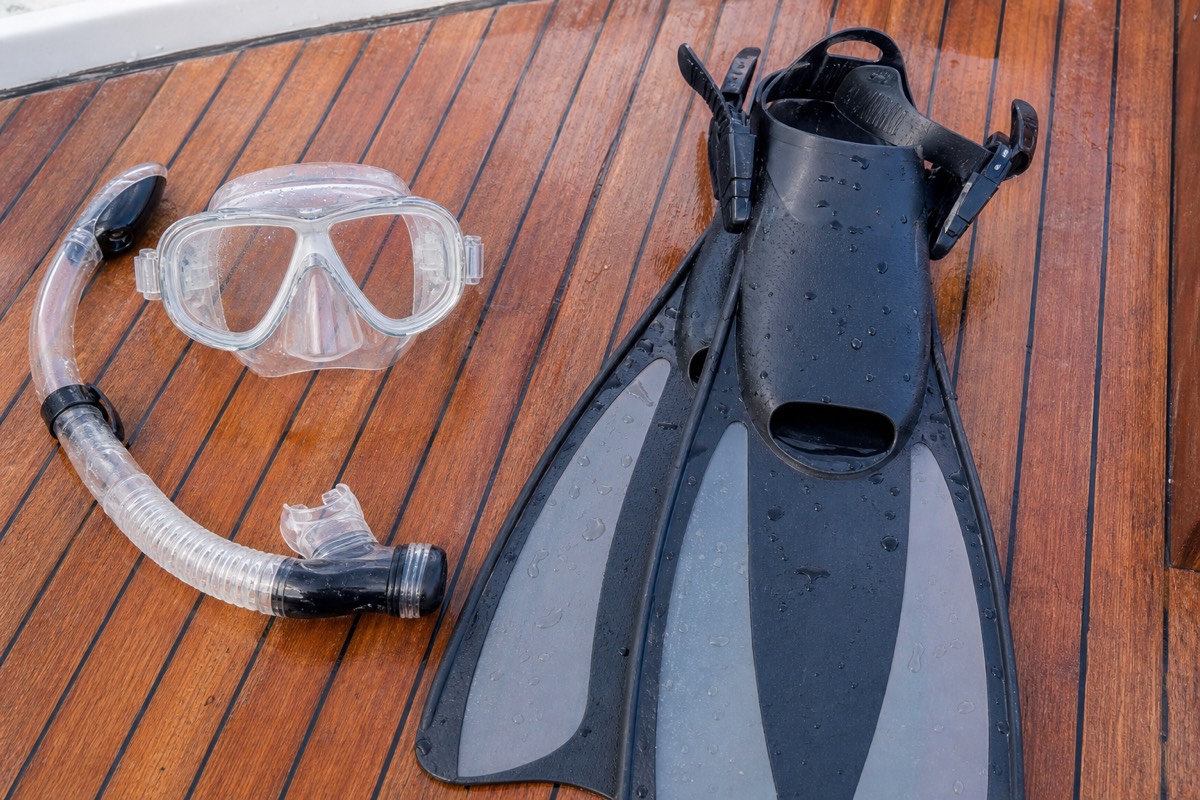
The one genuinely avoidable extra is paying for gear you don't need. Snorkel equipment is included on all nine tours, so any third party trying to sell you a mask and fins package before your trip is selling you something you already paid for. The genuinely optional extras, photos and dives, are worth budgeting consciously. The avoidable ones are not.
Stinger Suits
Marine stingers are seasonal in north Queensland, and stinger suit provision is one of those details that varies by operator and season rather than being uniform across the nine tours. When to travel, what stinger season means for your itinerary, and how it interacts with pricing windows deserves more than a paragraph, so we cover it properly in how to choose the right reef tour. The short version: suits are generally provided on trips that require them, but confirm on the specific listing, and don't treat it as a hidden cost until the listing says otherwise.
Day Trip Versus Liveaboard Cost
On this site the comparison is concrete: a standard full-day outer reef tour costs between $186 and $241, while the 2-Day Snorkeling Experience in a twin-share cabin costs $521. That is roughly two to two and a half times the day-trip price for twice the time on the water, plus a night snorkel that no day trip can offer.
What the liveaboard premium actually buys is reef time at the hours when day boats are gone. Corals feed at night, and a night snorkel puts you in the water during a window the $202 day-tripper never sees. The OceanQuest catamaran also means no commute back to shore at day's end, and a second full day of access without paying a second fare. If you add up two separate day tours at $202 each, you reach $404, and you still don't get the cabin or the night snorkel. Against that arithmetic, $521 for two days with accommodation included starts to look less like a luxury and more like a bulk purchase.
Spread across 48 hours, the $521 fare works out to roughly $11 per hour of the trip. The best value day tour on the site runs at roughly four times that rate. Of course, the liveaboard figure includes sleeping hours, so a fairer comparison is per day: about $260 a day against the $186 to $241 band, so the liveaboard sits at or just above the top of the day-tour range while throwing in the cabin and the night snorkel. That framing matters for anyone asking how much a Great Barrier Reef tour costs per day, because the answer changes once you stop treating all days as equal.
When the liveaboard is the wrong call: if you only want one good day of snorkelling, a $150 to $250 day tour delivers most of the same experience for less, and the extra night adds cost without adding much for a traveller who'd rather sleep on land. The overnight format also suits confident swimmers better than nervous ones; the night snorkel is the headline feature, and skipping it guts the value proposition. If you're weighing whether one day is enough for the reef at all, that question gets its own treatment in is the Great Barrier Reef worth it.
The Middle Option Nobody Mentions
Between a single day and a full liveaboard there's the Ocean Safari from Cape Tribulation, a $155 half-day trip. At 4½ hours it's the shortest tour on the site, and it makes sense for one specific situation: people based in the Daintree who want reef time without committing a full day or a full Cairns fare. It's not a budget substitute for a $200 outer reef day. It's a different geographic play, and the pricing reflects that.
Is A Cruise A Good Way To See The Great Barrier Reef?
Short answer: a cruise ship gets you a brief, curated taste of the reef, not the real thing. The big ships berth far offshore and tender passengers to a single platform reef experience, usually for a few hours, with no flexibility on sites or timing. The shore-based tours in this comparison reach the same water for less money and with more control over your day. If you're already committed to a cruise, taking the ship's reef excursion is better than skipping the reef entirely, but it shouldn't be the plan you build a Queensland trip around. For how to structure an independent reef itinerary instead, start with getting to the Great Barrier Reef from Sydney or Brisbane.
Why The Cheapest Listings Are Not What They Look Like
Search for cheap Great Barrier Reef tours from Airlie Beach, or any other departure point, and you'll meet the "$99 reef tour". This page tracks real, listed tours, and the honest reading of the price table is instructive here: among the nine verified tours, nothing between $99 and $155 exists. There is a $89 shore-based Green Island trip, a jump to $155, and then a solid run from $186 upward. That gap is not an oversight. It's the shape of the actual cost floor for putting a boat on the outer reef.
A reef tour has hard costs: fuel for a round trip that can run tens of kilometres offshore, crew wages, commercial marine insurance, marine park charges, and food for a boatload of passengers. A full-day outer reef crossing genuinely cannot be delivered profitably at $99, and listings that show that number are typically doing one of a few things. Some are quoting a child fare or a heavily discounted promotional rate with a tiny number of seats. Some are for a different product than the one pictured, a ferry transfer or island hop rather than a guided reef tour. And some absorb the loss on the fare and recover it through on-board upselling: photo packages, dive upgrades, food sold separately, and surcharges at check-in.
That last model deserves a moment of sympathy as well as suspicion. The $8 to $10 fuel and marine park surcharge described earlier is the transparent version of the same pressure. Operators face the reef's Environmental Management Charge and rising fuel costs, and repricing every listing each time costs shift is administratively painful, so some pass it through at check-in and some fold it into the fare. The problem with the true budget end isn't the existence of surcharges, it's when the surcharges are large enough to reverse the price ranking between two tours that looked different in the search results.
Notice what this means for the questions people actually type. A search for a Great Barrier Reef tour at $99, or for the cheapest reef tour from Airlie Beach, will always return results, because booking platforms rarely show an empty page. The results just won't be a full-day outer reef tour, whatever the headline implies. The floor for that product is visible in this site's own table: $155 for a half-day close to shore, $186 for the cheapest full day with an island destination, and $196 for the cheapest full day reaching two outer reef sites. Those are the real numbers. Everything advertised meaningfully below them is either shorter, closer to land, partially refunded through upsells, or not the product in the picture.
How To Spot A Price That's Too Good To Be True
- Check the duration. A real outer reef day runs seven hours or more. Anything listed at three hours or less at a bargain fare is either a half-day close-to-shore product or a transfer, not a reef tour.
- Check whether it says outer reef. "Reef" in a listing headline can mean a fringing reef off a mainland beach, which is a completely different experience from the outer ribbon reefs.
- Read for the surcharge line. The $8 to $10 pattern is normal and fine. An unexplained "levy" larger than that is a red flag on a cheap fare.
- Look at the booking platform. Prices and ratings in this article come from the operators' own GetYourGuide and Viator listings, which show live prices, cancellation windows and pickup details. An identical tour priced dramatically lower on an unfamiliar site is usually not identical.
None of this means you must spend $456. The $89 Green Island trip is legitimate, and the next section treats it that way. The point is narrower: below roughly $150 there is no honest outer reef tour, and every listing implying otherwise is redefining one of those words.
What Is The Cheapest Honest Way To Visit
The cheapest honest options, ranked by what they actually deliver:
- $89 Green Island Snorkelling & Glass Bottom Boat: the cheapest legitimate way to see the reef from Cairns. Nine hours on the island, snorkelling from the beach, a glass bottom boat ride, and no outer reef crossing. It's the right product for families, non-swimmers or very short visits, and it's a different product rather than a worse version of an outer reef trip.
- $155 Ocean Safari from Cape Tribulation: cheapest per hour of water time if you're already based in the Daintree. Half the price of a full day trip for a fraction of the day, which cuts both ways.
- $186 Frankland Islands All-Inclusive: the cheapest tour on this site that reaches a true island-and-reef destination with kayaks and SUP included, and the calm river crossing makes it the gentlest boat ride of the full-day options.
- $196 Full-Day Adventure from Cairns: the cheapest two-site outer reef day. If your definition of "the reef" requires the outer reef, this is your floor price.
The cheapest honest answer therefore depends on a question only you can answer: does your trip require the outer reef? If it does, $196 is the floor on this site, full stop, and no amount of searching will honestly move it lower. If it doesn't, if beach snorkelling off an island or a sheltered half-day is genuinely enough, then $89 to $155 buys a legitimate day and the savings are real rather than illusory. The mistake is not choosing the cheap option. It's choosing the cheap option while expecting the expensive one's outcome, which is how the worst reef reviews get written.
For people searching specifically for Whitsundays or Hamilton Island options: the Whitsundays region sits inside the Great Barrier Reef World Heritage Area and hosts its own reef tour market, and the pricing logic there mirrors what's described here, with boat size and trip length driving the fare more than the reef itself. The Whitsundays tours in this site's set follow the same rules about surcharges and inclusions, so the checklist above applies to them equally. Our regional comparison guide breaks down which departure point suits which trip.
Ways To Reduce The Cost That Don't Involve Riskier Bookings
Book the snorkel-only version of a tour that also sells scuba, rather than paying for a dive you might not complete. Travel outside the peak weeks, when operators are more likely to run promotional fares on the same boats. Pick the tour whose inclusions you'll actually use: the $186 Frankland Islands fare makes no sense for someone who never touches a kayak, and the $89 Green Island fare makes perfect sense for someone whose priority is a calm beach day with a bit of reef. And when comparing Whitsundays Great Barrier Reef tour options against Cairns ones, compare total day cost including transfers, not headline fare, because getting to the departure marina can quietly close the gap.
Which Of Our Nine Tours Fits Which Budget
Under $150. There's one option, and it's honest. The $89 Green Island Snorkelling & Glass Bottom Boat Experience is the only sub-$100 tour on this site, and it deserves to be judged as what it is: a family-friendly island day with beach snorkelling and a glass bottom boat, reachable without an outer reef crossing. For non-swimmers, small children, or anyone adding a reef taste to a packed Cairns itinerary, it's the right buy. For a traveller whose one shot at the reef is a single day, it's the wrong buy, and the rest of this list explains why the extra $100 is worth finding.
$150 to $250. This is the sweet spot, and it's crowded for a reason. The $155 Ocean Safari from Cape Tribulation is the half-day wildcard. The $186 Frankland Islands All-Inclusive trip is the value pick of the entire nine for most travellers: a calm river crossing, kayaks and SUP in the fare, and a full eight to nine hour day. The $196 full-day adventure from Cairns gives you two reef sites and the option to add scuba. The $202 Outer Great Barrier Reef & Coral Cay tour runs a 20-metre catamaran, a coral cay landing and an optional dive, and it rates 4.8 across 15,633 bookings on its listing, which makes it the most proven commodity in the middle tier. The $223 Port Douglas outer reef tour visits three sites with a smaller operator, and the $241 Quicksilver trip runs to a permanent pontoon with a helmet dive option. Every one of these is a legitimate full-day outer reef experience.
Over $450. The premium tier is about intimacy, not superior coral. ABC Reef Safaris at $456 caps the boat at 24 guests and runs with a marine-biologist guide, and it rates a perfect 5.0 on its listing. The Outer Great Barrier Reef & Coral Cay tour at $202, rated 4.8 across 15,633 bookings, delivers the same waterway for less than half the fare. Whether that gap is worth it depends on whether you value a bigger boat's coral cay landing or a smaller boat's guide ratio more. The premium is real; what it buys is attention, not reef quality. And the $521 two-day liveaboard sits in its own category, covered earlier in the day trip versus liveaboard comparison.
Does Paying More Get You A Meaningfully Better Trip?
Generally yes, but not in a straight line. The jump from $89 to roughly $200 buys you outer reef access and better coral, which is the single largest quality leap available in this market. The jump from $200 to $450-plus buys smaller groups and more guide attention, which matters enormously to some travellers and not at all to others. Price differences often reflect group size, boat type and trip length more than which reef the boat actually visits, so a higher fare is never a guarantee of a better site.
Put concretely: a traveller moving from the $89 Green Island day to the $196 full-day adventure spends about $107 more and gets the outer reef, two sites and the option to dive. A traveller moving from the $196 tour to the $456 ABC Reef Safaris spends $260 more and gets the same reef, roughly, with a quarter of the passengers and a marine-biologist guide instead. The first upgrade changes the water you see. The second changes the company you see it in. Budget accordingly, because those are different purchases and only the first one moves the scenery.
For matching your budget to the right operator in more detail, see choosing the right reef tour. And if cost is the main thing holding you back, our honest look at whether the reef is worth what it costs tackles that question directly. Note also that scuba diving on the Great Barrier Reef carries its own pricing structure beyond these snorkel-first fares; the snorkel versus dive comparison is covered separately in snorkelling versus scuba diving.
Reef access charges are set by the Great Barrier Reef Marine Park Authority, and general information on how the reef is managed and funded, including access charges, is published by that authority. All fares, durations, ratings and booking figures cited on this page come from the operators' own GetYourGuide and Viator listings, which show live prices, hotel pickup details and free-cancellation windows at the point of booking.