How Do You Get To The Great Barrier Reef From Sydney?
Sydney and the reef sit on the same coastline, on the same continent even, and people still ask this constantly. Fair question: Australia is enormous, and the two cities most associated with it, Sydney and the reef's gateway of Cairns, are nowhere near each other.
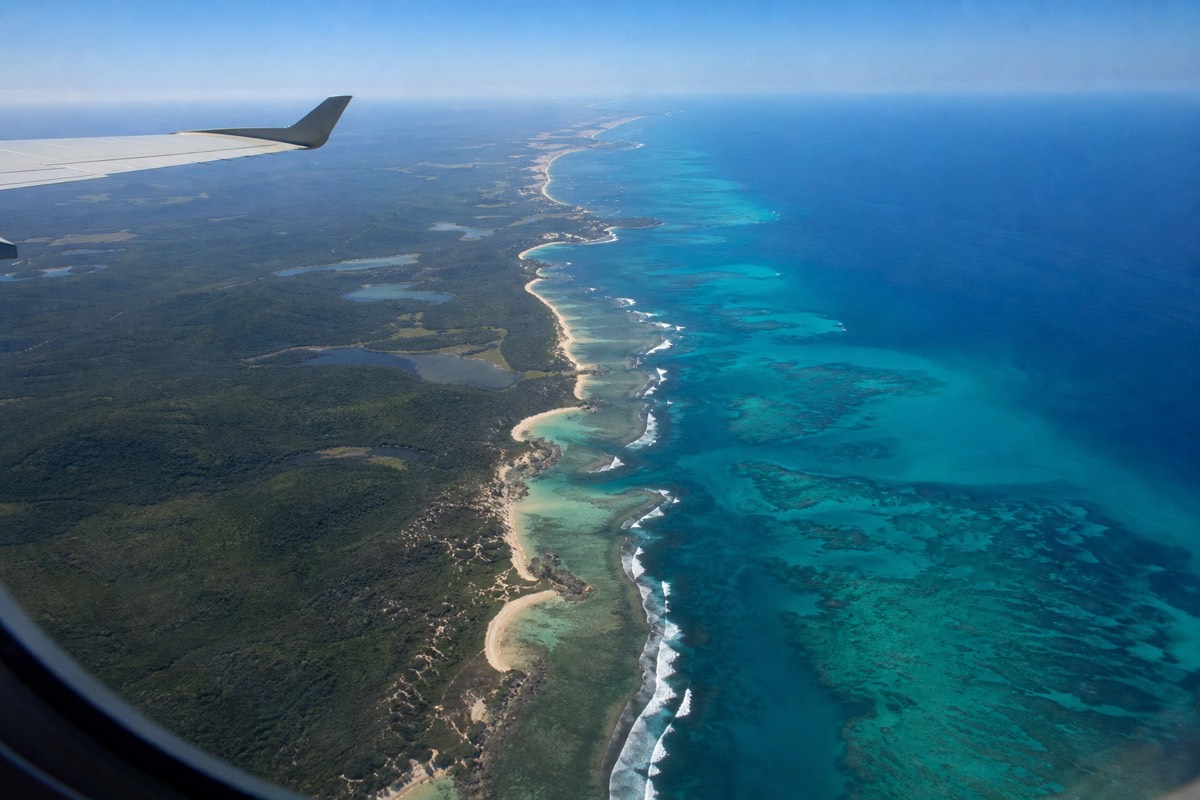
Fly. A direct flight from Sydney to Cairns takes about 3 to 3 hours 15 minutes, and from there a boat carries you out to the reef, typically 1.5 to 2 hours each way from Cairns or Port Douglas. There is no direct train between the two, and with 1,966 kilometers separating Sydney from Cairns in a straight line, driving or buses are not realistic options for most travelers.
Price tables and review counts in the original comparison are historical examples, not live quotes or safety evidence. Use the booking options below for current totals, inclusions and restrictions.
How Do You Get To The Great Barrier Reef From Sydney?
Sydney sits roughly 1,966 kilometers south of Cairns, the main gateway city for Great Barrier Reef tours, measured in a straight line. That is a fact worth sitting with for a moment, because it reframes everything else on this page. It is further than London to Rome. Two cities in the same country, on the same coast, separated by a distance that most European travelers would associate with an international flight and a border crossing.
That single number rules out a lot of the transport options people assume exist between two major cities in the same nation. There is no high-speed rail line hugging the Australian coast. There is no passenger ferry or cruise service running north from Sydney Harbor to the reef. And the road, while it exists and is fully sealed, turns a number that already looks daunting on a map into a multi-day commitment behind the wheel.
So the real answer to how you get from Sydney to the Great Barrier Reef is a two-step trip, and nearly everyone making it follows the same pattern. Step one: fly direct from Sydney to Cairns, a route served regularly with a confirmed flying time of roughly 3 to 3 hours 15 minutes. Step two: board a boat. Tours depart from Cairns or Port Douglas and typically run 1.5 to 2 hours each way to reach the outer reef sites where the best-known snorkeling and diving happens. There is no further train or rail leg required once you have flown in. The boat ride is the only remaining part of the trip, and it is the part you came for.
Put the whole journey side by side and the shape of it becomes obvious:
| Leg | Realistic Option | Time |
|---|---|---|
| Sydney to Cairns | Direct flight, the standard route | ~3h to 3h 15m |
| Sydney to North Queensland by rail | Technically possible, not practical | 40-plus hours, multi-leg |
| Cairns or Port Douglas to outer reef | Boat, on a guided tour | ~1.5 to 2 hours each way |
Notice what is missing from that table: any realistic overland alternative. A multi-leg rail journey is technically possible, using NSW TrainLink to Brisbane and then further connections north, but combined it runs 40-plus hours and is not a practical way to reach the reef. Travelers used to Europe's cross-country rail networks sometimes assume Australia has an equivalent between its major coastal cities. It does not, at least not on this route.
One more framing point before the detail. Most travelers treat Cairns as a dedicated leg of an Australia trip rather than a side day out of Sydney, and the 1,966-kilometer distance is exactly why. The reef is not a day excursion appended to a Sydney itinerary. It is a destination in its own right, reached by a flight comparable in length to a European short-haul hop, followed by a boat trip that is genuinely part of the experience rather than a commute to be endured. For a sense of the reef's own scale, and why operators run boats out this far from shore in the first place, the Great Barrier Reef Marine Park Authority publishes an overview of reef facts that is worth reading before you commit the flights.
By Plane: The Fastest Route
Flying is the answer for the overwhelming majority of travelers, and it is not a close call. Direct flights operate on the Sydney-to-Cairns route regularly, and the flight itself takes roughly 3 to 3 hours 15 minutes. That is the confirmed figure for the direct service, and it matters because it means the distance question, which looks intimidating on a map of Australia, collapses into something shorter than many domestic flights travelers think nothing of booking elsewhere in the world.
Do you need a connecting flight through another city? No, not if you fly direct. Some travelers route through Brisbane or another hub instead, usually because of fare pricing, airline loyalty, or seat availability on their dates, but a direct Sydney-to-Cairns flight avoids that extra leg entirely and keeps the trip to the confirmed 3-to-3h15m flying time. For anyone working backward from a tour departure time, that simplicity has real value. Every connection you add is another chance for a delay, another transfer between terminals, another hour tacked onto arrival.
What The Flight Actually Looks Like
The practical rhythm of the flying day is worth planning around rather than discovering. You leave Sydney, spend a little over three hours in the air, and land in tropical North Queensland. Because tour boats depart from Cairns Marlin Marina, and because some operators include hotel pickup as part of the package, nothing about arrival day needs to be complicated once the flight itself is booked. The two best-known tour options departing Cairns, the Full-Day Adventure Tour and the Outer Great Barrier Reef and Coral Cay Snorkel/Dive Tour, both leave straight from Cairns Marlin Marina. If your tour includes pickup, the bus or coach comes to you. If it does not, the marina is a short trip from the central accommodation district.
One point of timing discipline: book the flight to land the day before your reef tour, not the morning of. Reef boats depart in the morning, and a flight landing even at 9am leaves no window for check-in, transfers, or the reality that aircraft run late. A night in Cairns before the tour also gives you the evening to sort gear, swimwear, and sea-sickness precautions at a human pace. Operators brief passengers on departure times and check-in windows when booking, and the listings on GetYourGuide and Viator state them plainly.
Cairns Is Not The Only Airport
Cairns is the main gateway airport for reef tours, but it is not the only one. Some travelers fly instead into the Whitsundays region, where Hamilton Island serves as an air gateway to that section of the reef. The Whitsundays sit well south of the Cairns-to-Port Douglas stretch and suit a different style of trip, one built around island stays and sailing rather than day boats to the outer reef. Port Douglas, the other major departure point for reef tours, is not a separate flight destination at all: it is reached by road from Cairns, roughly an hour further north.
Which gateway fits your trip depends on what you want from the reef days, and that comparison deserves more than a paragraph. There is a full breakdown of Cairns versus Port Douglas versus the Whitsundays that weighs the trade-offs properly.
What The Flight Costs In Time And Money
On time, the flight is fixed and knowable: about 3 hours to 3 hours 15 minutes direct. On money, fares on the route move with season and demand, and no single figure quoted here would stay honest for long. The cost question that actually matters to most readers is the full end-to-end picture, flight plus tour plus the extras, and that is covered in detail in a separate breakdown of what a reef trip really costs.
The one caveat worth stating plainly: flight frequency and direct availability are good, but they are not infinite. On some days and in some seasons, the direct options thin out and the routing through Brisbane becomes the realistic path, which adds time. Checking the direct schedule for your specific dates is a five-minute job and it should be the first thing you do after deciding to make the trip.
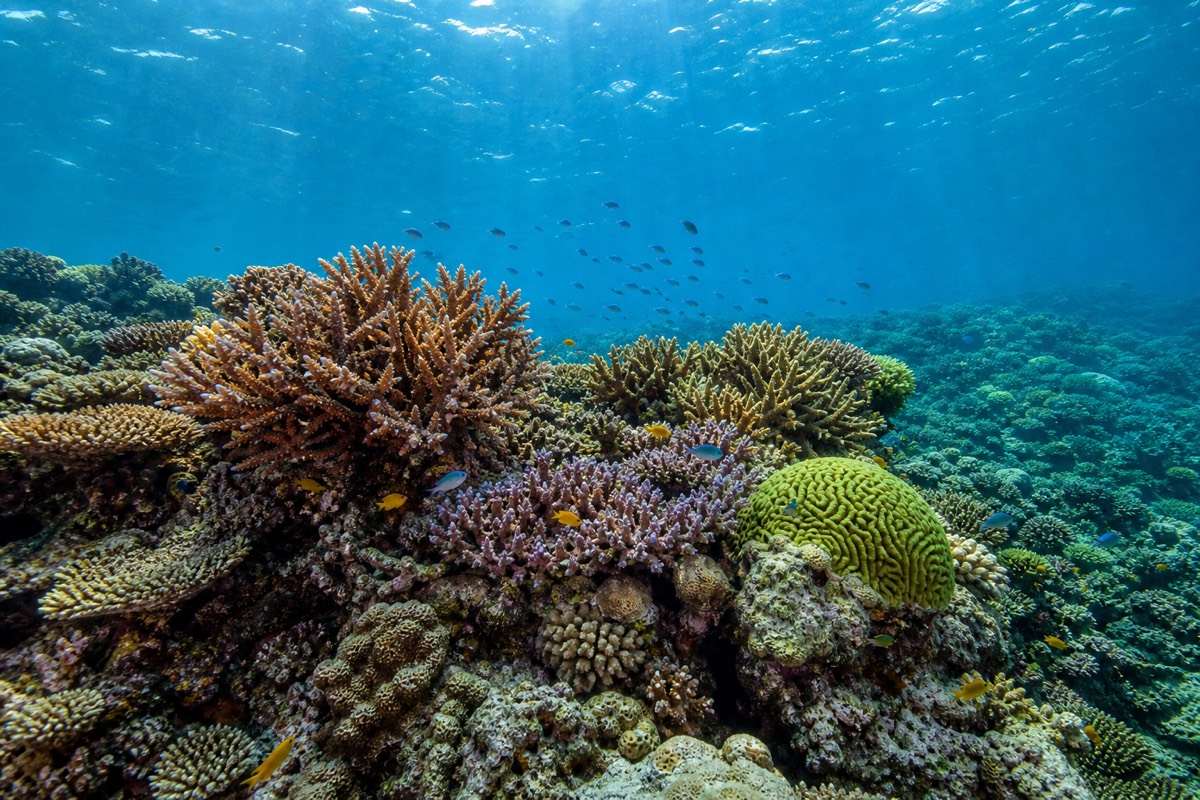
Is There A Train From Sydney To The Great Barrier Reef?
No. There is no direct through passenger train service between Sydney and Cairns or North Queensland. This surprises people, and the surprise itself is worth understanding, because it shapes how unrealistic the rail option actually is.
Australia's populated east coast looks, on a map, like exactly the kind of corridor that would carry a frequent intercity rail service. Sydney, Newcastle, Brisbane: the cities line up along the southeast like beads on a string. The rail network that exists does connect some of these points, and a multi-leg rail journey from Sydney toward North Queensland is technically possible. You would travel with NSW TrainLink from Sydney to Brisbane, then take further connections north from there. But combined, the journey runs 40-plus hours. That is not a scenic option or a slower alternative in the charming sense. It is nearly a full working week of travel compressed into train seats, spread across multiple legs, each of which must be booked and each of which can be delayed.
Travelers used to Europe's cross-country rail networks sometimes assume Australia has an equivalent between its major coastal cities. It does not, at least not on this route. The reasons are structural. Australia's population is a fraction of Europe's, spread thinly along an enormous coastline, and the passenger rail that does exist is built around a small number of long-distance corridors rather than a dense web of connections. Freight moves on these lines. People mostly do not, at least not at scale, and not at speed.
The Honest Verdict On Rail
Could you do it? In the literal sense, yes, with patience and careful booking. Would anyone planning a reef trip around a tour departure schedule want to? Almost never, and the 40-plus hour figure is the reason. A direct flight covers the same distance in about 3 hours to 3 hours 15 minutes. The train does not trade speed for scenery in a way that most travelers would consider fair, and every additional leg introduces a fresh chance for the whole chain to slip, which is a serious problem when a reef boat will not wait.
There is one narrow case where rail enters the conversation usefully, and it is not the Sydney-to-Cairns run. Travelers who want some overland texture in the trip sometimes take the train from Sydney to Brisbane as the first stage, then fly from Brisbane to Cairns. That hybrid keeps the rail journey to a manageable overnight segment and hands the genuinely long stretch to an aircraft. Even then, it is a choice made for the experience of it, not for efficiency. The Brisbane routing is covered properly in the section below.
For everyone else the summary is short. The answer to "Sydney to Great Barrier Reef by train" as a search is: the train exists as a technical possibility and fails as a practical plan. Fly, and save the train enthusiasm for corridors where it actually competes.
Is It Worth Driving To Cairns From Sydney?
Technically, yes, you can drive from Sydney to the Great Barrier Reef. The roads are sealed, the route is well-traveled, and countless Australians have done versions of it. Whether it is worth it depends entirely on how much of your trip the driving is meant to be.
Start with the number. Sydney sits roughly 1,966 kilometers south of Cairns in straight-line distance, and roads do not travel in straight lines. The actual driving distance is considerably longer than the straight-line figure, because the highway network bends inland and around terrain, and the practical consequence is a journey that consumes multiple full days of driving each way even with two drivers sharing the wheel. That is not an estimate of a specific drive time; it is the unavoidable arithmetic of covering well over 1,966 kilometers of real road. No version of this drive is a weekend proposition.
For most travelers planning a reef trip, the drive fails on one simple ground: schedule mismatch. Reef tours depart on fixed morning schedules from Cairns and Port Douglas. A traveler who has spent three or four days driving north to make a 7:30am boat departure has converted what could have been a single 3-hour flight into an expedition, and then faces the same expedition in reverse on the way home. Nearly everyone working around a tour schedule therefore flies. The driving option is standard practice for almost no one making this trip as a reef-focused journey.
When The Drive Makes Sense
There is a real version of this trip that works, and it is worth naming honestly rather than dismissing the car entirely. If you have weeks rather than days, and if the overland journey itself is the point rather than an obstacle, the Sydney-to-Cairns drive is one of the great road trips available in Australia. Coastal towns, national parks, and the slow change from temperate to tropical landscape reward the traveler who is not watching a boat departure time. Some travelers drive one direction and fly the other, which captures the overland experience without paying its full round-trip price in days.
But be clear-eyed about what you are choosing. The straight-line distance alone, about 1,966 kilometers, makes the drive a long undertaking, which is why flying is the practical choice for nearly everyone making this trip. If your question is "Sydney to Great Barrier Reef by car" because you are weighing the car against the plane for a one-week trip built around reef days, the car loses, and it is not close. If your question is because you are planning a weeks-long Australia loop and the reef is one stop among many, the car can earn its place.
A middle option deserves a mention: the bus. Long-distance coach services do connect Australian cities, but over this distance they inherit every disadvantage of driving, the multi-day duration, without the freedom of having your own vehicle at the far end. For the Sydney-to-Cairns corridor specifically, the bus occupies the worst position on the board. It is slower than flying and less flexible than driving. Skip it.
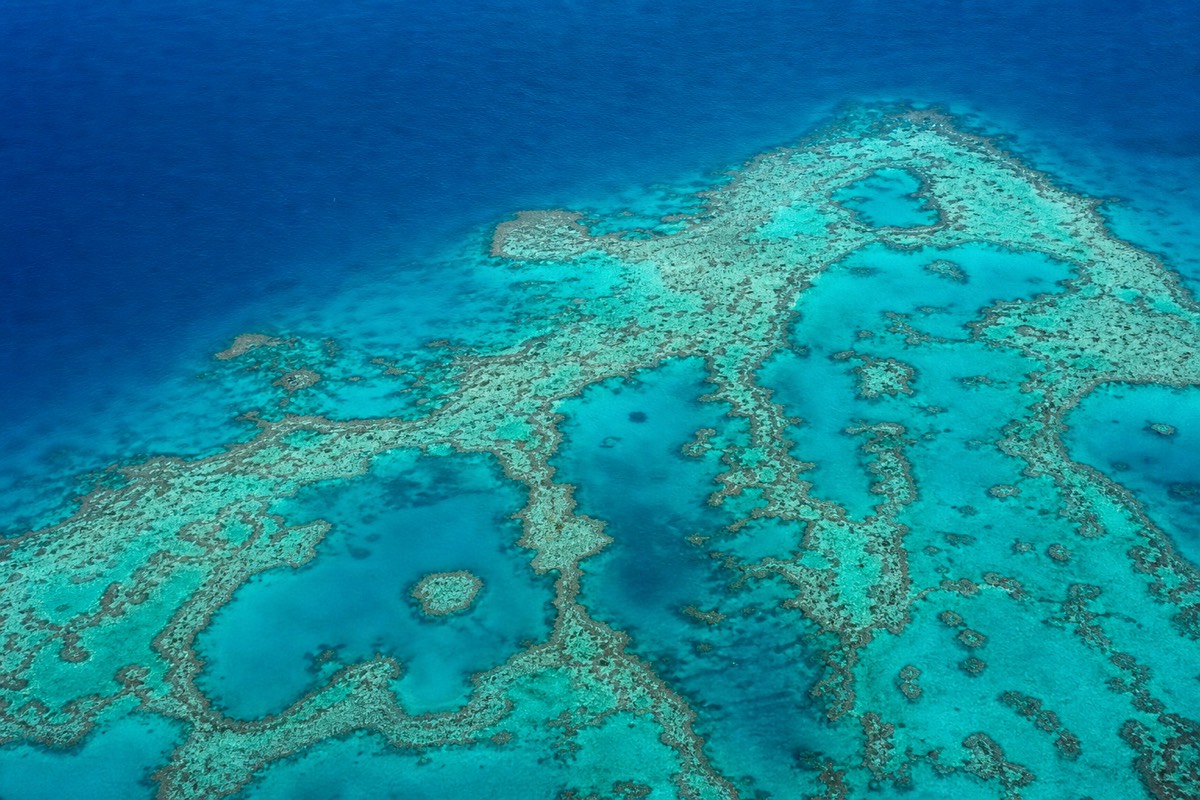
How Far Is The Great Barrier Reef From Sydney?
The headline figure: about 1,966 kilometers, measured in a straight line from Sydney to Cairns, the main gateway city for reef tours. That single number explains nearly everything else on this page: why the flight is standard, why the train is not, why a day trip does not work. It is further than London to Rome, which is the comparison that tends to land hardest with European readers, and it reframes the trip for anyone picturing the reef as a short hop up the coast.
How Far By Plane
By plane, the distance is the same 1,966 kilometers of straight-line measure, and the direct flight covers it in roughly 3 hours to 3 hours 15 minutes. Aircraft effectively travel the straight-line route, which is why the flying time maps so cleanly onto the distance figure. There is no hidden detour, no great circle surprise. Book direct and the distance question answers itself in a little over three hours.
How Far By Boat
The "how far by boat" question has two different answers depending on what is being asked. If the question is whether you can travel from Sydney to the reef by boat as transport, the answer is that no scheduled passenger service exists on that route, and the distance, over 1,966 kilometers of open coastline, explains why. If the question is the final leg of the trip, the boat ride from the mainland out to the reef itself, then the figure is small: tours from Cairns and Port Douglas typically run 1.5 to 2 hours each way to reach the outer reef sites. The long distance is the flight's job. The boat's job is the last stretch, and it is a comfortable one.
How Far By Road
By road the distance runs longer than the straight-line 1,966 kilometers, by a margin that matters for planning. Highways curve inland, route around terrain, and pass through towns rather than bypassing the entire coast. The practical consequence is covered in the driving section above: multiple full days of driving each way. The straight-line number is the honest minimum, and the road adds to it.
The Reef's Own Scale
One last distance worth holding in your head, because it explains the whole boat-based structure of reef tourism. The reef itself is enormous, stretching along the Queensland coast, and the best-known outer reef sites sit far enough from shore that a commercial tour is the practical way to reach them. This is why the journey has the shape it does: a flight to a gateway city, then a dedicated boat ride out to the sites. The Great Barrier Reef Marine Park Authority publishes detailed reef facts that give the full sense of the system's scale, and they are worth a read before you commit.
Day Trip To The Great Barrier Reef From Sydney: Is It Possible?
No, not in any honest sense of the phrase, and it is worth walking through the arithmetic because the question is genuinely common.
A same-day round trip breaks down like this. The flight from Sydney to Cairns takes roughly 3 to 3 hours 15 minutes each way, before you count airport arrival buffers on both ends. The boat ride from Cairns or Port Douglas to the outer reef runs 1.5 to 2 hours each way. A typical full-day reef tour occupies most of the daylight hours by design: the Full-Day Adventure Tour from Cairns, for example, leaves straight from Cairns Marlin Marina and reaches two reef sites in a single day. Add the two directions of flying, the four boat transit legs of a round trip out and back, check-in windows, airport-to-marina transfers, and the simple fact that reef boats depart in the morning while flights from Cairns leave on their own schedule, and the sums collapse. You cannot be on a morning boat departure and a morning flight on the same day.
The gap is not marginal. Even in the most generous version of the plan, with a first flight out of Sydney and a last flight back at night, the boat alone would need to depart and return within a window that does not exist. And this is before any allowance for the thing that actually goes wrong with such plans: a single delayed flight strands you, and a reef tour booked for that day is money lost.
Most travelers treat Cairns as a dedicated leg of an Australia trip rather than a side day out of Sydney, and the roughly 1,966-kilometer distance is exactly why. The realistic budget is at least a few days in the Cairns or Port Douglas area: enough time to fly in, do one or more reef days, and fly back out without rushing the water time that is the entire point of coming this far.
How many days is the right number, and whether one reef day is enough to justify the trip, are questions with real answers that deserve their own space. The full treatment lives in the guide to whether the Great Barrier Reef is worth it.
The one honest alternative to the multi-day plan, for travelers absolutely locked to Sydney, is a substitute rather than a shortcut. Sydney has its own coastal marine life and aquarium experiences, but none of it is the Great Barrier Reef, and no amount of framing makes it so. If the reef is the reason for the trip, build the days for it. If the trip cannot hold those days, the answer is to come back when it can, not to spend a desperate day proving the impossible.

Getting There From Brisbane Instead
Brisbane enters this journey in two distinct ways, and it is worth separating them because they get conflated constantly. Brisbane is a rail terminus, a flight hub, and a common connecting point. It is not, itself, a Great Barrier Reef gateway.
Why Brisbane Is Not The Destination
The reef's tour infrastructure, the boats, the operators, the daily departures to the outer reef, is concentrated in the north: Cairns, Port Douglas, and the Whitsundays. Brisbane sits well south of that country. You cannot board a reef day boat in Brisbane, and the question of how to get to the Great Barrier Reef from Brisbane has the same ultimate answer as the Sydney version: get yourself north, by air, to a real gateway.
Brisbane As A Rail Stop
The rail angle comes first. NSW TrainLink runs the Sydney-to-Brisbane leg, and this is the first stage of that technically-possible, 40-plus-hour multi-journey to North Queensland described in the train section above. Brisbane is where the Sydney service ends and the onward connections begin. For the hybrid traveler, the one who wants some train texture without committing to the full overland odyssey, the play is: rail from Sydney to Brisbane, then fly from Brisbane north to Cairns. The overnight rail segment is manageable, the flight north covers the genuinely long stretch, and you arrive with a story and a schedule both intact.
Brisbane As A Flight Hub
The second angle is air. Some travelers route from Sydney to Cairns through Brisbane, adding a connection where a direct flight exists. When does that make sense? Occasionally, for fare reasons: a connecting itinerary sometimes prices below the direct route, and in peak periods the direct options can thin out on specific dates. But the default logic runs the other way. A direct Sydney-to-Cairns flight takes roughly 3 hours to 3 hours 15 minutes. Any Brisbane routing adds a stop, a transfer, a second boarding, and a fresh opportunity for delay, all to cover the same distance. If the price gap is real, take it. If it is marginal, pay the difference for the direct seat.
Brisbane also serves travelers whose Australia trip is bigger than the reef. If your itinerary already includes Brisbane or the Gold Coast, flying north to Cairns from Brisbane rather than backtracking through Sydney is the obvious order of operations. The reef leg slots onto the end of a Queensland progression rather than sitting as a spoke off a Sydney base.
The Whitsundays Consideration
One Brisbane-adjacent note on gateways. Travelers heading for the Whitsundays section of the reef, including Hamilton Island, generally reach it via flights into that region, and Brisbane functions as the common origin for those services. If your reef plan is Whitsundays-shaped, island stays and sailing rather than outer-reef day boats out of Cairns, the routing logic differs from the Cairns plan in ways worth understanding before booking. The comparison of Cairns, Port Douglas and the Whitsundays sets out which gateway suits which kind of trip.
For the core question on this page, though, Brisbane is a waypoint, not an answer. From Sydney, fly direct to Cairns. From Brisbane, fly north. In both cases the gateway that matters is the one with the marina.
What To Book Once You Land
The moment you land in Cairns, the trip stops being about logistics and starts being about picking the right operator. That choice deserves real thought, because the reef days are the point of the whole journey, and the boats are not interchangeable.
The mechanics first. Tours depart directly from Cairns Marlin Marina, and some operators include hotel pickup as part of the package, which removes the last fragment of arrival-day friction. The Full-Day Adventure Tour from Cairns leaves straight from Cairns Marlin Marina and reaches two reef sites in a single day, a structure that suits travelers who want variety in one outing. The Outer Great Barrier Reef and Coral Cay Snorkel/Dive Tour, also departing Cairns, is the other heavyweight option on this route, a snorkel and dive combination aimed squarely at the outer reef. Both listings on GetYourGuide and Viator show live prices, pickup details, and free-cancellation windows, and reading them before booking is the single highest-value ten minutes of the planning process.
Can You Skip The Tour Entirely?
In a few limited spots, yes, and honesty requires saying so. Shore-accessible snorkeling exists at places like Green Island's fringing reef, where the reef comes close enough to land that you can swim to it rather than boat out for hours. A private boat can also reach certain areas using designated moorings. But most of the outer reef, and the best-known sites, realistically require a commercial tour because of how far they sit from shore. Mainland beaches around Cairns do not offer direct reef access on their own. The distinction matters: the fringing reef at Green Island and the outer reef sites the big boats reach are different experiences, and travelers who substitute one for the other sometimes come away underwhelmed by a trip that never actually went to the thing they flew 1,966 kilometers for.
Choosing Between The Options
Three decisions shape which booking fits: which gateway city, what kind of water time, and when in the year you are going. The gateway question, Cairns versus Port Douglas versus the Whitsundays, is handled in the full gateway comparison. The water-time question, snorkeling versus scuba, gets a proper treatment in the snorkel versus dive guide, since the answer changes what kind of boat and operator you need. The timing question, which month, which season, and what the stinger calendar means for your trip, is covered in the guide to choosing the right reef tour, because the right time of year and the right tour style are genuinely linked decisions.
Money, briefly, because it cannot be avoided: tour prices vary widely by boat, inclusions, and style, and the honest end-to-end picture of what a reef trip costs, tour plus the extras that creep in, is laid out in the real cost breakdown. Book through the operators' own GetYourGuide and Viator listings, where live prices and free-cancellation windows are shown, and check the cancellation terms against your flight schedule. A delayed flight and a non-refundable reef day are a bad combination, and it is one a few minutes of reading prevents.
The last thing worth knowing before you book is the state of what you are going to see. The reef's health, the bleaching record, and what that means for the experience of visiting are real questions with complicated answers, and they are addressed without gloss in the guide to whether the reef is dying. Read it, then book with clear eyes. The trip from Sydney is short by air, the boats run daily, and the water at the end of it is unlike anything else within three hours of that city.