Is The Great Barrier Reef Dying? The Honest Answer For Snorkelers (2026)
Search the reef's name and the word "dying" comes up before almost anything else. The honest answer sits between the doom headlines and the tourism brochures, and it changes what you should actually book.
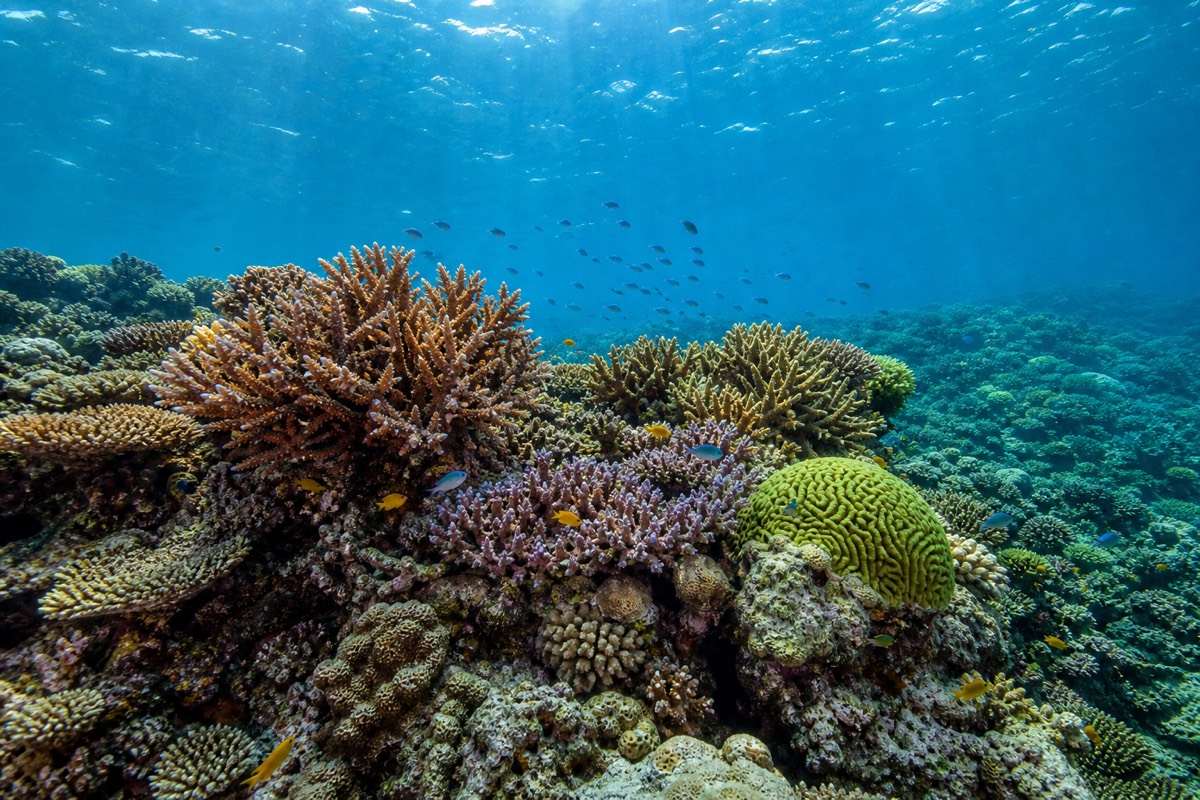
No, the Great Barrier Reef is not dead and not past saving, but it is under severe and documented pressure. The Australian Institute of Marine Science reports eight mass bleaching events since 1998, most recently in 2024 and 2025, alongside genuine recovery in the northern and central sections, where hard coral cover now sits close to or above its 40-year average and where most Cairns and Port Douglas tours actually operate.
Price tables and review counts in the original comparison are historical examples, not live quotes or safety evidence. Use the booking options below for current totals, inclusions and restrictions.
Is The Great Barrier Reef Dying?
Every few months a new photo of bleached coral goes viral, and every few months someone cancels a Cairns trip over it. Meanwhile operators keep running boats out to the same reef systems they have worked for decades, because most of what they are looking at underwater is still alive, still colorful, and still recovering in places from the last hit it took. Both things are true at once, and pretending otherwise, in either direction, does readers a disservice.
The honest answer to "is the Great Barrier Reef dying" is that it is neither dying nor fine. It has taken repeated, climate-driven bleaching hits since 1998, most recently in 2024 and 2025, and it is showing real signs of partial recovery in the northern and central sections where most snorkeling tours from Cairns and Port Douglas actually operate. Hard coral cover there is close to or above its 40-year average, according to AIMS's 2025/26 condition monitoring.
No credible reef science supports "the reef is dying" as a factual claim. The scientific record shows a reef under real, sustained pressure from repeated climate-driven disturbances, with coral cover that has stabilized or slightly increased in recent surveys and no sign of systemic, reef-wide collapse. That is a more complicated answer than either extreme people repeat online.
It is not "the reef is basically fine," which glosses over eight mass bleaching events since 1998 and real regional damage. It is also not "the reef is dead or dying," which the actual coral cover numbers directly contradict. The most accurate framing is of a vast, varied system: a marine park of 344,400 km², part of a World Heritage Area of roughly 348,000 km² stretching about 2,300 km across roughly 3,000 individual reefs, some 600 continental islands and around 300 coral cays, listed by UNESCO since 1981. A system at that scale will always contain both badly hit sections and thriving ones at the same time, which is exactly what the monitoring shows. Some sections took heavy, repeated damage. Others, including much of what boats from Cairns and Port Douglas visit day to day, are holding steady or improving.
Painting the whole system with one brush, in either direction, is not supported by the reef's own monitoring data. The rest of this guide walks through what that data actually says, what happened to the reef in the most recent bleaching events, what the biggest killer of the reef really is, and what all of it means if you are deciding whether to book a trip.
Current Health Status: What The Monitoring Actually Says
The most reliable window into reef health is the long-term monitoring program run by the Australian Institute of Marine Science, the body whose 2025/26 condition report underpins every figure in this section. Its summary position is blunt: the reef is not completely dead, but it is in severe danger and has suffered massive declines at the reef's worst moments, particularly during the back-to-back bleaching of 2016 and 2017. Both halves of that assessment hold up under the numbers. The danger is real, documented, and driven overwhelmingly by heat. The "not completely dead" half is what the coral cover figures show, year after year.
It is worth being precise about what hard coral cover actually measures, because the term gets used loosely in coverage of the reef. Cover is the percentage of the seafloor occupied by live hard coral along surveyed transects. It is the single best proxy reef scientists have for overall reef condition, because hard coral is the structural engine of the whole ecosystem: it builds the reef, shelters the fish, and its presence or absence cascades through everything else. When AIMS reports a regional average of 35.1%, that is not a claim about every reef in the region. It is a statistically sound summary of surveyed sites, and the spread underneath it matters, which is addressed below.
The 2026 Coral Cover Numbers, Region By Region
In AIMS's 2025/26 condition monitoring, hard coral cover rose in two of the reef's three regions. The Northern Great Barrier Reef went from 30.0% to 35.1% hard coral cover. The Central region went from 28.6% to 31.6%. The Southern region held roughly stable around 26.4%. Only 16% of surveyed reefs showed an actual decline in that period.
Regional coral-cover averages do not establish the condition at a tour’s individual stops. Cairns and Port Douglas generally visit the northern reef region; operators choose sites for conditions and access, and no itinerary guarantees healthy coral everywhere.
| Region (2026 survey) | Prior survey cover | 2026 cover | Trend |
|---|---|---|---|
| Northern GBR (most Cairns tours) | 30.0% | 35.1% | Up, near or above 40-year average |
| Central GBR (most Port Douglas tours) | 28.6% | 31.6% | Up, near or above 40-year average |
| Southern GBR | ~26.4% | ~26.4% | Stable |
One caveat belongs next to those figures, because honest reporting demands it. Regional averages conceal a wide spread. The 16% of surveyed reefs that declined did not decline evenly, and within the recovering regions there are individual sites in poor condition, heavily bleached in 2024 and still working back. The regional number is the best single summary available, but it is a summary, not a promise about any specific reef you might anchor at.
The scale of the gains also deserves context. A rise from 30.0% to 35.1% in a single survey period is not a marginal statistical wobble. It represents a substantial amount of new living coral across thousands of square kilometres of reef, accumulated in the years following a severe bleaching event. The reef did not merely stop declining; in its two most-visited regions, it grew. Any account of the reef's condition that omits that fact, and plenty do, is telling half the story.
How Bad The 2025 Bleaching Actually Was
The 2025 bleaching event was moderate by the reef's own recent standards. Of 281 surveyed reefs, 27% showed high or very high bleaching prevalence, meaning roughly 31% to 90% of coral affected. But 6% of reefs showed no bleaching signs at all, and the remaining 67% showed only low to moderate prevalence. That is a much better picture than 2024, when 73% of surveyed reefs had prevalent bleaching above 10%.
| 2025 bleaching prevalence category | Share of 281 surveyed reefs |
|---|---|
| No signs of bleaching | 6% |
| High or very high prevalence (31 to 90% of coral affected) | 27% |
| Remainder: low to moderate prevalence | 67% |
Two consecutive bleaching years, 2024 then 2025, is a genuine warning sign, because it narrows the recovery window corals need between hits. But "moderate" and "consecutive" are not the same as reef-wide collapse, and the 2025 numbers were measurably less severe than the year before. The pattern that worries reef scientists is not any single bleaching event, it is the shrinking gap between events. A reef that bleaches once a decade has years to regrow tissue and rebuild structure. A reef that bleaches in consecutive years has to start recovering before the last round of damage has fully resolved. That is the real risk highlighted in the monitoring record: not that recovery is impossible, but that repeated hits could eventually outpace it.
On the water, bleaching severity is patchy, not uniform. A boat running to Norman Reef might find sites that came through 2025 largely untouched sitting a short ride from a site that bleached hard. That patchiness is exactly why operators scout conditions site by site rather than writing off entire regions, and why the AIMS condition summary reports in ranges and percentages rather than a single verdict. A one-off satellite photo or a two-year-old viral post cannot capture any of this, and crews running the same sites multiple times a week are working from better, more current information than either.
This is also where the viral-photo problem does its damage. A photograph of a badly bleached site from 2024 remains accurate as a photograph of that site at that moment, and it can circulate for years as though it described the reef now, everywhere. The same is true of a stunning healthy-reef photo used to argue there is no problem at all. Both images are real. Neither is representative on its own, which is precisely why AIMS surveys hundreds of reefs and reports percentages rather than impressions.
Why The Scale Of The System Resists Any Single Verdict
Part of why the "is the reef dying today" question generates so much confusion is that the reef is not one reef. The marine park covers 344,400 km², the wider World Heritage Area roughly 348,000 km², and the system spans about 2,300 km along the Queensland coast, taking in roughly 3,000 individual reefs and around 300 coral cays. When one section bleaches severely, another section the same season can be entirely unaffected, and both realities get photographed, posted, and argued about as though they described the same place. The AIMS regional reporting structure exists precisely because a single figure for "the reef" would mislead in both directions.
There is a practical consequence of that patchiness for anyone booking a trip. Because the reef spans three distinct monitoring regions and thousands of individual sites, the difference between a great day in the water and a disappointing one often comes down to which reef a boat chose that morning, not to the reef's global health trend. That is why the operator matters as much as the destination, and why the same week can produce wildly different reviews from passengers on different vessels.
Is The Great Barrier Reef Recovering In 2026?
Partly, yes, and the word "partly" is doing real work in that sentence. The 2026 monitoring data shows hard coral cover increasing in the Northern GBR (30.0% to 35.1%) and the Central GBR (28.6% to 31.6%), with the Southern GBR stable around 26.4%. Only 16% of surveyed reefs declined. This is the strongest regional recovery measured since the back-to-back 2016 and 2017 events, and it follows directly on the heels of the 2024 bleaching, which makes it more striking, not less.
Yes, Coral Can Genuinely Recover Between Bleaching Events
Corals can and do recover between bleaching events when heat stress is limited and conditions are favourable, which is exactly what the 2026 cover increases in the Northern and Central GBR demonstrate following the 2024 event. Recovery is not uniform, and honest reporting requires saying why: it depends on the region, how recently and how hard that specific reef was hit before, and which coral species dominate a given site. Fast-growing branching corals, the staghorns and table corals that give the reef its postcard structure, tend to rebound quicker than slow-growing massive corals. The catch is that those fast growers are also more heat-sensitive, which means the reefs that bounce back fastest are also the ones most vulnerable to the next event.
The mechanism matters for understanding why recovery is real rather than statistical noise. Bleaching does not kill coral outright. It is a stress response: corals expel the symbiotic algae living in their tissues when the water around them stays too warm, and a bleached coral is starving and colorless but often still alive. If the heat passes within a short window, the coral can reabsorb algae and return to normal function within months. That is why a reef region can record heavy bleaching prevalence one summer and measurably higher coral cover two years later. The corals were stressed, many survived, and the ones that did kept growing.
The algae in question, often called zooxanthellae, are the reason reef corals can exist at all. Through photosynthesis they supply the coral with most of its energy, which is how coral reefs thrive in nutrient-poor tropical water in the first place. Losing them under heat stress is not a cosmetic event, it is the coral losing its primary food source. That is also why bleaching outcomes vary so much between individual colonies: a few hours of additional heat, or a slightly stronger current delivering cooler water, can decide whether a given coral on a given bommie survives the same event that kills its neighbour. Reef-wide statistics are aggregations of thousands of those individual outcomes, which is another reason the patchiness described earlier shows up at every scale, from whole regions down to opposite sides of a single coral head.
This is why "is the Great Barrier Reef dying or growing" is a question the data refuses to answer with one word. Both processes are running at the same time, on different reefs, sometimes on the same reef. Growth in the north and center, stability in the south, decline on 16% of surveyed reefs, all within one interconnected system.
What The Recovery Does Not Mean
A single good survey does not undo the trend line. The reef has now absorbed eight mass bleaching events since 1998, in 1998, 2002, 2016, 2017, 2020, 2022, 2024 and 2025, and the intervals between events are getting shorter. The 2022 event was the first mass bleaching ever recorded during a La Niña year, when waters are normally cooler, which was itself an unwelcome first for the monitoring record. Recovery capacity and recovery reality are different things. The reef has shown it can rebuild. Whether it gets enough calm years ahead to keep doing so is the open question, and no one monitoring the reef claims to know the answer with certainty.
There is also a structural dimension the cover percentage does not capture. Coral cover measures how much of the seafloor is occupied by live hard coral, which is the best single proxy for reef health that exists, but it says nothing about the age and size structure of the coral colonies. A reef regrown by young, fast-colonising corals is not the same ecosystem as the mature reef it replaced, even at identical cover percentages. Giant, decades-old massive corals that died in 2016 or 2017 will not be replaced on anything like a human timescale. The 2026 numbers are genuinely good news, and they are good news about a system that is also, in places, simpler and younger than it was thirty years ago. Both descriptions are accurate.
It helps to put the recovery in human terms. The corals driving the 2026 gains in branching species can put on visible new growth within a single season, and a site that was rubble in 2017 can host dense schools of fish again within five to seven years, because fish return quickly once structure returns. What does not return quickly is the centuries-old massive coral that formed the site's original framework. A snorkeler swimming over a recovered site in 2026 sees a living, functioning reef. What they cannot see, and what the cover percentage cannot say, is how much of the original ancient architecture is gone underneath it.
What can be said is that the sections most visitors actually swim in are, as of the most recent survey, the ones in best condition. That is not a marketing line, it is what the regional numbers show.
Major Threats: Bleaching, Climate, Crown-Of-Thorns And Storms
Why is the Great Barrier Reef in danger? The threat list is well documented and not seriously disputed. The dominant one is heat. The others compound it.
Mass Bleaching Driven By Rising Sea Temperature
Rising sea temperature, driven by climate change, triggers mass coral bleaching when corals expel the algae that feed and color them. Every mass bleaching event on record traces back to unusually warm water sitting over the reef for weeks at a stretch. Heat stress is cumulative and reef-wide, which is why the same event can hit the far north hard one year and barely touch the south, depending on where the warm water pools.
| Mass bleaching event | Year | Notes |
|---|---|---|
| 1st recorded mass event | 1998 | Coincided with a global marine heatwave |
| 2nd | 2002 | Second major reef-wide event |
| 3rd | 2016 | Severe, concentrated in the far north |
| 4th | 2017 | Back-to-back with 2016, unprecedented at the time |
| 5th | 2020 | Widespread across all three reef regions |
| 6th | 2022 | First mass bleaching recorded in a La Niña (cooler) year |
| 7th | 2024 | Major event, the reef's most recent severe hit |
| 8th | 2025 | Consecutive with 2024, moderate compared to 2024 |
Read down that table and the pattern is hard to miss. The first four events were spaced four years, then over a decade, then one year apart. The last four arrived in 2020, 2022, 2024 and 2025. Nobody planning around the reef's future treats the intervals as settled, but the direction of travel in the record is not in dispute, and it is the single strongest argument against complacency.
The 2016 and 2017 pairing deserves particular attention, because it set the template for every worried headline since. Two consecutive severe events meant corals that survived 2016 with depleted energy reserves faced 2017 before they had rebuilt them, and the far north, hit hardest in 2016, lost a large share of its coral in that pairing. When the 2024 and 2025 events arrived back-to-back, the comparison everyone in reef science reached for was 2016 and 2017. The difference, on the 2026 evidence, is that the second event in the newer pairing was moderate rather than severe, and the following survey showed cover rising rather than cratering. Two similar-looking patterns produced very different outcomes, which is a reminder that "back-to-back bleaching" is a warning sign, not a death sentence, and the details of each event decide which it becomes.
Crown-Of-Thorns Starfish
The crown-of-thorns starfish preys directly on coral, and its periodic population outbreaks have chewed through large tracts of reef over the decades. A single adult can eat its way across substantial areas of coral tissue, and an outbreak population numbering in the millions, as past outbreaks have, can strip entire reef systems faster than the coral can regrow. Outbreak control, mostly by trained divers culling starfish on high-value sites, is a standing part of reef management. It is a serious, recurring local pressure, but it moves in waves and can be managed at the site level in a way that heat cannot. A culled outbreak stays culled. A cooler ocean does not stay cooler because a park authority asked it to.
Cyclones And Storm Damage
Tropical cyclones physically smash coral structures, and a single severe storm can undo years of growth on the reefs in its path. A centuries-old massive coral colony that survived four bleaching events can be broken apart by one night of cyclone swell, and the rubble field left behind takes years to reconsolidate before new coral can even settle on it. Like starfish outbreaks, storm damage is severe but localised. A reef flattened by a cyclone may sit within a day's sail of reefs the same storm never touched.
Water Quality And Runoff
Sediment, fertiliser and pesticide runoff from coastal agriculture and development degrade inshore water quality, which stresses the inshore reefs closest to the mainland and slows coral recruitment. Cloudy, nutrient-rich water favors algae over coral, and juvenile corals struggle to establish on a reef smothered by it. It is the reason many of the better tours run to outer reef sites rather than the closest fringing reefs, and the reason water quality improvement is a standing plank of the Reef 2050 Long-Term Sustainability Plan.
These local pressures matter, and the Australian Institute of Marine Science's own bleaching record points to heat stress as the dominant, recurring cause behind every mass event since monitoring began. That is a different problem than a single oil spill or a single storm, and it is why the fix has to happen at the level of global emissions, not just local reef management, a point the Reef 2050 plan states plainly as its top priority action.
One more thing links the four threats together. They do not take turns. A reef recovering from cyclone rubble is more exposed to starfish predation because its new coral growth is concentrated and vulnerable. A reef degraded by runoff bleaches sooner because stressed corals have less energy reserve to survive a heat event. The threats multiply rather than add, and the multiplication is why reef management treats resilience, the general capacity of the system to absorb hits, as the thing being defended.
What Is The Biggest Killer Of The Great Barrier Reef?
The single biggest killer of the Great Barrier Reef is rising sea temperature driven by climate change. That is not an opinion distributed evenly across threats to seem balanced, it is what the event record itself shows. Mass coral bleaching happens when water stays unusually warm long enough that corals expel the symbiotic algae, the zooxanthellae, that both feed them and give them their color. A bleached coral is starving, not dead. If the heat passes quickly, the coral can take its algae back and recover. If it does not, the coral dies and the reef structure begins to erode.
Every one of the eight mass bleaching events on the reef's record, 1998, 2002, 2016, 2017, 2020, 2022, 2024 and 2025, traces back to heat stress rather than to any local cause. The 2016 and 2017 back-to-back events were, at the time, unprecedented, and the far north took the worst of the 2016 hit. The 2024 event was the most recent severe one, with 73% of surveyed reefs showing prevalent bleaching above 10%. The 2025 event that followed was moderate by comparison: 27% of 281 surveyed reefs showed high or very high prevalence, 6% showed no bleaching signs at all, and the remainder showed low to moderate levels.
How much of the Great Barrier Reef is bleached in any given year is therefore not a single figure anyone can quote out of context. In 2024, the answer was that most surveyed reefs showed bleaching above a visible threshold. In 2025, the answer was that roughly a quarter of surveyed reefs were badly affected, two-thirds were lightly to moderately affected, and a small fraction showed nothing at all. The honest general statement is that some bleaching now occurs somewhere on the reef most summers, but mass events, the kind that show up in the record as numbered milestones, remain the ones that reshape regional cover, and those are the ones tracked in the table above.
What makes heat the biggest killer rather than merely the most frequent one is the way it interacts with everything else. A reef weakened by poor water quality bleaches at a lower temperature threshold. A reef recovering from a cyclone has less live coral to lose, but also less structural complexity left to shelter juvenile fish and coral larvae. Heat stress arrives on a reef that has already been softened by the local threats, and it is the only threat on the list that no local measure can prevent. When scientists describe the reef's future as hinging on emissions trajectories, this asymmetry is what they are describing.
Heat also stacks the deck against recovery in a way the local threats do not. Crown-of-thorns starfish outbreaks can be culled. Cyclone-damaged reefs can be left to regrow. Poor water quality can be improved by changing land practices. But a bleaching event driven by ocean temperature cannot be fixed at the scale of one marine park, no matter how well it is managed, because the ocean does not respect park boundaries. The Reef 2050 Long-Term Sustainability Plan, the joint Australian and Queensland government strategy running through 2050, lists limiting climate change impacts as its top priority action precisely because of this. It is the threat that determines how much room all the other recovery work has.
It is worth being specific about what "biggest killer" means, because it can be measured in two ways. Measured by the area of coral lost, the 2016 and 2017 heat events did more cumulative damage than any starfish outbreak or cyclone season in the monitoring era, gutting the far northern reefs that had previously been among the system's most pristine. Measured by frequency, heat is the only threat that has produced eight reef-scale crises in under three decades. Both measures point to the same culprit. Other threats kill coral in patches and waves. Heat is the one that shows up in every decade, hits every region eventually, and sets the ceiling on how much the others can be compensated for.
A caveat worth sitting with: the biggest killer being global does not mean the local work is pointless. Water quality programs, starfish control and marine park zoning measurably improve the reef's resilience, its ability to survive and recover from heat events. Resilience is the margin the reef survives on between one bleaching event and the next. The 2026 recovery in the northern and central regions did not happen in a vacuum; it happened in a park with active management, zoning that protects breeding stocks, and culling programs that keep secondary pressures down. The honest framing is that climate change sets the trajectory and local management decides how much of the reef is still standing to meet it.
Will The Great Barrier Reef Still Exist In 2050?
Almost certainly yes, but existing and thriving are not the same thing, and no honest answer can promise the second.
The reef has already survived eight mass bleaching events, two of them back-to-back twice, and its coral cover is currently recovering in two of its three regions. A system that has taken that many hits and is still posting cover increases is not on track to vanish by mid-century. What scientists who monitor the reef actually warn about is not disappearance but transformation: a reef that continues to exist but with less coral diversity, more heat-tolerant species replacing the sensitive branching corals, and a shrinking share of sites that still look like the postcard version.
The uncertainty is genuinely large because it depends on a variable no reef scientist controls: how quickly global emissions fall. A future with sustained, severe bleaching at short intervals produces a much diminished reef by 2050. A future with longer recovery windows between events produces something still recognisably magnificent. The reef's own recent history contains evidence for both outcomes. The 2016 and 2017 events showed how fast sections of a reef can degrade. The 2026 survey, showing Northern GBR cover at 35.1%, above its 40-year average, showed how fast it can come back when given a break.
The back-to-back 2024 and 2025 events are the newest data point in that argument, and they cut both ways. The concern is obvious: two consecutive heat years is exactly the compressed interval that prevents recovery. The counterpoint is that the second event was moderate, with 27% of surveyed reefs at high or very high prevalence against 73% showing prevalent bleaching the year before, and that the reef's cover numbers did not crater the way the worst-case reading of consecutive events would predict. The reef took the punch and, on the 2026 evidence, stayed on its feet.
For a traveler, the practical takeaway is that the reef you would visit in the coming years, especially from Cairns and Port Douglas into the recovering northern and central sections, is the version still worth seeing. Anyone waiting for a better time may be waiting in the wrong direction: the most defensible reading of the data is that the reef is at its most vulnerable and its most recoverable now, and the years ahead depend on choices no individual booking can influence.
Can The Great Barrier Reef Still Be Saved?
Saved is the wrong verb, which is why "is the Great Barrier Reef beyond saving" is a harder question than it sounds. A 2,300 km system of roughly 3,000 reefs is not saved the way a single endangered species is brought back from the brink. It is managed, stressed, hit, and rebuilt, continuously, and the question that matters is whether the rebuilding can keep pace with the damage.
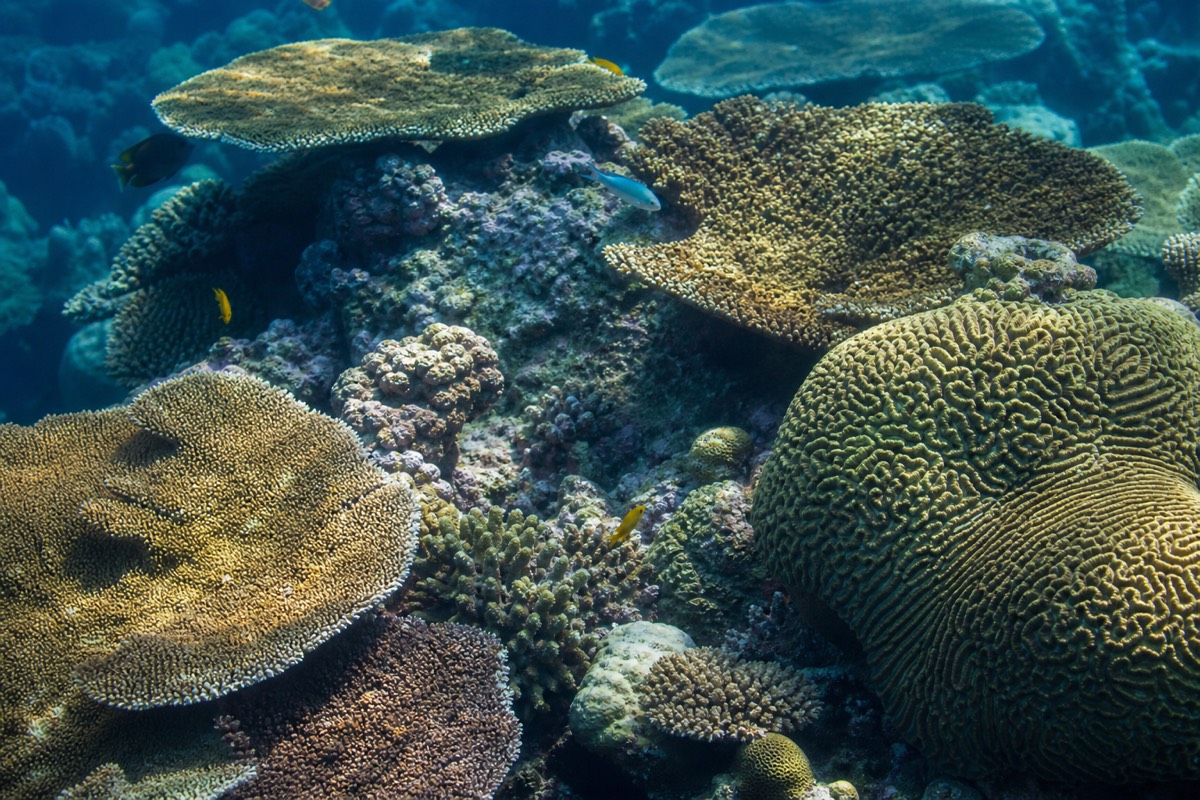
The evidence says it currently can. The 2026 monitoring shows hard coral cover rising in the Northern GBR from 30.0% to 35.1% and in the Central GBR from 28.6% to 31.6%, with only 16% of surveyed reefs in decline, and that follows the 2024 bleaching event. Recovery capacity is demonstrably real. The reef is not beyond saving in any sense the data supports.
The institutional response points the same direction. Both the reef's marine park authority and Australia's federal environment department describe a reef under real pressure but still worth protecting and investing in, not one written off as lost. The Reef 2050 Long-Term Sustainability Plan sets priority actions on limiting climate change impacts, cutting land- and water-based pollution, managing international pressures, and direct protection and restoration work. It is reviewed every five years, which is itself a signal: the plan assumes ongoing, adaptive management rather than a fixed endpoint. A government body does not build a 24-year sustainability roadmap around a system it considers already lost. It builds one around a system worth defending, which lines up with what the coral cover numbers themselves show: real damage, real recovery capacity, and a genuine reason to keep managing it carefully rather than write it off.
That framing matters for travel planning more than it might seem. A reef managed as worth defending is a reef with active starfish control, water quality programs, zoning, and monitoring, all of which feed into the conditions a snorkeler actually swims in. What happens if the Great Barrier Reef dies, in the scenario people fear, is severe and well documented elsewhere: the loss of one of the world's richest ecosystems, of the fisheries and tourism economies it supports, and of a natural structure visible from space. The reason that scenario remains hypothetical rather than scheduled is the recovery the monitoring keeps catching in the act.
The most useful way to hold the question is as a range with honest bounds. At the pessimistic end, no amount of local management offsets a future of annual severe bleaching, and the reef steadily simplifies into something smaller and poorer. At the optimistic end, emissions fall, intervals between events lengthen, and the reef does what it just proved it can do in the north and center: grow back. The 2026 data does not let anyone pick between those ends with confidence. It does rule out the one thing people keep claiming, which is that the outcome is already decided and the decision went badly.
Can You Still Swim In The Great Barrier Reef?
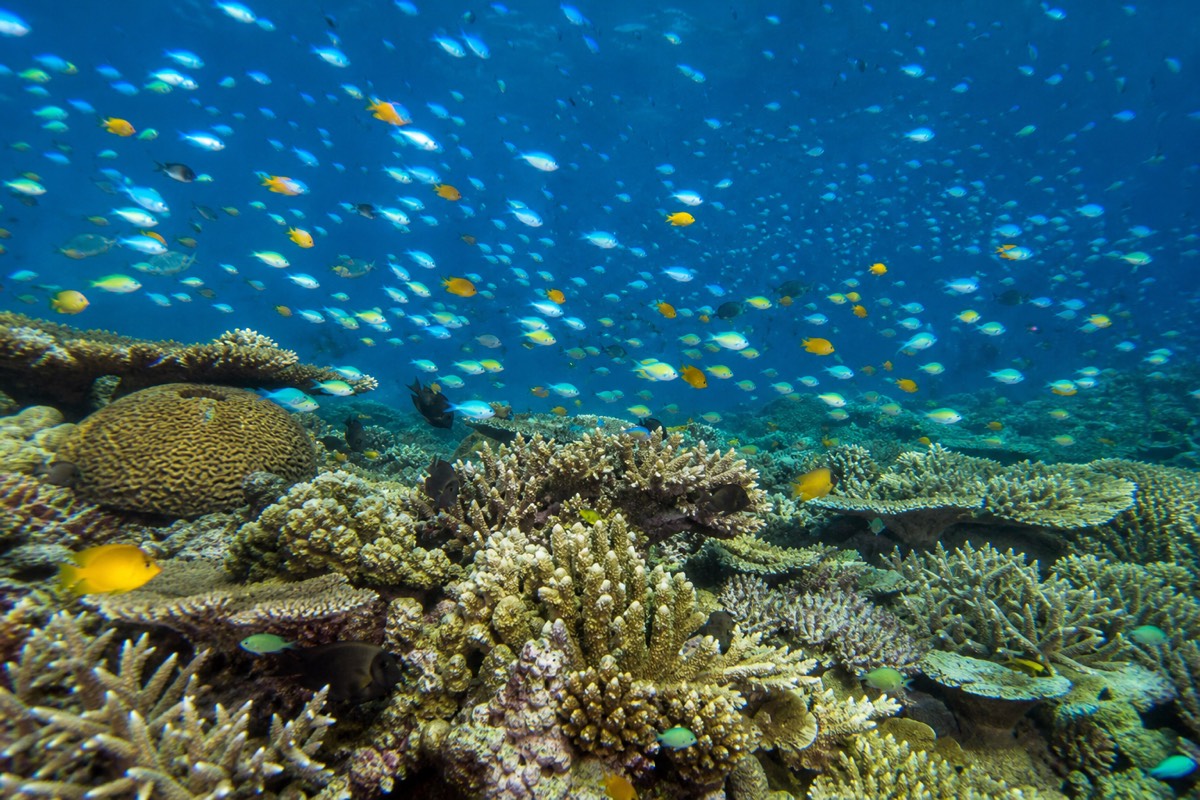
Yes, and not in a consolation-prize way. Current hard coral cover on the Great Barrier Reef is higher than on many reef systems worldwide, and the Northern and Central regions where most Cairns and Port Douglas tours operate are the same regions showing the strongest 2026 recovery, so a well-chosen tour still delivers a genuinely healthy reef experience.
The reef most visitors picture, big table and staghorn corals, clownfish tucked into anemones, turtles cruising past, is still very much findable, especially on trips that reach outer reef sites rather than the closest inshore fringing reef. Outer reef sites also sit further from the runoff and water-quality pressures that hit inshore reefs hardest, which is one reason the stronger tours go to the trouble of the longer crossing.
Choosing which trip is its own question. Timing matters, and the tradeoffs around stinger season, water clarity and weather windows are covered in the guide to choosing the right reef tour. If your other hesitation is safety rather than reef health, the reef safety guide covers sharks, stingers and crocodiles in the same real-data approach as this page.
What This Means For Booking A Trip Now
Yes, it is still worth booking a snorkeling trip right now, and the reasoning is not motivational, it is numerical. The two regions posting the biggest 2026 recovery gains are the two regions the main tour hubs depart into. You are, by choosing the standard Cairns or Port Douglas itinerary, choosing the healthiest monitored sections of the reef.
Not all tours deliver that equally, though. Three stand out for different reasons, and every figure below comes from the operator's own GetYourGuide listing.
The Outer Great Barrier Reef & Coral Cay Snorkel/Dive Tour ($202, rated 4.8 across 15,633 bookings, the most-booked tour on this site) runs a 20m catamaran out to Wonder Wall and Upolu Coral Cay in the Northern GBR, the region posting the biggest 2026 recovery gains, with drift snorkeling past turtles and stingrays. For the clearest read on current reef health underwater, the ABC Reef Safaris Great Barrier Reef Adventure ($456, rated 5.0 across 15,089 bookings) is guided by a marine biologist in small groups capped at 24 people with a six-guests-per-guide ratio, out of Port Douglas to Rudder Reef and the outer reef. That guide-to-guest ratio means genuine, current, on-site commentary about what is thriving and what is not, not a recycled script. For a straightforward first outer-reef trip from Cairns, the From Cairns: Great Barrier Reef Full-Day Adventure Tour ($196, rated 4.6 across 13,498 bookings) covers two reef sites among Norman, Saxon and Hastings Reefs with both snorkel and scuba options.
| Tour | Price | Rating (listings) | Why it holds up now |
|---|---|---|---|
| Outer GBR & Coral Cay Snorkel/Dive Tour | $202 | 4.8, 15,633 bookings | Outer reef in the region with the biggest 2026 recovery gain |
| ABC Reef Safaris GBR Adventure | $456 | 5.0, 15,089 bookings | Marine-biologist guided, small group, current on-site reef commentary |
| From Cairns: GBR Full-Day Adventure Tour | $196 | 4.6, 13,498 bookings | Two outer reef sites, snorkel or scuba, solid all-round first trip |
There is a fuller argument for why seeing the reef now, while it is recovering, is the right call rather than a guilty one. Tourism on the reef is one of the economic engines that keeps its protection politically and practically funded, and operators running trips into recovering regions are the same crews whose reporting from the water supplements the science. A booking does not rescue the reef, but the visitor economy it supports is part of the reason the reef has a management regime this well resourced. Going is not a harm to be offset. Going badly might be, which is why the tour choice matters.
Whichever tour you are weighing, the guide to choosing the right reef tour walks through the tradeoffs between outer reef distance, group size and price. Choosing between Cairns, Port Douglas and the Whitsundays as a base matters too, since each launches into different sections of the reef. For budgeting, the breakdown of what a reef tour really costs covers price ranges by trip type, and if you are torn between swimming on the surface or going under, the snorkeling versus scuba diving comparison settles it. Travelers working out how long to stay, or whether one day is enough, will find that answered in is the Great Barrier Reef worth it, and anyone planning the route from Sydney or Brisbane can follow how to get to the Great Barrier Reef from Sydney.
What To Tell Someone Who Says "Why Bother, It's Dying"
Tell them the data does not support "dying." Hard coral cover in the Northern and Central Great Barrier Reef is near or above its 40-year average as of 2026, and only 16% of surveyed reefs showed decline in the most recent survey. The reef has absorbed eight mass bleaching events since 1998 and it is still there, still recovering in the sections most tours actually visit, and still recognized as the world's largest coral reef system, UNESCO-listed since 1981, a status reflecting its scale and significance rather than a system in terminal decline.
That is not a reason for complacency. Repeated bleaching, especially back-to-back years like 2024 and 2025, is a real and documented threat, and the biggest single driver is climate change. But "under threat and fighting back" is a different, truer story than "dying," and it is the one that should actually shape a snorkeling decision.