Is Finding Nemo'S Reef Real?
Marlin and Dory's reef isn't a spot you can find on a chart, but the water around them is drawn from somewhere specific, and that part actually checks out.
Yes. The reef in Finding Nemo is based on the real Great Barrier Reef off the coast of Queensland, Australia, and Pixar's own official materials name it directly. The clownfish species and the anemone partnership shown in the film are real reef biology too. What is fictional is the plot, the characters, and the specific reef locations depicted on screen.
Price tables and review counts in the original comparison are historical examples, not live quotes or safety evidence. Use the booking options below for current totals, inclusions and restrictions.
Is Finding Nemo'S Reef Real?
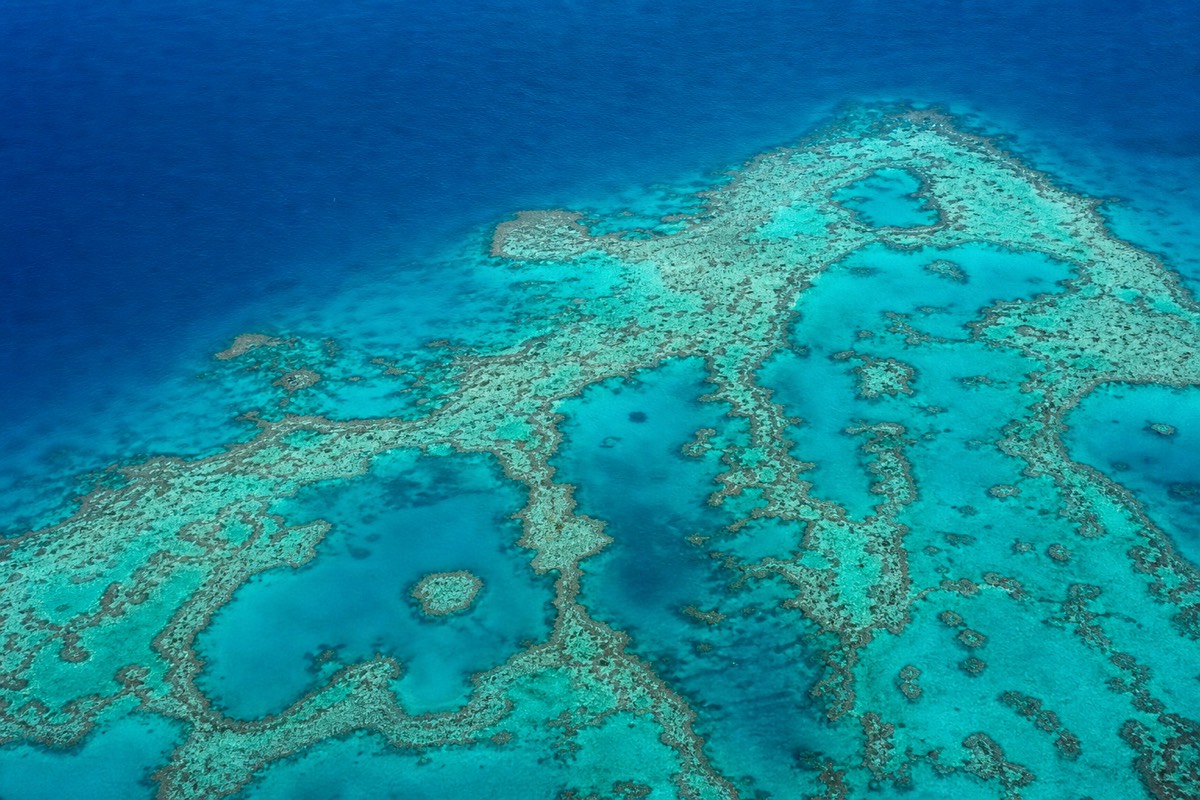
It is, and the confirmation comes from the studio itself. Disney and Pixar's own materials describe Finding Nemo's setting as "the colorful and warm tropical waters of the Great Barrier Reef." That phrasing matters because it removes the usual ambiguity around animated films. Pixar did not invent a generic tropical backdrop and let audiences assume it was somewhere real. The studio named the actual reef system off the coast of Queensland, the largest coral reef ecosystem on the planet, and built its story inside it.
So when someone asks whether the Finding Nemo reef is real in real life, the honest answer splits into two parts. The setting is real and confirmed. The specific places shown within it, the anemone where Marlin and Nemo live, the drop-off Marlin warns Nemo about, the route to Sydney Harbour, are animated inventions. No real dive site carries the name of Nemo's home, and no operator will take you to the exact patch of reef from the opening scenes. That patch does not exist.
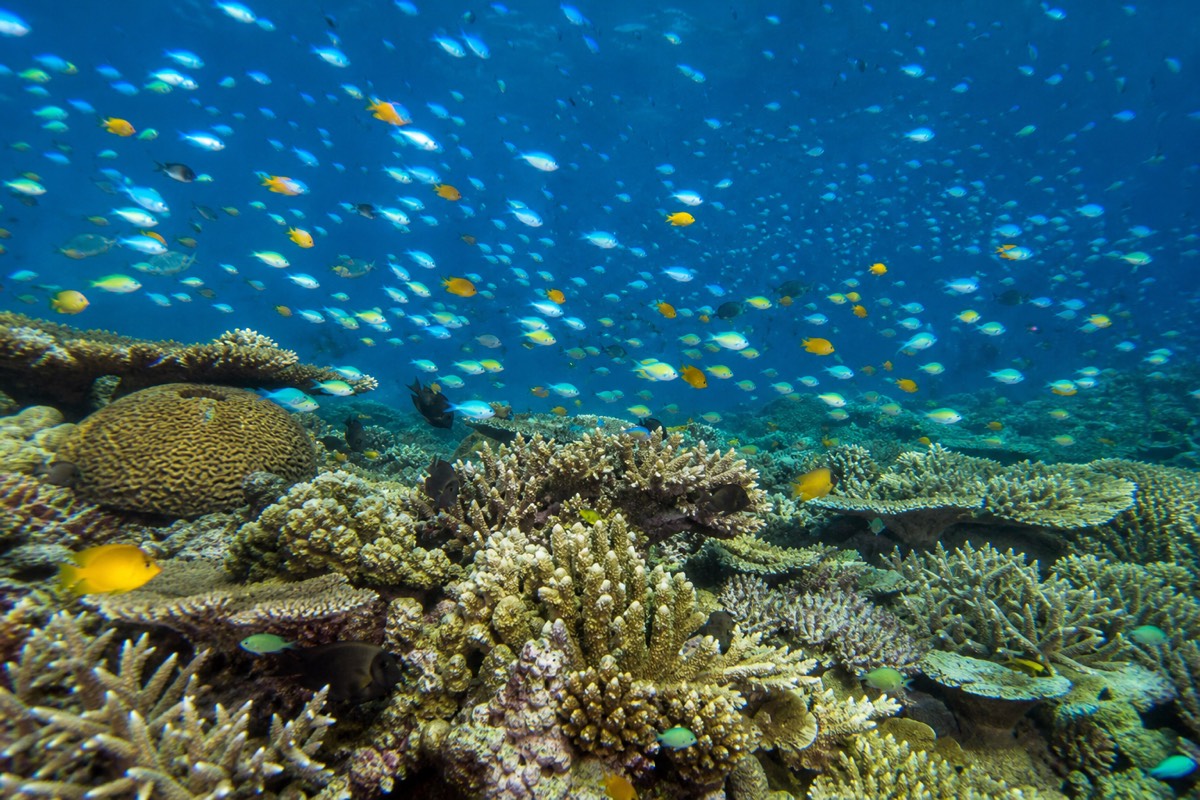
What does exist is everything underneath the animation. The ocellaris clownfish, the species Nemo and Marlin are drawn from, is a genuine Great Barrier Reef resident. The sea anemone partnership at the centre of the story is real symbiosis, not movie magic. And the broader backdrop of the film, hard coral gardens, darting damselfish, turtles, rays, pelagic fish passing in the blue, is drawn from a real ecosystem you can visit, snorkel over, and recognise scene by scene.
| Element | Real Or Fictional |
|---|---|
| The setting, the Great Barrier Reef | Real, confirmed by Pixar's own official materials |
| Ocellaris clownfish species | Real reef species |
| Clownfish-anemone relationship | Real behaviour, depicted accurately |
| Marlin, Nemo, and Dory as characters | Fictional, animated |
| Exact reef locations and plot events | Fictional |
Why does it matter that Pixar named a real reef rather than an invented one? Because it means the film's backdrop is not artistic invention dressed up as biology. It is a real ecosystem the studio chose to represent with species-level accuracy, which is a meaningfully different claim than "a pretty animated ocean," and it is part of why the film works as an introduction to reef life for so many people who go on to plan an actual trip.
Plenty of people arrive at this question sideways. Some watched the film as children and are now planning a trip to Queensland. Others have seen forum threads on reddit asking whether the reef in the film is a real place in the ocean, and the answers there can drift toward trivia about a completely unrelated location called Point Nemo, which this page deals with separately below. The short version for trip planners is this: the reef is real, it is the Great Barrier Reef, and the species at the heart of the story are real residents of it.
What The Film Got Right About The Great Barrier Reef
Pixar sent its artists and story crew to real places before animating the film, and the results show in ways that go beyond pretty backgrounds. The studio's stated commitment was to represent the underwater world with genuine care, and the strongest evidence of that is the clownfish and anemone relationship, which the film gets right in its actual biology.
The Clownfish And Anemone Relationship Is Real
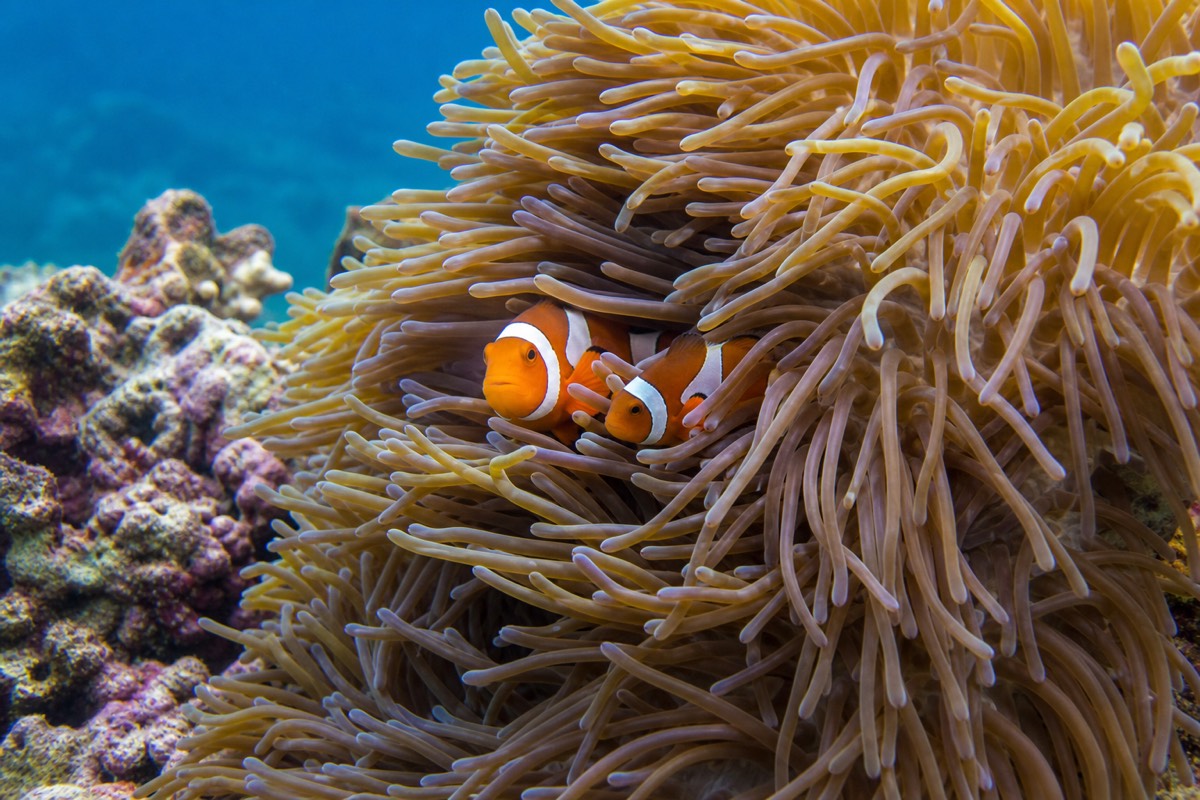
In the ocean, anemone fish live inside the stinging tentacles of sea anemones without being harmed. This is a true symbiotic pairing: the clownfish gains protection from predators among the anemone's stinging cells, and in turn the fish defends its host and keeps it clean. The film treats this as straightforward fact rather than inventing an explanation, and that is exactly how it works in real life. A snorkeller floating above an anemone on a real reef site will see the same behaviour the animators borrowed: clownfish darting out of the tentacles, staying within a short range of home, and ducking back in at any sign of threat.
That faithfulness is why the film functions as a surprisingly good introduction to reef life. The fish at the centre of the story is a real species, its home is a real biological partnership, and the setting is a named real ecosystem. Reef guides on the Great Barrier Reef point out anemone fish specifically because they are easy to spot, easy to explain, and instantly recognisable to anyone who has seen the film. It is one of the better-known examples of symbiosis on the reef, and once you are floating right above one, the explanation takes about ten seconds and stays with people for years.
The Setting And Its Species-Level Detail
The choice to name the Great Barrier Reef rather than a fictional location means the film's backdrop carries species and structure drawn from a real ecosystem. Coral gardens, reef slopes, sandy lagoons, and the open blue beyond the reef edge are all genuine features of the real reef's architecture. The turtle migrating along the East Australian Current reflects a real phenomenon: the current exists, it runs south along the Queensland coast, and it is genuinely a highway for travelling marine life.
For anyone whose interest in the reef started with a movie night, this is the encouraging part. The film is not a fantasy with a decorative reef painted behind it. It is a story set in a real place, using a real species as its protagonist, with real biology underneath the talking animals. When you get to the actual reef, the world looks familiar in ways that few animated films can claim. For the full range of what you would realistically spot in the water yourself, a marine life guide covers species well beyond anemone fish.
What Is Not Real Or Accurate
Now the honest ledger of what the film invents or bends. Marlin, Nemo, and Dory are invented characters with an invented story. The plot events, the diver who takes Nemo, the fish tank in a Sydney dentist's office, the journey across the open ocean, are all fiction. No real reef site corresponds to the specific anemone where Marlin and Nemo live, and Pixar's own materials describe the general setting as the Great Barrier Reef without naming one particular spot, which means the exact locations on screen have no real-world address.
A few further caveats are worth stating plainly, because a reader deciding whether to book a reef trip deserves the unvarnished picture rather than a nostalgic one.
- Fish do not talk, hold conversations, read, or form rescue committees. Charming as it is, the social world of the film is pure storytelling.
- Clownfish are not rescued by their parents in the way the film depicts. The real reproductive and social behaviour of anemone fish is very different from Marlin's story, and the film does not attempt to represent it.
- The speed and scale of Marlin's ocean crossing are wildly compressed. The film turns a journey that would be extraordinary for any small reef fish into a road movie. The real geography is covered below.
- Beyond the clownfish and anemone pairing, the film should be treated as animated storytelling first. What is specifically confirmed is the setting and the clownfish biology. Other species and scenes are artistic interpretation, and it would be a mistake to assume documentary-level accuracy throughout.
One more honest point. The reef the film depicts, dense, vibrantly coloured, and visibly thriving at every scale, is a portrait of a healthy ecosystem. The real Great Barrier Reef is a living system facing serious pressures, and its condition varies enormously from site to site and year to year. If your mental image of the reef comes entirely from a 2003 animated film, the real thing may look different from what you expect, at least in places. For the state of the reef itself, bleaching events, and what that means for a visit, our guide on whether the Great Barrier Reef is dying covers it properly.
Where Does Nemo Live? Clownfish And Anemones In Real Life
Strip away the plot and the question of where Nemo lives has a real, well-documented answer. Ocellaris clownfish live in association with host sea anemones on tropical reefs, and the Great Barrier Reef sits squarely within their natural range. Each clownfish or clownfish pair occupies one host anemone and treats it as home base. The fish rarely strays more than a short distance from its host, which is why the film's depiction of a home anemone, a fixed address on the reef, is biologically sound even if the address itself is invented.
The relationship works because the clownfish can live safely inside the anemone without being stung or harmed by it. The anemone, in return, receives defence from butterflyfish and other anemone-nipping predators, and the fish's presence and activity help keep the host healthy. Marine biologists describe this as one of the textbook examples of mutualism on coral reefs, and it is the actual biology behind Nemo and Marlin's home, not an invented bit of movie logic.
A few specifics about real anemone fish that the film either gets right or quietly glosses over:
- Ocellaris clownfish are small, typically a few centimetres long, and orange with white bands, close to the film's colouring for Nemo and Marlin.
- They live in warm tropical waters, which matches the Great Barrier Reef's northern and central sections where their host anemones thrive.
- Each host anemone supports a small group, generally a dominant female, a breeding male, and juveniles. The film's small family unit is not far from the real social structure.
- When the dominant female is lost, the group's hierarchy reshuffles, a detail of real clownfish biology that has generated endless discussion since the film's release, and which the film's story does not attempt to follow.
So where does Nemo live in real life terms? On a host anemone, on a tropical reef, within swimming distance of dozens of other anemone-dwelling neighbours. Pixar located that home on the Great Barrier Reef, and the reef genuinely supports this species and this behaviour. The anemone address is fictional. The lifestyle is not.
There is a useful distinction to hold onto here for anyone comparing the film to the real ocean. Pixar's official materials never claim a specific site, so the question "where does Marlin live in Finding Nemo" has no chartable answer. What the studio did confirm is the general setting, and the species-level accuracy sits inside that confirmed setting rather than in any named location. That is the honest shape of the answer: a real home range, an invented home address.
Can You See Clownfish Snorkeling The Great Barrier Reef?
Yes, and this is where the question stops being trivia and starts being trip planning. Clownfish and their anemone homes turn up on real Great Barrier Reef snorkel sites, and they are a highlight that several operators specifically call out in their own listings rather than something you have to hope for.
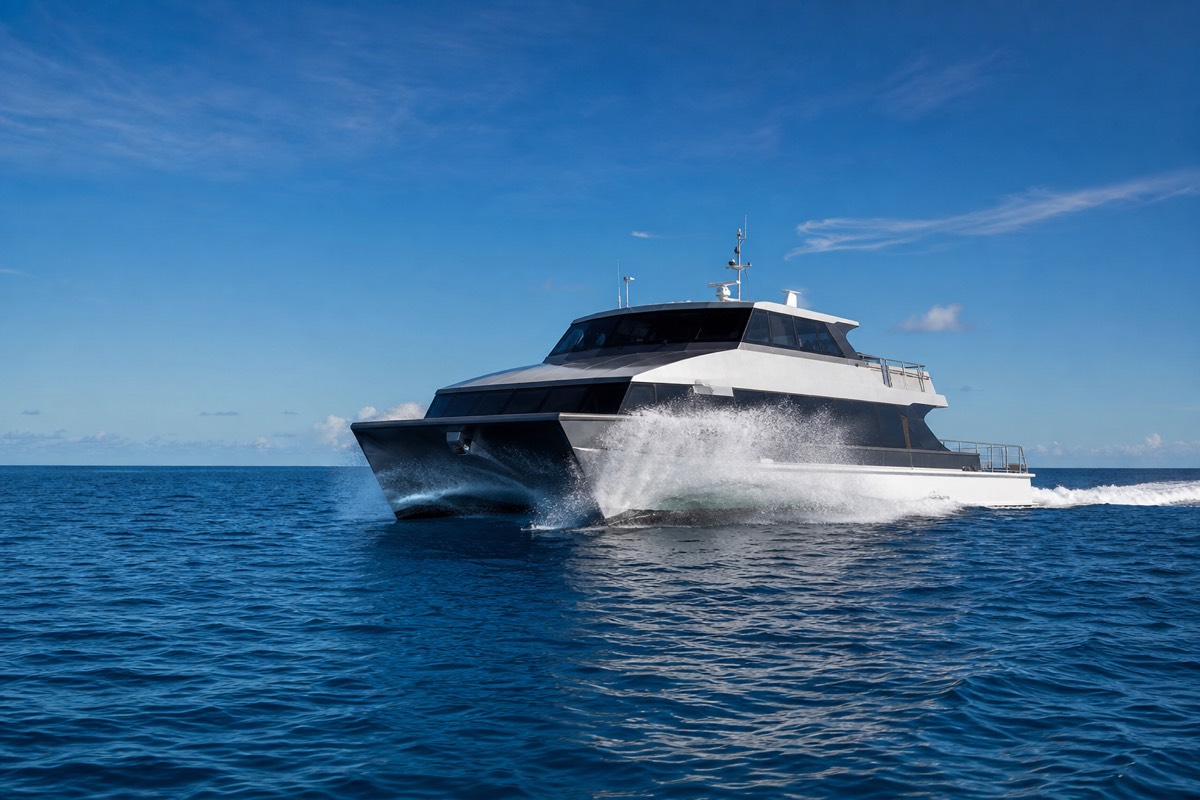
The clearest example comes from the Port Douglas Outer Great Barrier Reef Snorkeling & Diving Experience. The operator lists clownfish among its regular sightings across its reef sites, Agincourt and Opal among them, and the day includes guided reef talks alongside the snorkelling. The listing holds a 4.9-star rating on its operator page. That combination matters for a specific reason: an operator that names a species as a regular sighting, and runs guided talks to point marine life out, turns clownfish from a lucky find into a realistic expectation.
Do you need to be an experienced snorkeller to have a chance at seeing them? No. The tour listing clownfish as a regular sighting runs guided reef talks alongside the snorkelling, which is the kind of setup that makes a specific species a realistic find for a beginner rather than something reserved for experienced divers. Anemone fish hold station close to their hosts, usually in shallow to mid-depth water well within snorkelling range, and they are site-attached rather than skittish in the way larger fish can be. Floating above an anemone in calm conditions, you will typically watch the fish emerge, patrol a small loop, and tuck back into the tentacles. It is one of the most reliable small-animal encounters on the reef.
A fair caveat: not every tour calls out clownfish, and not every reef site hosts the right anemones. Outer reef sites where anemones are common are the better bet, and tours visiting multiple sites give you more than one chance on the day. If the choice of tour, its format, or its location base is the live question, our guide to choosing the right Great Barrier Reef tour works through it in full, including when to go and when to avoid stinger season. And if you are weighing whether you even need a tank to see this marine life, our comparison of snorkeling versus scuba diving on the reef addresses it directly: for anemone fish, snorkelling is usually enough.
The wider picture of what else you might spot, turtles, wrasse, parrotfish, reef sharks, and the rest of the cast that no film could fit in, is a separate subject with its own depth, and for most trip planners it is the natural next read after this one.
Marlin'S Journey Versus The Real Geography
The film sends Marlin from his home reef to Sydney Harbour and back again, a crossing of roughly 1,700 kilometres of coastline each way, compressed into what plays as a few days of screen time. Viewers have mapped the route in detail, and searches for a Marlin's journey map are common enough to be worth addressing honestly.
Start with what is real. The East Australian Current is a genuine major current. It flows southward along the Queensland and New South Wales coast, carrying warm tropical water toward the temperate south, and it is used by migrating marine life, including the sea turtles the film's turtle-riding sequences riff on. If a small reef fish wanted to travel south along the Australian coast, a strong southward current would be the vehicle to do it in. The film did not invent that.
What the film does compress and bend is everything else. The distances involved are enormous for a fish a few centimetres long. The timeline turns months of plausible drifting into a fortnight of adventure. The film's geography also blends real place names, Sydney Harbour is real, the dentist's office overlooks it, with invented reef locations that have no real chart coordinates. Marlin's home reef is somewhere in the animated Great Barrier Reef, but no source in Pixar's materials names a specific site, because there is not one.
For a trip planner, the practical takeaway is simple. The journey in the film runs along the same stretch of the Australian east coast that a real visitor travels, roughly the Cairns and Port Douglas reef region down to Sydney, and seeing the two endpoints yourself is entirely doable. The reef end is where the story's actual biology lives, and that is where the snorkelling is. If the question is how much time that end of the trip deserves, whether a single day out on the water is enough to see the reef properly, our article on whether the Great Barrier Reef is worth it takes that question on with specifics.
One related question people often bundle with this one: where does Finding Dory take place? Its sequel journey moves the story to the other side of the Pacific, along the California coast, which is a different ocean and a different reef conversation entirely.
Point Nemo Is A Completely Different Place
Here is the confusion this page exists partly to clear up. Many of the questions and forum threads around "is Nemo's reef real" end up answering something else entirely: questions about Point Nemo, the oceanic pole of inaccessibility in the South Pacific, the spot farthest from any land on Earth, named after Jules Verne's Captain Nemo rather than the Pixar film.
They are unrelated. Point Nemo is not a reef, has nothing to do with the Great Barrier Reef, and is not where the film is set or where its story takes place. It is a coordinate in open ocean, thousands of kilometres from Australia, famous as an isolated patch of deep water rather than as a coral destination. It is also, for different reasons, sometimes discussed as the resting place of decommissioned spacecraft, which is where most of the trivia interest comes from.
If you arrived here looking for that, now you have your answer and can discard it as irrelevant to the film. The reef in Finding Nemo is the Great Barrier Reef, off Queensland. Point Nemo is a nominal point in the empty South Pacific. Same borrowed word, no connection between them. Nothing about Point Nemo belongs in a conversation about reef trips, snorkelling sites, or clownfish, and no tour operator anywhere is sailing there.
Which Tours Actually Reach Clownfish Habitat
The practical end of the whole question: turning a fictional anemone address into a real day on the water. Not every reef tour delivers you to anemone territory, so it is worth knowing what to look for in an operator before you book.
What To Look For In A Listing
Three signals separate a tour with a realistic chance of clownfish from a generic boat ride. First, the operator's own listing names clownfish or anemone fish among its sightings, which tells you the sites it visits actually host them. Second, the itinerary visits outer reef sites, where anemones are common, rather than only inshore or island locations. Third, the day includes guided reef talks or an in-water guide, because a pair of tiny orange fish on a busy reef is easy to swim straight past without someone pointing them out.
The Port Douglas Outer Great Barrier Reef Snorkeling & Diving Experience checks all three. Its listing names clownfish among regular sightings across multiple reef sites including Agincourt and Opal, it runs guided reef talks, and it carries a 4.9-star rating on its operator listing. That is the template to measure other tours against, and it is a fair benchmark precisely because it makes its claims specific: named sites, named species, and a stated format for how you will be shown the reef rather than a vague promise of colourful fish.
Where To Base Yourself
Port Douglas is the departure point for the Agincourt reef system, and it is also the town with the shortest run to outer reef sites, which is why its operators can make anemone territory a regular feature of the day. Cairns offers the widest overall choice of tours and the most departure options, while the Whitsundays trade outer reef speed for islands and scenery. Each base suits a different kind of traveller, and the comparison deserves its own treatment rather than a compressed verdict here: see our guide on Cairns versus Port Douglas versus the Whitsundays for the full breakdown.
What The Day Costs And How To Reach It
Two questions almost always follow the tour choice, and both have dedicated pages. What a day on the water actually costs, including the gap between the cheapest options and the ones worth booking, is covered in our breakdown of what a Great Barrier Reef tour really costs. And getting to the reef coast from Australia's southern cities, the practical logistics of reaching Cairns or Port Douglas from Sydney or Brisbane, is handled in our guide on getting to the Great Barrier Reef from Sydney.
The last piece of honest framing: the film is a story, and the reef is not a theme park for that story. You will not find Nemo. What you will find, on a well-chosen day from the right port, is the real biology the film borrowed, an orange fish a few centimetres long, tucked into the swaying tentacles of a stinging anemone, going nowhere because it has no reason to leave home. However you found your way here, from a movie night or a trip already in the works, comparing the reef's actual snorkelling tours is the natural next step. For most people who grew up with the film, that moment above a real anemone is worth the trip on its own.