Is The Great Barrier Reef One Of The 7 Wonders Of The World?
The reef is not one of the ancient Seven Wonders or the seven New7Wonders of Nature winners. It is a UNESCO World Heritage Site and was a finalist in the modern nature campaign.
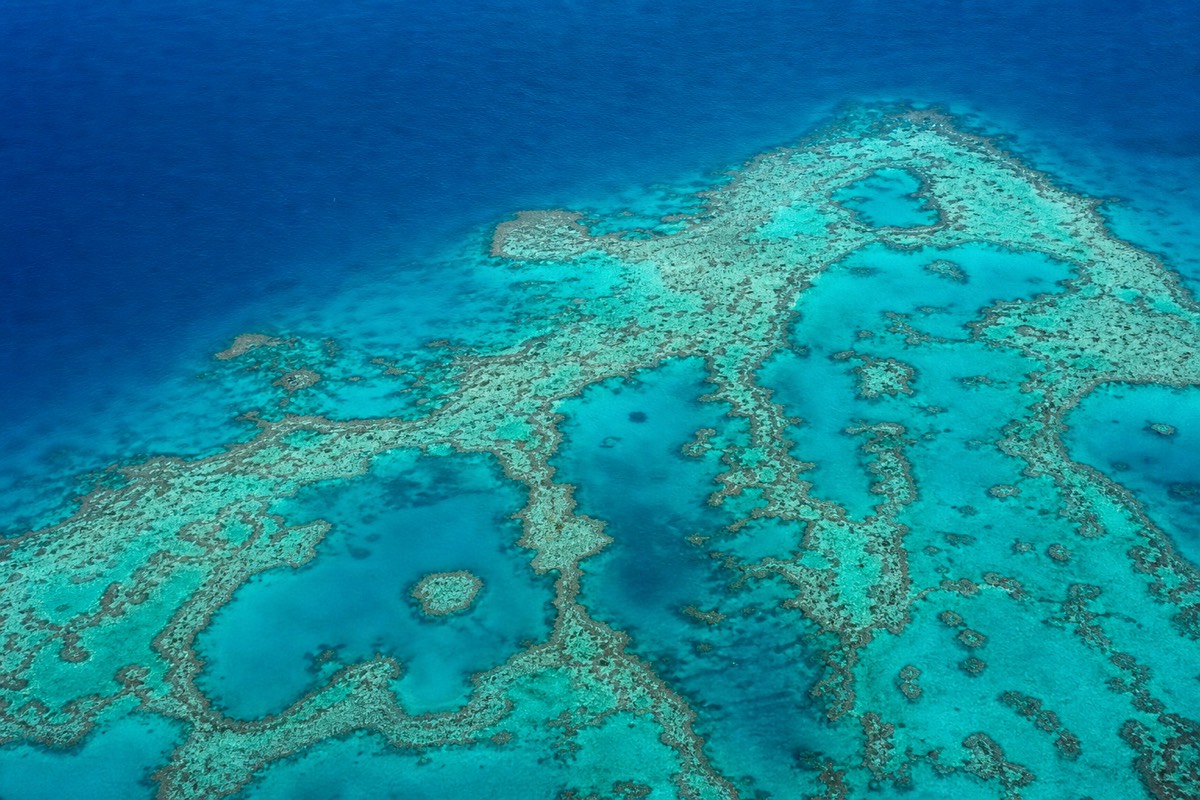
Yes and no, and the difference matters. The Great Barrier Reef is not on the ancient Seven Wonders of the World, a fixed list of human-built structures compiled by Greek writers more than 2,000 years ago. It does appear on the widely cited CNN Seven Natural Wonders list, and it has been a UNESCO World Heritage Site since 1981.
Price tables and review counts in the original comparison are historical examples, not live quotes or safety evidence. Use the booking options below for current totals, inclusions and restrictions.
Is The Great Barrier Reef One Of The Seven Wonders Of The World?
The short answer depends entirely on which "seven wonders" a person means, and most travelers asking this question have three different lists tangled together in their heads. The first is the ancient Seven Wonders of the World. The Great Barrier Reef has never been part of that list, and it never could be, because the list closed more than two thousand years ago. It was compiled by Greek writers celebrating human-built monuments: the Great Pyramid of Giza, the Hanging Gardens of Babylon, the Colossus of Rhodes, the Temple of Artemis at Ephesus, the Statue of Zeus at Olympia, the Mausoleum at Halicarnassus, and the Lighthouse of Alexandria. Only one of them, the Great Pyramid, still stands today. Nothing gets added to that list, no matter how spectacular, and certainly not a living reef that formed long after the Greeks wrote their guidebooks.
The second list is the New7Wonders of Nature, a modern project run by the New7Wonders Foundation through a global public vote that ran from 2007 to 2011. This is where a common mix-up creeps in, and it is worth untangling carefully. The Great Barrier Reef was put forward as a candidate in that vote, and plenty of travel articles still describe it as a winner. It was not. The seven sites declared winners in 2011 were the Amazon, Ha Long Bay, Iguazu Falls, Jeju Island, Komodo National Park, the Puerto Princesa Underground River, and Table Mountain. The reef campaigned as a finalist but did not make the final seven. Anyone repeating the claim that the reef "won" the New7Wonders of Nature vote is repeating an error that has circulated widely online.
The third list is the one that actually puts the reef on the map: the Seven Natural Wonders of the World, an informal compilation popularised by CNN in 1997, which includes the Great Barrier Reef alongside six other natural landmarks. Unlike the ancient list, this was never a formal designation with a governing body behind it, but it is the list most people are picturing when they ask whether the reef is "one of the seven natural wonders." On that list, the answer is yes.
The reef also holds a designation with real institutional weight, separate from any wonders list. UNESCO inscribed the Great Barrier Reef as a World Heritage Site in 1981, recognising its outstanding natural significance. World Heritage status is not a public popularity contest. It is awarded by UNESCO's World Heritage Committee against strict criteria, and unlike a one-time vote it carries ongoing monitoring and reporting obligations for the Australian government. That monitoring is part of why the reef's condition is tracked so closely year over year, a subject covered in detail in this guide to the reef's current health.
| Designation | Status | Origin |
|---|---|---|
| Ancient Seven Wonders of the World | Not included | Fixed list from antiquity |
| New7Wonders of Nature (winners announced 2011) | Finalist, not one of the seven winners | Global public vote, 2007 to 2011 |
| CNN Seven Natural Wonders | Included | Informal list, 1997 |
| UNESCO World Heritage Site | Inscribed | Listed in 1981 |
Does the distinction matter when you are planning a trip? Not for what you will see in the water. The coral, the fish, and the scale of the thing are identical regardless of which list brought you there. But the bookkeeping does explain something real: independent bodies, including a UN heritage committee, have evaluated the reef and judged it globally significant through processes with actual criteria behind them. That is a different kind of claim from a travel blog calling somewhere "one of the wonders of the world" with nothing behind the phrase. The reef earns its bucket-list reputation on substance, and the rest of this page covers exactly what that substance is: how big it is, how it formed, and where to find it.
What The Seven Natural Wonders Actually Are
The Seven Natural Wonders of the World is not an ancient list and has no official owner, which is precisely why confusion surrounds it. The version most commonly cited today traces to a 1997 CNN compilation, which named seven natural landmarks chosen for their visual scale and uniqueness: the Grand Canyon, the Great Barrier Reef, the Harbour of Rio de Janeiro, Mount Everest, the Northern Lights (the aurora borealis), the Paricutin volcano in Mexico, and Victoria Falls on the Zambia-Zimbabwe border.
Each of the seven earned its place for a different reason. The Grand Canyon is a chasm of extraordinary depth carved by the Colorado River. Mount Everest is the planet's highest peak above sea level. The Harbour of Rio de Janeiro wraps a city in dramatic granite peaks and water. The Northern Lights are an atmospheric phenomenon rather than a place, which makes the reef's inclusion notable: the Great Barrier Reef is the only living structure on the list, and the only one visible from space. Paricutin is the youngest volcano in the Northern Hemisphere's mainland in recorded history, having erupted into existence from a cornfield in 1943, and geologists were able to document its entire life cycle. Victoria Falls, known locally as Mosi-oa-Tunya, "the smoke that thunders," is considered the largest sheet of falling water in the world by combined width and height.
Against that company, the Great Barrier Reef holds its own easily. It is the largest coral reef system on Earth, the largest structure built by living organisms, and one of the most complex ecosystems anywhere in the marine world. It is also the only one of the seven that is fundamentally fragile, built by animals a few millimetres across and sensitive to water temperature in a way that a canyon or a mountain range is not. That combination of scale and delicacy is what gives the reef its particular standing among the world's natural landmarks, and why its UNESCO listing comes with obligations that the Grand Canyon's status as a "wonder" never did.
One caveat belongs here. Because the Seven Natural Wonders list is informal, several versions circulate. Some swap in different volcanoes, some count separate auroras, and some travel publications quietly reshuffle entries to suit their own audiences. The CNN version with the reef included is the one with the widest circulation and the one most people mean when they use the phrase. When a source claims the reef is "officially" one of the seven natural wonders, treat the word "officially" loosely: there is no body that could make it official, only broad agreement that the reef belongs on any sensible shortlist of Earth's greatest natural phenomena.
The reef's other verifiable titles stand on firmer ground. The UNESCO World Heritage inscription from 1981 is a formal designation with documentation, criteria, and ongoing reporting attached. And while the reef did not win the New7Wonders of Nature vote, its candidacy alongside the eventual winners reflected a genuine global recognition of its significance rather than marketing. Between the CNN list, the World Heritage inscription, and its status as the largest reef system on the planet, the reef has more genuine credentials than most places that get called "wonders" casually.
Interesting Facts About The Great Barrier Reef
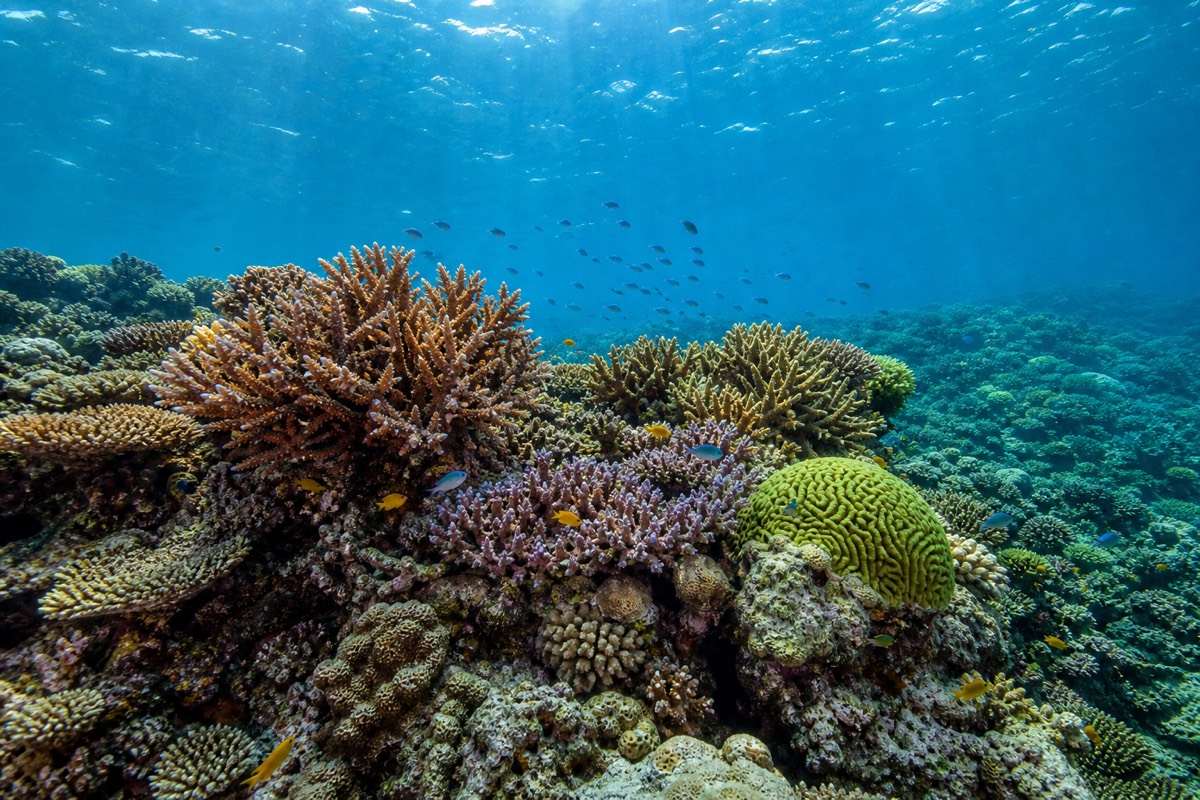
GBRMPA, the Great Barrier Reef Marine Park Authority, publishes a running collection of reef facts that explains why the reef keeps landing on these lists. A few standouts: the reef is visible from space, it is home to around 1,500 species of fish and some 400 types of coral, and it supports six of the world's seven species of marine turtle. It is a single interconnected living structure, not a cluster of separate attractions, which is what makes the "largest living structure" claim meaningful rather than promotional.
Are There Seven Or Eight Natural Wonders?
Both counts circulate, and the reason goes back to the fact that no official body owns the list. The CNN compilation names seven, and that is the version with the widest recognition. Some published versions stretch to eight, usually because a list-maker splits a phenomenon that another list treats as one entry, or adds a favourite that the original compilation left out. Without a governing body there is nothing to stop either count, which is why the honest answer is: seven in the standard version, eight in some variants, and neither number is official. The Great Barrier Reef appears on essentially all of them.
What Are The Seven Natural Wonders Of Australia?
There is no official Australian list either, but informal compilations of Australia's seven natural wonders circulate widely, and two sites appear on virtually every version: the Great Barrier Reef and Uluru. Beyond those two, the entries rotate depending on the source, with the Twelve Apostles along the Great Ocean Road, the Bungle Bungle Range in the Kimberley, and Shark Bay in Western Australia among the names that recur most often. Treat any specific seven as a suggestion rather than a designation. What is not debatable is that the reef is the country's most internationally recognised natural landmark, holding a UNESCO World Heritage inscription since 1981 and a place on the CNN Seven Natural Wonders list.
How Big Is The Great Barrier Reef?
According to GBRMPA, the Great Barrier Reef Marine Park stretches approximately 2,300 kilometres along the Queensland coast, covering around 344,400 square kilometres. Those two numbers are worth sitting with for a moment, because they are hard to picture from land. The reef's area is larger than the United Kingdom, the Netherlands, and Switzerland combined. At its widest, the reef system extends more than 250 kilometres offshore, which is why "seeing the Great Barrier Reef" from Cairns almost always means a boat ride of an hour or two rather than a swim from the beach.
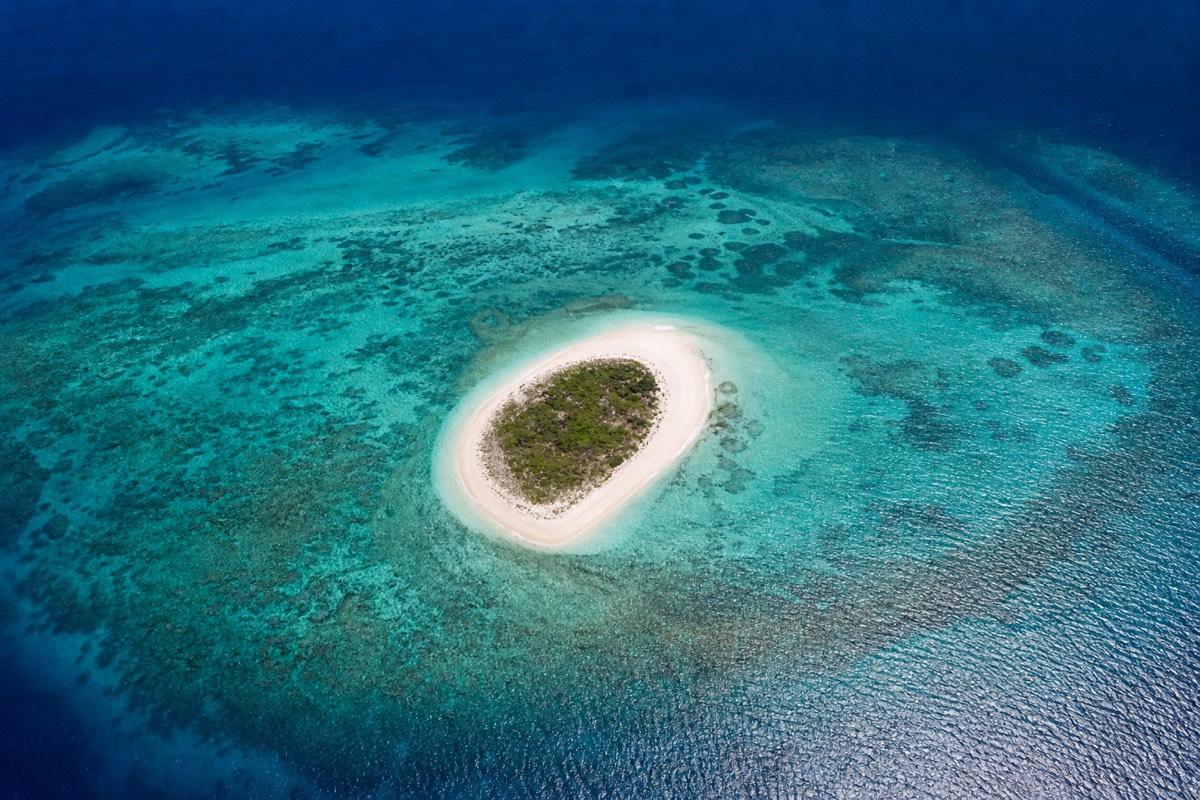
The system is built from roughly 2,900 individual reefs, ranging from tiny patches to vast ribbon reefs along the outer edge, plus around 900 islands and cays. Some of those islands are continental islands with their own vegetation and hiking trails, while others are coral cays, islands literally built by the reef itself from accumulated coral debris. This structure matters for trip planning more than most first-time visitors realise. The term "the Great Barrier Reef" covers everything from shallow fringing reefs beside tropical islands to the outer reef wall where the coral drops away into deep blue water. A trip to a cay near the Whitsundays and a trip to the outer reef from Cairns are both "Great Barrier Reef tours," but they can feel like different countries underwater.
Yes, it is the biggest reef in the world, and it is not a close contest. The reef is not only the largest coral reef system on Earth but the largest structure on the planet built by living organisms. The builders are coral polyps, animals typically measured in millimetres, which secrete calcium carbonate skeletons that accumulate over centuries into the massive structures divers swim along today. Billions of polyps across thousands of individual reefs, acting together over thousands of years, produced something visible from orbit.
Size translates directly into biodiversity. GBRMPA's figures put the reef at around 1,500 fish species, some 400 types of hard coral, more than 130 species of sharks and rays, and six of the world's seven marine turtle species. Around 30 species of whales and dolphins use the reef's waters. Dugongs, the lumbering grazers sometimes mistaken for mermaids in old sailor lore, feed on seagrass meadows inside the lagoon. A single snorkel session will not sample more than a sliver of this, which is one honest reason many visitors book more than one trip, and why the question of how many days to give the reef, and whether one day is enough, deserves its own consideration.
A caveat for the sake of honesty: the 344,400 square kilometre figure describes the Marine Park boundary, not solid coral. Most of that area is open water, seagrass meadow, and sand between the actual reefs. The living coral structure is spread in patches through that expanse. A visitor who expects a continuous wall of coral for 2,300 kilometres will be disappointed, and a visitor who understands the reef as an archipelago of coral systems in a protected sea will understand what they are looking at.
How Was The Great Barrier Reef Formed?
The reef is built by animals, and the animals are small. Coral polyps are simple creatures related to jellyfish and sea anemones, most just a few millimetres across, that pull calcium out of seawater to build themselves a hard limestone skeleton. The living part of the coral is a thin layer of tissue sitting on that skeleton. When polyps die, their skeletons remain, and new polyps settle on top and keep building. Over centuries, that stacking process produces the solid coral structures reefs are made of, and the reefs in turn grow upward and outward as sea levels change.
GBRMPA notes that the reef's structure has grown on older reef platforms over hundreds of thousands of years, but the living coral visible today is geologically young. The modern, actively growing reef established itself over roughly the last 6,000 to 8,000 years, as sea levels rose after the last ice age and flooded the continental shelf off Queensland. In other words, the reef snorkelers visit is a thin, living skin sitting atop a very deep history. Reefs formed and drowned repeatedly across earlier ice age cycles, and each new generation of coral built on the rubble of the last. The result is not one reef but a patchwork of around 2,900 individual ones, growing wherever conditions lined up.
Those conditions are specific, which is why coral reefs occupy less than a fraction of the world's oceans. Corals need warm water, generally between roughly 20 and 30 degrees Celsius. They need sunlight, because each polyp hosts microscopic algae called zooxanthellae that photosynthesise and supply most of the coral's nutrition, which is why most reef-building coral lives in shallow, clear water. They need the right salinity, a hard surface to settle on, and water clean enough for light to penetrate. The Queensland coast delivers all of it in abundance: shallow tropical water, steady warmth, and a continental shelf stocked with old reef platforms for new coral to colonise.
The algae partnership deserves a moment because it explains both the reef's colours and its vulnerability. The zooxanthellae living inside coral tissue are what give hard corals their extraordinary palette. When water gets too warm, corals expel the algae, a process called bleaching, and lose both their colour and their main food source in one stroke. Bleached coral is still alive, but it is starving, and repeated or prolonged bleaching can kill it. This is why unusually warm summers are the single biggest threat to the reef's long-term condition, a subject examined properly in this guide to whether the Great Barrier Reef is dying. The formation story is still being written, and not always in the coral's favour.
One more formation fact worth carrying to the water: the reef is not static. Individual corals grow slowly, with massive boulder corals adding only a centimetre or so per year, while branching staghorn corals grow several times faster but break more easily. Fast-growing species can recolonise damaged areas within years if conditions allow, while the great old boulder corals, some of which are centuries old, cannot be replaced on a human timescale. When a dive briefing points out a cabbage coral the size of a small car, the crew is showing passengers something that took longer than European settlement of Australia to grow.
Where Is The Great Barrier Reef Located?
The Great Barrier Reef sits off the coast of Queensland, in north-eastern Australia, in the Coral Sea. It runs roughly from the tip of Cape York in the north down to the southern town of Bundaberg, hugging the continental shelf for the entire 2,300-kilometre length. To answer the common question directly: the reef is located in the Coral Sea, an arm of the south-western Pacific Ocean, and it is located in Australia, in the state of Queensland. The cities most associated with visiting it, Cairns and Port Douglas, sit at the reef's mid-section where the outer reef comes closest to shore.
That geography shapes every practical decision a visitor makes. Because the reef runs parallel to the coast, multiple towns act as gateways, each with different trade-offs. Cairns is the largest and has the most departures. Port Douglas is closer to a ribbon of outer reef sites. The Whitsundays, further south, offer island scenery plus reef access, including trips to the famous Heart Reef. Airlie Beach, Townsville, and Bundaberg all serve as departure points too, each reaching a different slice of the system. Choosing between the main gateways is genuinely consequential, and it is a decision with its own comparison of Cairns, Port Douglas and the Whitsundays rather than a paragraph here.
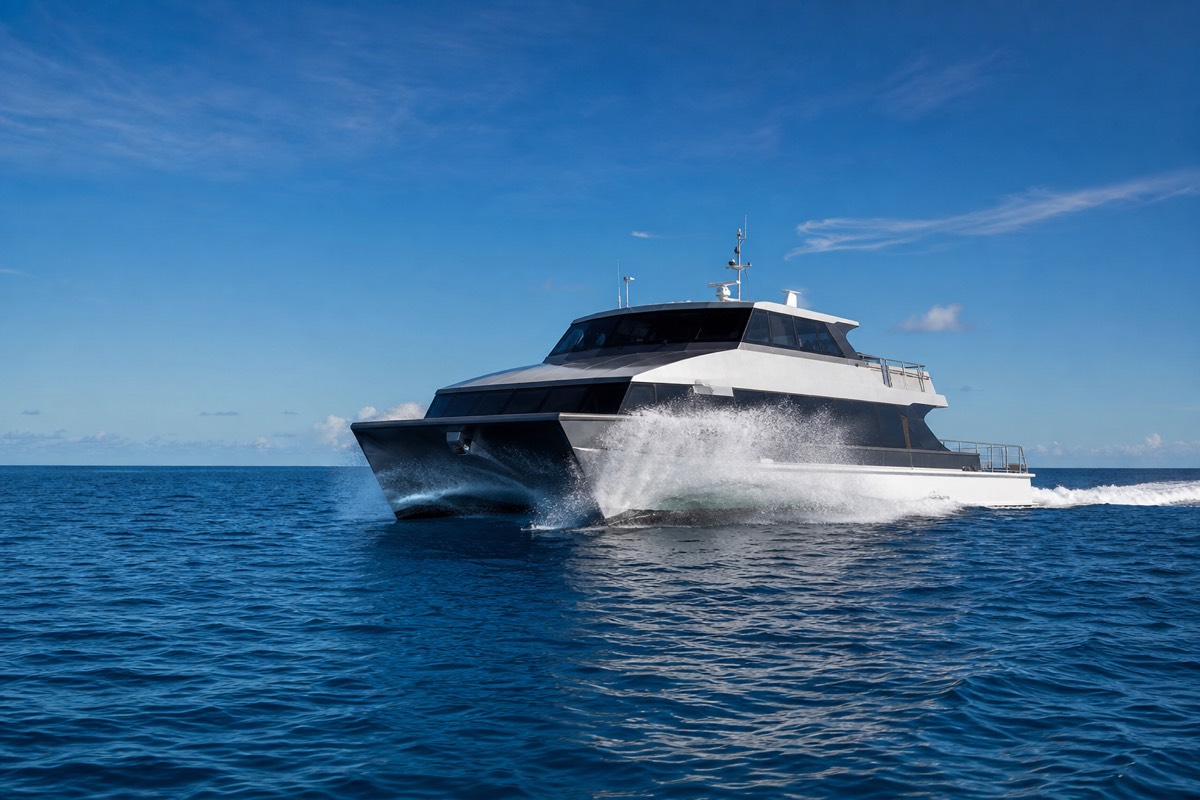
Distance to the reef varies enormously depending on where you start. From Cairns, the outer reef pontoon sites that most day trips visit are roughly an hour and a half to two hours by fast catamaran. From Port Douglas, crossing times are similar for the ribbon reefs to the north and east. Some fringing reefs beside islands can be reached in minutes by small boat, while the outer edge of the park lies more than 250 kilometres offshore at its widest. This is why two "reef tours" can involve anything from a 20-minute hop to a full-day expedition with most of the day spent on the water. Travelers coming from farther afield will find the journey from Sydney or Brisbane to the reef requires its own planning, since the drive from Sydney alone runs the length of the coast.
The reef's position in the tropics also governs the practical experience of visiting it. Cairns sits at roughly 16 degrees south of the equator, which means warm water year-round, a wet season in summer, and the presence of marine stingers in the warmer months on some parts of the coast. Water clarity varies with season, weather, and location, with outer reef sites generally clearer than inshore ones. None of this makes one part of the year automatically wrong, but the seasonal pattern is real, and the question of when to go, and how to choose a tour accordingly, deserves more than a sentence.
Seeing The Wonder For Yourself
Recognition is one thing; a pontoon on the outer reef with a mask on is another. The good news is that the reef is unusually accessible for a natural wonder of its scale. Day trips run daily from Cairns, Port Douglas, and the Whitsundays to established reef sites with moorings, pontoons, and crew who brief passengers on everything from fins to fish identification. A typical full-day trip includes snorkelling gear and a guided orientation, with optional introductory dives for people who have never breathed underwater before. The choice between snorkelling and scuba diving on the reef is less about skill than people assume, since the coral sits close enough to the surface that snorkellers see the same show divers do, just from above.
Costs vary with what is included, from basic snorkel day trips to sail-and-dive expeditions and liveaboard boats that sleep on the reef overnight. The honest framing is that the reef is not a cheap day out, and the price reflects boat fuel, permits, safety crew, and marine park fees rather than a captive-market markup. A proper breakdown of what a Great Barrier Reef tour really costs, across trip types and departure points, is worth reading before booking, because the spread between the cheapest and most complete options is wide.
Two final honest notes. First, reef conditions change: the marine wildlife that makes the reef famous, from turtles to reef sharks, are wild animals, and no operator can promise a specific encounter on a specific day. Second, the reef is a genuinely fragile wonder, and visiting it responsibly matters more than it would at, say, the Grand Canyon. Follow the crew's briefing, keep fins off the coral, and take nothing. The reef spent the last several thousand years building the thing you came to see. The least a visitor can do is leave it exactly as found.