Best Things To Do In Cairns Besides The Great Barrier Reef
Most Cairns trips are built around one boat day, sometimes two. Everything else on the calendar, rainforest, waterfalls, a free public swim, a night market, is what actually makes the difference between a weekend stopover and a trip worth the flight.
Cairns is the launchpad for the Great Barrier Reef, but the city itself earns several days: a rainforest cableway and heritage railway, the Daintree and Cape Tribulation, the Atherton Tablelands waterfall circuit, a free waterfront lagoon, and a night market. Most of it sits within two hours of the CBD and needs no second flight, so a reef day slots neatly into a fuller week.
Price tables and review counts in the original comparison are historical examples, not live quotes or safety evidence. Use the booking options below for current totals, inclusions and restrictions.
What Is There To Do In Cairns Besides The Reef?
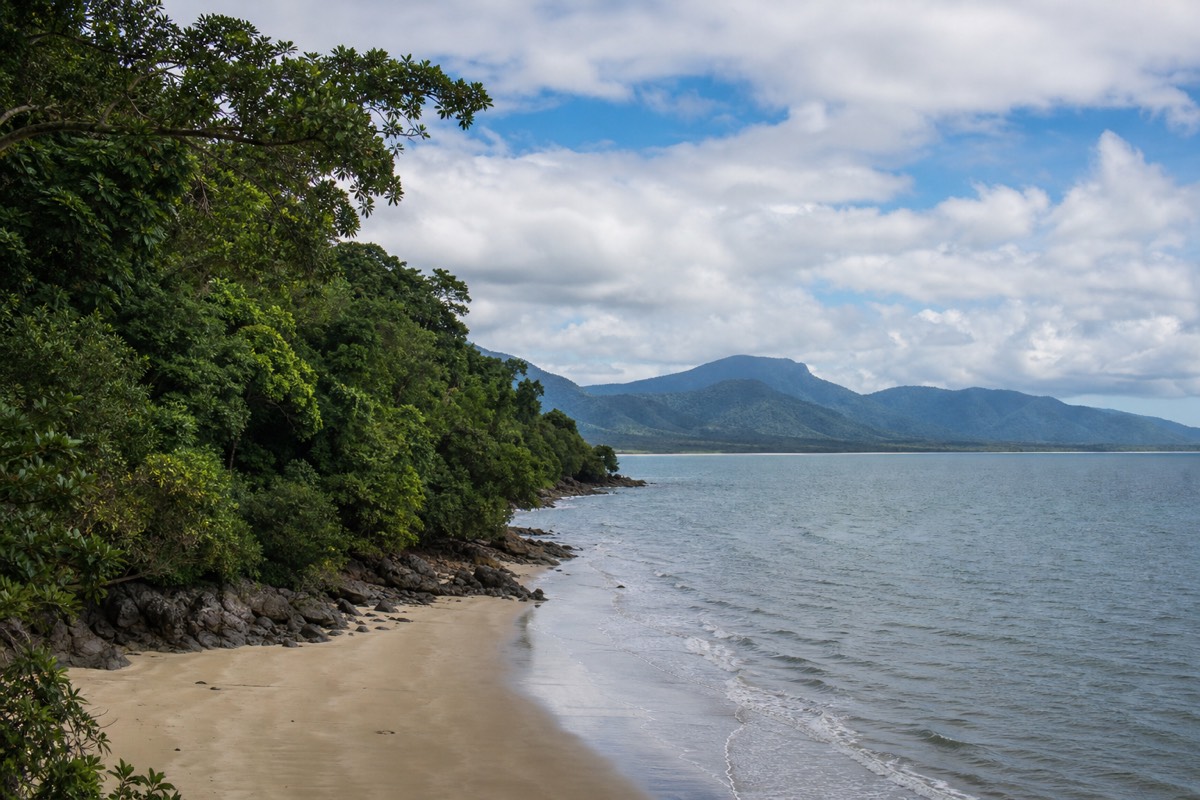
Cairns gets treated as a launchpad, a place you pass through on the way to a boat. That undersells it badly. The city sits at the hinge between two World Heritage-listed systems: the reef offshore and the rainforest inland. The second half of that pairing rarely gets the attention it deserves, which is a shame, because it includes a rainforest older than the Amazon, a cableway that hangs over its canopy, a heritage train cut through the mountainside by hand in the 1880s, and a whole elevated hinterland of waterfalls and crater lakes an hour's drive up the range.
Travelers who only book the reef day and fly out the next morning miss the rest of it. They also miss the free lagoon on the waterfront, open even when swimming in the actual ocean isn't advisable, and a night market built for exactly the kind of evening that follows a long day outdoors. The short version: pair one reef day with one or two land days. Kuranda and the Skyrail Rainforest Cableway cover half a day to a full day depending on how you link them. The Atherton Tablelands work best as their own day if you like waterfalls and countryside driving. None of it requires a domestic flight.
Most of the region's headline attractions sit within an hour or two of the city center, which is why operators and repeat visitors tend to treat a Cairns trip as reef-plus-land rather than reef alone. That compactness is the single most underrated fact about the place. Other Australian tourism cities spread their attractions across a state; Cairns stacks a cableway, a heritage railway, an aquarium, two World Heritage areas and a hinterland food trail inside a two-hour radius of one CBD. It is the reason the top 10 things to do in Cairns can genuinely be done in a week without a single domestic flight, and it is the reason this page organizes the options the way it does: water first, then rainforest, then the city's own food and culture, because that is the order most travelers actually encounter them in.
Here is a rough map of what's on offer and how much of a day each tends to occupy.
| Attraction | What it is | Typical time commitment | Good fit for |
|---|---|---|---|
| Kuranda Scenic Railway | Historic mountain railway through rainforest gorge country | Half day, often combined with Skyrail | Scenery, photography, a slower pace |
| Skyrail Rainforest Cableway | Gondola cableway over the rainforest canopy | Half day, often combined with Kuranda | Rainforest views without a hike |
| Daintree Rainforest & Cape Tribulation | The oldest continuously surviving tropical rainforest on Earth, running to the coast | Full day | Nature-focused travelers, first-time visitors to the tropics |
| Atherton Tablelands | Elevated hinterland of waterfalls, crater lakes and farmland | Full day, usually self-drive or tour | Waterfalls, road-trip travelers, food and coffee stops |
| Cairns Esplanade Lagoon | Free public saltwater swimming lagoon on the waterfront | An hour or an afternoon | Families, budget days, evenings |
| Cairns Aquarium | Indoor aquarium focused on Australian tropical species | Two to three hours | Rainy days, marine-life fans who haven't been in the water yet |
| Rusty's Markets & night markets | Produce and craft markets, plus evening food-stall markets | An hour or two | Evenings, food, souvenirs |
None of that competes with a reef trip, it extends it. A traveler who books a single day with an operator departing Cairns Marlin Marina still has the rest of the week for everything above. The question isn't whether to see the reef, it's what to do with the days on either side of it.
One more framing note before the detail. The list above splits cleanly into free things, cheap things and booked things, and a well-built Cairns week uses all three. The lagoon, the esplanade, the beaches north of the city and the markets cost little or nothing. Kuranda, the Daintree and the Tablelands cost a car or a tour but no flight. Only the reef day is a significant single booking. Travelers who arrive thinking every day needs a tour booked in advance consistently overspend; travelers who arrive knowing which days need bookings and which don't tend to leave with the better trip. The rest of this page is organized to make that distinction easy.
On The Water And The Islands
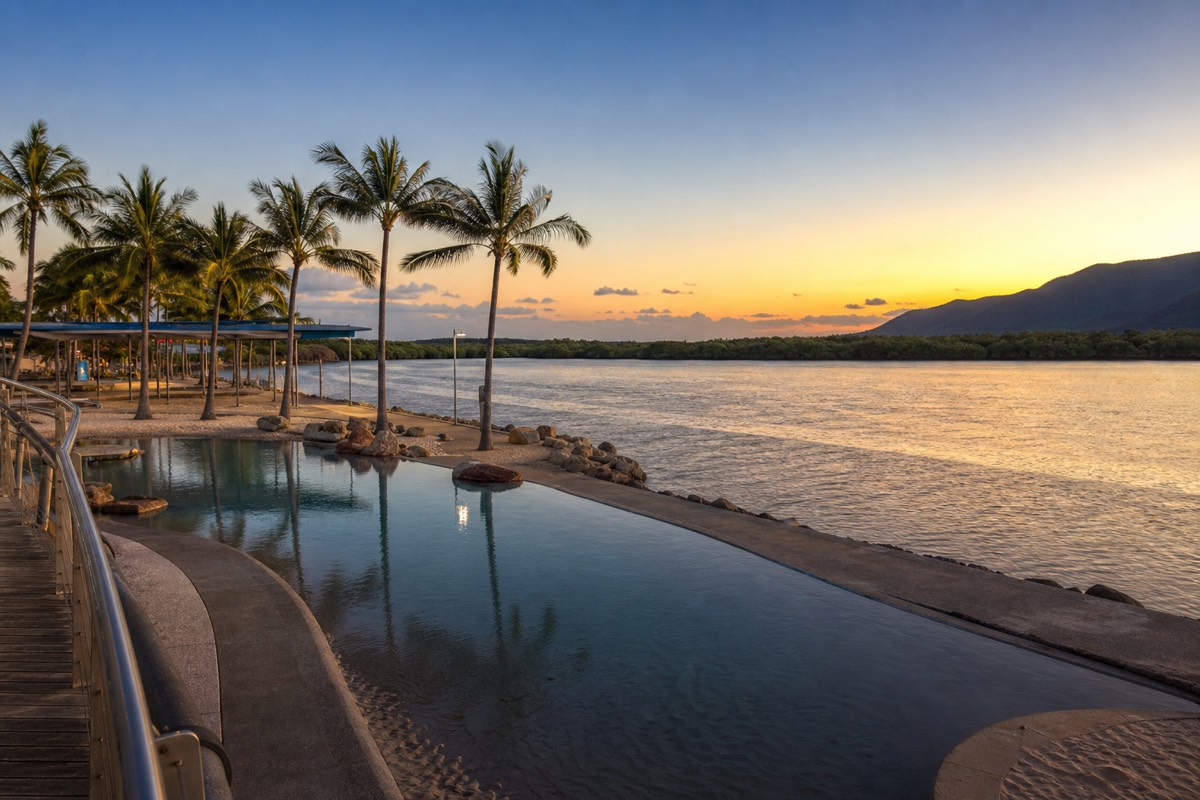
Even setting the outer reef aside, water shapes daily life in Cairns more than almost anywhere else in Australia. The city's own swimming lagoon sits on the waterfront precisely because the ocean off the CBD is not a swimming beach: mudflats, estuarine water and, at certain times of year, marine stingers make the esplanade shoreline better admired than entered. The lagoon solves that. It's free, it's saltwater-treated rather than open ocean, and it's open year round, which makes it the default afternoon for families, budget travelers and anyone whose legs are tired from a boat day.
The pattern repeats along the coast. Travelers chasing a swim in the actual ocean head north to the beach suburbs and beyond, or out to the islands, and the choice between them matters more than most first-time visitors expect. Here is how the main water options around Cairns break down for someone who has already booked, or is about to book, their reef day.
| Water option | What you get | Time from Cairns | Honest caveat |
|---|---|---|---|
| Cairns Esplanade Lagoon | Free swimming on the waterfront, lifeguard-patrolled, open year round | In the CBD | It's a lagoon, not a beach. No waves, no snorkeling |
| Northern beaches (Trinity, Palm Cove, etc.) | Actual ocean swimming beaches with patrolled stretches | 20 to 45 minutes north | Stinger nets and seasonal closures apply; swim between the flags |
| Green Island and Fitzroy Island | Island day trips with beaches and fringing reef from Cairns | Boat transfers from the marina | Fringing reef is not the outer reef experience |
| Cape Tribulation coast | Where the rainforest meets the reef, with a short reef trip departing locally | Roughly two hours' drive north | Crocodile habitat; the Ocean Safari half-day tour is the practical way to get on the water there |
Two rows of that table deserve honest explanation, because they are where expectations most often misfire. The island trips, Green Island and Fitzroy Island among them, are marketed hard in Cairns, and they are good products, but they are not the same product as the outer reef. Fringing reef around an island gives you beach time, easy snorkeling and a short transit, and the coral and water clarity are what they are. The outer reef gives the clarity and coral quality the reef is famous for, at the cost of a 1.5 to 2 hour transit each way. Neither is a rip-off; they simply serve different travelers, and the mistake is booking an island day expecting the outer reef experience or vice versa.
The northern beaches row carries its own nuance. Trinity Beach, Palm Cove and their neighbors are real swimming beaches with patrolled stretches, and they are the closest thing to the postcard version of tropical Queensland within easy reach of the CBD. But the same seasonal forces that shaped the lagoon shape them too: stinger enclosures, flags and, in the warmer months, suits. The beach day is genuinely good. It just isn't a swim-anywhere-anytime beach day, and travelers who understand that beforehand enjoy it far more than those who discover it on arrival.
The Cape Tribulation option deserves special mention because it solves a problem most itineraries create for themselves. Cape Tribulation sits roughly two hours north of Cairns, and travelers already headed that way for the Daintree often build the day around a half-day reef trip that departs from the same stretch of coast rather than backtracking to Cairns for a separate boat day. The Ocean Safari reef trip departing Cape Tribulation is the shortest reef tour on our comparison list at 4½ hours, hotel pickup included, which leaves the rest of the day free for the rainforest side of the trip: a Daintree River cruise, a walk through the beach-forest boardwalks, or simply driving the loop back through the Daintree village.
That combination is genuinely unusual. Cape Tribulation is the point where the Daintree rainforest and the Great Barrier Reef sit within view of each other, two World Heritage areas meeting at the waterline. A half-day on the water out of Cape Tribulation and an afternoon on a rainforest boardwalk cover both listings inside the same twelve hours. Nowhere else in Australia lets you do that on foot.
One practical note worth knowing before any trip near the Daintree rivers: the rivers and mangrove-lined estuaries around the region are crocodile habitat, and Queensland's marine park authority publishes standing guidance on staying away from the water's edge in these areas rather than treating it as generic caution. It's the kind of fact that's easy to skip in trip planning and genuinely useful once you're standing on a riverbank. The Great Barrier Reef Marine Park Authority's page on reef animals covers it alongside the marine species you're more likely to be thinking about. For the broader picture on stingers, sharks and crocodiles around Cairns waters, our guide to reef safety and its deadliest animals covers it in detail, including what stinger season means for swimmers and snorkelers.
For anyone weighing whether the islands or the outer reef deserve the one boat day on their itinerary, the honest answer is that they are different products. Island trips suit travelers who want a beach, a swim and easy snorkeling without a long transit. Outer reef trips suit travelers who want the coral quality and water clarity the reef is famous for, at the cost of a 1.5 to 2 hour transit each way. The comparison lives in our guide to choosing the right reef tour, including which months make island water clearer or murkier.
What A Reef Day Leaves Room For
The arithmetic of a reef day explains why land days matter. A standard full-day outer reef trip from Cairns spends 1.5 to 2 hours in transit each way, gives 3 to 4 hours in the water across 2 or 3 reef sites, and runs 8 to 10 hours door to door from hotel pickup to hotel drop-off. That's a whole day. It's also a day that ends between 5 and 6 pm, which is exactly when the Cairns night market and the esplanade food scene start earning their keep. Travelers who structure the week as one boat day followed by one slow land day report a better trip than those who stack two boat days back to back.
It's worth being precise about what that 8 to 10 hours contains, because it changes what you can plan around it. Door to door means hotel pickup to hotel drop-off, so the day starts early and finishes in time for dinner but not much else. The 3 to 4 hours in the water is cumulative, spread across 2 or 3 sites rather than one long session, with the transit between sites counted separately. Travelers who imagine six hours of continuous snorkeling and travelers who dread exactly that are both calibrating to the wrong number. Three to four hours in the water, broken up, with food and rest between, is the reality, and for most swimmers it is enough. Travelers who want to decide between snorkeling and diving for those hours, rather than just assuming one or the other, can compare the two properly in snorkeling versus scuba on the reef.
The 4½-hour half-day option out of Cape Tribulation sits at the opposite end of the scale, and it is the honest answer for travelers whose trip simply cannot absorb a full boat day. Four hours, pickup included, means the morning or afternoon is spent on the water and the other half stays free for the rainforest or the drive. It costs reef time compared to the full-day outer reef trips, that trade-off is real and not worth pretending away, but for a Daintree-based day it is the only way to cover both World Heritage listings in one date, and for some itineraries that trade is the whole point of the trip.
Rainforest And Nature: Daintree, Kuranda And The Atherton Tablelands
This is where Cairns separates itself from every other Australian city, and it deserves the most planning attention of anything on this page. The rainforest inland and north of the city is the Wet Tropics of Queensland World Heritage Area, listed on 9 December 1988 against four natural criteria. It runs roughly 420 kilometres between Cooktown and Townsville, covers 894,516 hectares, about 0.12 percent of Australia's land area, and carries a perimeter of around 3,000 kilometres. That listing is the reason the Daintree keeps getting described in superlatives, and the underlying numbers hold up.
| Measure | Figure |
|---|---|
| World Heritage listing date | 9 December 1988, four natural criteria |
| Total area | 894,516 hectares, about 0.12% of Australia |
| Length | Approximately 420 km, Cooktown to Townsville |
| Vascular plant species | About 2,800, with roughly 700 endemic |
| Vertebrate animal species | At least 663 |
| Butterfly species | 230 |
| Highest point | Bartle Frere South Peak, 1,622 m |
| Rainforest Aboriginal tribal groups | At least 20 with continuing connection to the area |
The Wet Tropics Management Authority's published facts and figures record roughly 2,800 vascular plant species inside the area, of which about 700 are found nowhere else on Earth, alongside at least 663 vertebrate animal species and 230 species of butterfly. The Daintree itself is widely cited as the oldest continuously surviving tropical rainforest on the planet, older than the Amazon. Whether or not you memorize any of that, the practical version matters: a rainforest day almost anywhere around Cairns is a day inside the same listed area. The Daintree, Mossman Gorge, the Barron Gorge the railway climbs through, and the crater lakes up on the Tablelands all sit within it. The highest point, Bartle Frere South Peak at 1,622 metres, is also inside it, which gives a sense of the range the railway and the cableway climb into.
One thing the listing does not do is turn the area into a park with a gate. Most of it is public national park and state forest managed by Queensland's park service, with towns, farms and roads threaded through it, so the visitor experience is a series of walking tracks, lookouts and river crossings rather than a single entrance. That is worth understanding before booking, because a "Daintree tour" from one operator may mean a river cruise and a short boardwalk while another means the full drive to Cape Tribulation and back.
Kuranda: The Railway, The Cableway, Or Both?
Most visitors do both, riding one direction and returning the other, because the railway and the cableway show the same rainforest from two completely different vantage points. The Kuranda Scenic Railway is a heritage train that climbs through cuttings and past waterfalls carved into the range behind Cairns, a slow, historic way to see the terrain from ground level. The Skyrail Rainforest Cableway does the opposite: it lifts you above the canopy in a gondola, with stations along the way where you can get out and walk boardwalks through the rainforest itself. Neither requires hiking fitness, and both end up in the village of Kuranda, which has its own market and wildlife park scene worth an hour or two on its own.
| Feature | Kuranda Scenic Railway | Skyrail Rainforest Cableway |
|---|---|---|
| Vantage point | Ground level, through cuttings and past gorges | Above the canopy, looking down into the rainforest |
| Pace | Slow, scenic, historic | Gentle, with optional stops to walk boardwalks |
| Character | Heritage train, built in the 1800s to service the Tablelands | Modern cableway engineering over protected rainforest |
| Common pairing | Up by Skyrail, back by train, or the reverse | Up by Skyrail, back by train, or the reverse |
| Best for | Travelers who want the classic Queensland rail experience | Travelers who want the canopy view without walking |
The engineering numbers explain why the loop feels like two different trips rather than one journey done twice. The railway covers 33 kilometres between Cairns and Kuranda, cut through 15 hand-dug tunnels and over 55 bridges as it climbs from sea level to 327 metres. The train was built between 1887 and 1891, and its route was hacked out of the range by hand crews working with picks and black powder, which is why the line carries 98 curves and threads the gorge instead of taking a direct line up it. The modern service still runs through the heart of Din Din, the Barron Gorge National Park.
Those construction facts are not trivia; they change the experience on board. A line built by hand through a gorge cannot run fast, so the journey is genuinely slow, and the cuttings and curves mean the scenery arrives at the window rather than rushing past it. Travelers expecting a commuter-style ride are sometimes impatient by the halfway mark. Travelers who know the line was dug between 1887 and 1891, by crews with picks and black powder, tend to spend the ride looking for the evidence, and it is everywhere: tunnel mouths, bridge after bridge, and the gorge walls the track hugs for most of the climb.
The Skyrail runs 7.5 kilometres over the canopy between Smithfield and Kuranda, with two mid-route stations you can get out and walk at. Red Peak is the cableway's highest point at 545 metres above sea level, and it has a boardwalk loop with ranger-guided walks included rather than sold separately. Barron Falls station further along carries lookouts over the falls and a rainforest interpretation centre. The Kuranda terminal sits at 336 metres, next door to the railway station and a short walk from the village, which is what makes the up-one-way-down-the-other loop work without any extra transfer.
| Detail | Kuranda Scenic Railway | Skyrail Rainforest Cableway |
|---|---|---|
| Route length | 33 km, Cairns to Kuranda | 7.5 km, Smithfield to Kuranda |
| Climb | Sea level to 327 m at Kuranda | Up to 545 m at Red Peak, terminal at 336 m |
| Engineering | 15 hand-dug tunnels, 55 bridges, 98 curves | Gondola cableway over protected rainforest |
| Mid-route stops | Barron Falls viewing stop | Red Peak and Barron Falls stations, both walkable |
| City end | Cairns city, with a Freshwater station option | Smithfield, roughly 15 minutes north of Cairns city |
Where you sleep changes which end of the loop is convenient. Skyrail's Smithfield terminal sits about 15 minutes north of the Cairns CBD and roughly 50 minutes south of Port Douglas, per Skyrail's own visitor information, so anyone based on the northern beaches or in Port Douglas is closer to the cableway end than to the city rail terminus. That also means a Port Douglas base can pair a Kuranda day with a reef day out of Port Douglas without either day involving a long southbound drive first. Our comparison of Cairns, Port Douglas and the Whitsundays as reef bases goes deeper on that trade-off.
The common move, doing one leg by rail and the other by cableway, turns what could be two separate half-days into a single satisfying loop that starts and ends near the Cairns waterfront. It's a full day once you count transfers and time in Kuranda village itself, so most travelers treat it as its own day rather than stacking it against a reef trip on the same date.
Kuranda Village Itself
Kuranda is worth the extra hour or two travelers usually give it. It's a market town in the genuine sense: stalls selling local craft and produce, cafes, a butterfly sanctuary and a wildlife park among the long-running attractions, all walkable from either the railway station or the Skyrail terminal. Because both the train and the cableway drop you in the same village, it functions as a natural midpoint rather than a detour, which is part of why the loop works so well as a single day rather than two separate half-day trips squeezed onto different dates.
The village is also, quietly, one of the better things to do in Cairns with kids. The butterfly sanctuary and the wildlife park are both short walks from the terminals, the village itself is compact enough that small legs can manage it, and the arrival by gondola or heritage train is itself half the entertainment. Families doing the loop typically ride up by cableway, because the canopy view holds children's attention better than a slow train climb, spend the middle of the day in the village, and ride the railway down with tired children who fall asleep against the window. It is a rare full-day outing that leaves adults and children equally satisfied, and it needs no swimming, no sun management beyond the ordinary, and no early morning.
A Daintree And Cape Tribulation Day
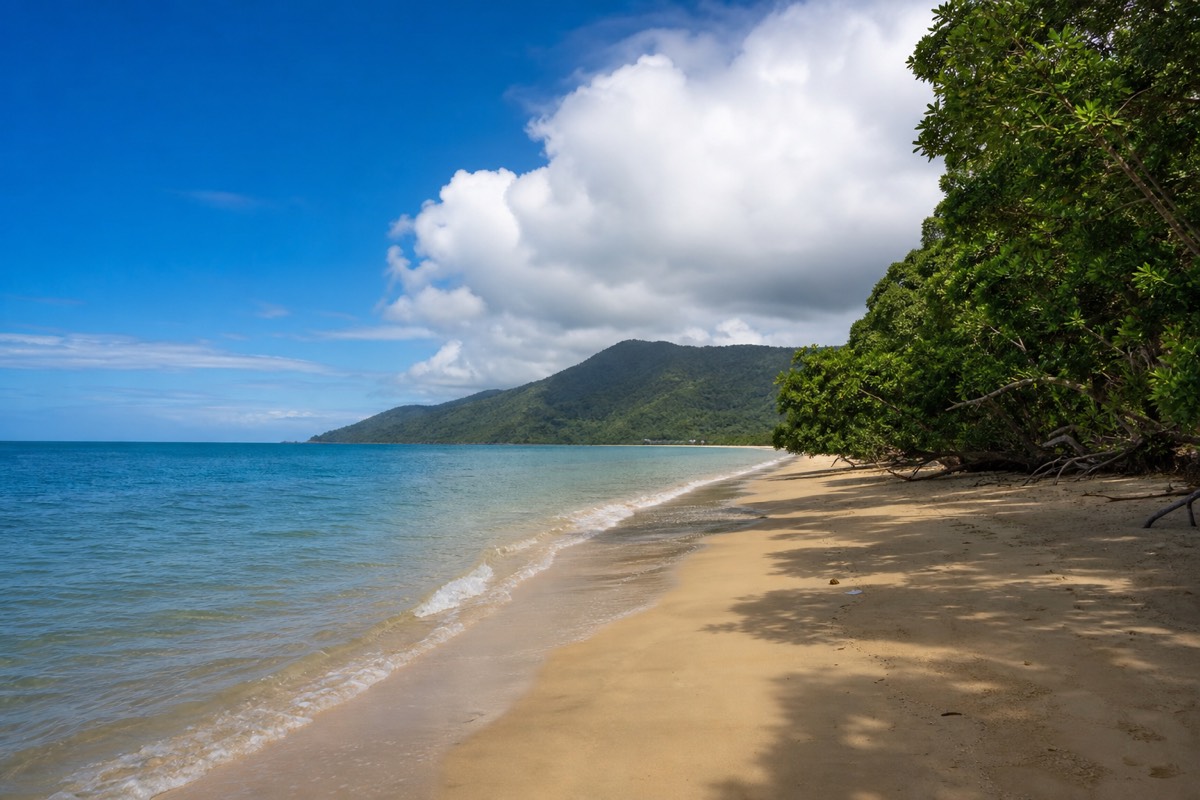
A Daintree and Cape Tribulation day typically means a drive or tour north from Cairns, a river crossing, walks through ancient rainforest that runs straight down to the beach, and a long look at where two World Heritage sites meet at the waterline. Boardwalks, short rainforest walks, and river cruises looking for estuarine wildlife are the typical building blocks of a day up there.
The drive itself is part of the attraction. Crossing the Daintree River by ferry, winding through lowland forest that thickens the further north you go, and emerging at Cape Tribulation beach where the trees stop and the reef begins: this is the stretch of coast that gives Far North Queensland its reputation. Travelers with a rental car can self-drive the day easily, and travelers without one have a long list of small-group tours to choose from, which makes the Daintree one of the better things to do in Cairns without a car, provided the tour includes pickup.
Crocodile content deserves a flag here, because "things to do in Cairns crocodile" is a genuine search pattern and a genuine decision point. Daintree River cruises are the standard, safe, regulated way to see estuarine crocodiles: operators run purpose-built boats, the animals are viewed from the water at distance, and the guides know the resident population. What no one should do is approach riverbanks, estuaries or mangroves on foot. The distinction between a booked cruise and a casual riverbank walk is the distinction between the region's best wildlife experience and one of its most avoidable risks.
A word on what the day actually feels like, because the marketing and the reality diverge a little. The Daintree is sold on superlatives, oldest rainforest on Earth, oldest than the Amazon, and the superlatives are earned. But the day itself is not one dramatic reveal; it is a sequence of quiet moments. A boardwalk where the canopy closes overhead. A river crossing where you watch the water for eyes that may or may not appear. A beach where the rainforest stops at the sand. Travelers who arrive expecting a themed attraction sometimes report the day felt slow. Travelers who arrive expecting a landscape generally describe it as the best non-reef day of their trip. The difference is entirely in the calibration, and it is worth calibrating before the two-hour drive north.
The Atherton Tablelands
For travelers who like waterfalls, crater lakes and slower countryside driving, yes, the Atherton Tablelands is generally considered worth a full day, though it rewards a car more than a fixed itinerary. The Tablelands sit up and inland from Cairns at a noticeably cooler elevation, a patchwork of dairy country, coffee farms, crater lakes formed by ancient volcanic activity, and a run of waterfalls that locals refer to as a circuit. It's a different Queensland than the coastline: green, hilly, and quiet.
Where the Daintree and Cape Tribulation stretch is lowland tropical rainforest running straight to the coast, best suited to rainforest walks, river cruises and a half-day reef trip tacked on nearby, the Tablelands sit up and inland, elevated hinterland built around a self-drive waterfall circuit, crater lake swims and farm-gate food and coffee stops. Neither one is objectively better. They serve different days and different travelers, and a week in Cairns has room for both if you want it.
The practical reality of the Tablelands is that self-drive beats touring for most travelers, simply because the attractions are dispersed and the pleasure is in the stops between them. A coffee farm here, a dairy there, a swim in a crater lake, and two or three waterfalls strung together by winding roads. Travelers without a car can join organized Tablelands day tours, and they do exist, but the pace is necessarily fixed and the farm stops shorter. Budget the whole day. The circuit is not something to squeeze between other commitments.
It is also the region's best answer for travelers who have done the reef and the Daintree and want a day that feels nothing like either. The temperature drop alone changes the mood: the coast is tropical and humid, the Tablelands are temperate and green, and travelers who have spent four days in salt air and sun often describe the change of air as the single most refreshing part of the week. Add the farm-gate food and coffee culture, which the coast does not really have, and the day earns its slot on variety rather than spectacle. That is a fair trade. Not every day of a trip needs to be the best day of the trip; some of them need to be the day that makes the next big day possible.
Food And Culture In Cairns
Cairns is a small city with an outsized food scene for its size, built on three things: the produce of the Wet Tropics, a steady flow of international travelers with money to spend on dinner, and a waterfront position that makes seafood the default rather than the exception. The night market on the esplanade is the best known institution, food stalls and souvenir stands open into the evening, and it's built for exactly the kind of tired, sun-worn evening that follows a reef day or a Tablelands circuit. You arrive back at your hotel salt-sticky, walk five minutes, and eat.
Rusty's Markets are the daytime counterpart, a produce and craft institution where the region's growers sell directly. Tropical fruit is the draw: the Wet Tropics grows things that barely appear in southern supermarkets, and the stalls at Rusty's are the easiest place to try them. Give it an hour or two on a morning between bigger outings, which is roughly what it needs.
A few patterns worth knowing before you plan your eating:
- Evenings are the natural slot for the night market. It exists to catch the post-tour crowd, and the stalls reflect that: quick, cheap, varied food rather than destination dining.
- Rusty's runs mornings. It's a produce market first, so it suits the start of a day, particularly a day with no early boat departure.
- Seafood is local by default. The reef and the coastline supply the restaurants, and the marina precinct carries the biggest concentration of it.
- The Cairns Aquarium is the cultural bridge for travelers whose reef day didn't happen. Two to three hours indoors, focused on Australian tropical species, and genuinely useful as the rainy-day option, because Far North Queensland does deliver rain.
The aquarium is worth one more sentence of honesty, because its role in a Cairns week is misunderstood. It is not a substitute for the reef, and travelers who treat it as one are disappointed. What it does well is two other jobs: it shows the tropical freshwater and rainforest species that a reef trip never will, the rivers and creeks of the Wet Tropics hold their own wildlife, and it gives travelers a second look at things they saw at distance on the boat, rays, reef fish, the smaller coral-reef residents that flash past a snorkel mask. As a rainy-day fill-in, it is the best indoor option in the city. As a reef replacement, it is not. Book accordingly.
Culture in Cairns also includes the layer that most itineraries skip entirely: the Rainforest Aboriginal tribal groups of the Wet Tropics, at least 20 of them, with continuing connection to the area. The Skyrail's Barron Falls station carries a rainforest interpretation centre, ranger-guided walks at Red Peak are included with the cableway ticket, and the land the railway and gondola cross is country with deep and specific meaning. The line's own history pages cover the construction era, but the longer human story of the area is older than the railway by thousands of years, and the interpretation points along both journeys are where it is presented. Travelers who want more than scenery will find it, but it requires choosing the tours and interpretation points that present it rather than the ones that just drive past.
For travelers planning around food, the honest summary is this: Cairns will not compete with Sydney or Melbourne for fine dining, and it doesn't try to. What it does well is cheap, fresh, tropical and waterfront, from market stalls to marina restaurants. Budget accordingly, and leave the fancy dinner for the night after the reef day, when the appetite is largest.
One structural note ties the food scene back to the itinerary advice later on this page. The eating rhythm of a Cairns week is set almost entirely by what you did that day. Reef days end early enough for a proper dinner and a slow walk along the esplanade. Kuranda days end mid-afternoon, which suits an early dinner or a longer market wander. Daintree days end late, often back in Cairns after dark, and those are the nights the night market was built for. Travelers who try to book a fixed dinner schedule for the whole week fight this rhythm constantly. Travelers who let the day decide the meal have a better time and spend less.
What Is Cairns Best Known For?
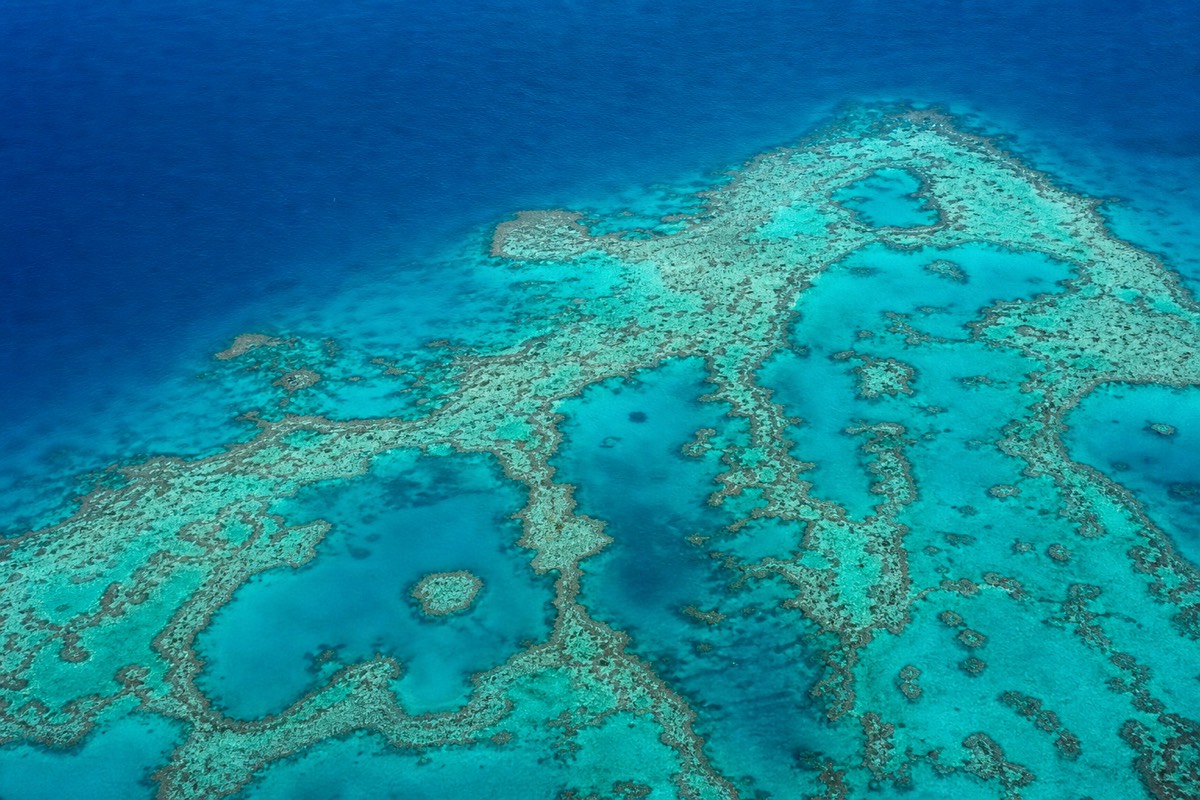
Cairns is best known as the primary gateway to the Great Barrier Reef, and there's no version of the city's identity that separates the two. The reef made the tourism economy, the Marlin Marina exists because of it, and the majority of visitors arrive because of it. But the second thing Cairns is known for, and the thing that makes it distinctive among Australian cities rather than merely busy, is the Wet Tropics rainforest at its back. Being the hinge between two World Heritage areas, reef and rainforest, within sight of each other at Cape Tribulation, is a geographic fact no other Australian city can claim.
In practice, the city's reputation splits into four recognizable strands. The reef gateway is the first and biggest. The rainforest hinterland, Kuranda, Daintree, the Tablelands, is the second. A tropical north lifestyle, the lagoon, the night market, the marina, the palm-lined esplanade, is the third. And a convention and backpacker economy that keeps the place unusually lively year round is the fourth. Together they explain why Cairns punches above its size in things to do: a city of its population, elsewhere in Australia, would not sustain this many attractions, tours and restaurants.
The dual-World Heritage position deserves a moment of its own, because it is the fact that everything else hangs off. The Great Barrier Reef World Heritage Area lies offshore. The Wet Tropics of Queensland World Heritage Area, listed in December 1988, runs from Cooktown down toward Townsville, and Cairns sits inside it. The two listings meet at Cape Tribulation, which is why a single day up there can touch both. Sydney has a harbour, Melbourne has laneways, and they are fine things to have. Cairns has two of the planet's listed natural systems on its doorstep at once, one on each side, and that is the whole reason this page can describe a full week of distinct days within two hours of one CBD. The city's fame rests on the reef, but its unusualness rests on the pairing.
The reputation comes with a caveat worth stating plainly. The city itself is not a beach destination in the way its postcards suggest. There is no swimming beach in the CBD, the ocean off the esplanade is mudflat and estuarine, and the famous swimming happens at the man-made lagoon or at the northern beaches, or on boat trips. Travelers who arrive expecting a Gold Coast layout are consistently surprised. Travelers who arrive expecting a working tropical city with a lagoon, a marina and two World Heritage areas on either side of it are delighted. Set expectations correctly and the city over-delivers.
How Many Days In Cairns Is Enough?
Most travelers need three to five days in Cairns to cover the essentials well: one full-day reef trip, one Kuranda loop day, and one Daintree and Cape Tribulation day, with the fourth or fifth day absorbing the Atherton Tablelands, the lagoon, the markets and the aquarium. Anything less than three days forces hard choices, because each of the big three days out is a genuinely full day. A two-day trip can manage a reef day plus either Kuranda or the Daintree, not both.
Here is a realistic shape for a first visit, adjustable for pace and season:
| Day | Plan | Why it works |
|---|---|---|
| Day 1 | Arrive, esplanade lagoon, Rusty's Markets if morning, night market in the evening | Low effort, no booking needed, acclimatizes you to the tropics before the big days |
| Day 2 | Full-day outer reef trip from Cairns Marlin Marina | The headline day, 8 to 10 hours door to door |
| Day 3 | Kuranda Scenic Railway and Skyrail loop | A gentler pace the day after the boat, and the classic Cairns land day |
| Day 4 | Daintree and Cape Tribulation, self-drive or tour, optionally pairing the Ocean Safari half-day reef trip | The oldest rainforest on Earth plus a second, shorter reef experience |
| Day 5 | Atherton Tablelands waterfall circuit, or a slow lagoon and aquarium day | Flexible filler, best with a car |
The ordering is deliberate. Putting the reef day second gives arrival day for the free and easy things, and putting Kuranda after the reef rather than before it means the cableway's gentle pace lands on the day your sea legs need a rest. Whether one reef day is enough, or whether a second boat day is worth the cost, is a bigger question than this page can answer honestly in a paragraph, so we treat it separately in is the Great Barrier Reef worth it, and how many days do you need.
Families should lean toward the longer end of the range. Things to do in Cairns with kids cluster around the lagoon, the aquarium, the Kuranda wildlife parks and the butterfly sanctuary, and kids' tolerance for 8 to 10 hour boat days varies enough that a buffer day is wise. Travelers on a short stopover, by contrast, can compress to two days by choosing either the reef or the rainforest and accepting the miss. Cairns rewards the longer stay, but it doesn't punish the short one.
The car question shapes the day count as much as the calendar does. Travelers without a car can run the five-day plan above almost intact, because reef trips pick up at hotels, Kuranda works from the CBD, and Daintree tours with pickup exist, but the Tablelands day loses most of its appeal on a fixed-route coach. Travelers with a car gain the Tablelands, the northern beaches at will, and the freedom to break the Daintree drive at Mossman Gorge or any of the boardwalks between Cairns and the ferry. Neither approach is wrong. The honest framing is that a car buys flexibility on land days and sits parked during the reef day, so travelers planning one boat day and three land days get more from the rental than travelers planning three boat days and one afternoon ashore.
What To Be Careful Of In Cairns
The tropics are not hostile, but they are specific, and a few risks here are genuinely different from what visitors from temperate Australia or overseas are used to. None of these should change your plans. All of them should change your habits.
- Marine stingers. Box jellyfish and Irukandji are a seasonal reality in Far North Queensland waters, and swimming at unpatrolled beaches outside enclosures during stinger season is the single biggest avoidable risk in the region. The lagoon exists partly to solve this problem.
- Crocodiles. Estuarine crocodiles live in the rivers, estuaries and mangroves around Cairns and north through the Daintree. Queensland's marine park authority publishes standing guidance on staying away from the water's edge in these areas. Never swim in or near estuarine water, and treat every riverbank as croc habitat rather than checking for signs.
- The sun. The UV in tropical Queensland is ferocious even on overcast days. Reef days are the biggest trap: you are cooler in the water and on the boat breeze than the sun is strong, and sunburn through a full day on the water is the most common souvenir travelers didn't want.
- Driving distances. The Daintree and Cape Tribulation day involves a long drive on roads shared with wildlife, and fatigue after a reef day is real. Don't stack a big drive immediately after a big boat day.
- Weather swings. The Wet Season delivers genuine rain, and the region's tours run around it rather than despite it. The aquarium and the markets are the standard wet-weather plan for good reason.
- Booking the wrong tour. Because the Wet Tropics has no gate and no single entrance, tour descriptions vary wildly for the same headline name. A "Daintree tour" can be a river cruise and a boardwalk, or the full drive to Cape Tribulation and back. Read what the listing actually includes before paying.
The crocodile point deserves the bluntest phrasing on this page, because it is the one risk where casual behavior and booked behavior differ so sharply. A Daintree River cruise is a regulated, purpose-built experience with a strong safety record. Standing on a mangrove riverbank at dusk is not the same activity and is not treated the same way by the authorities who publish the guidance. The rule that locals follow is simple: if the water is estuarine, it is crocodile habitat regardless of what the signs say or don't say. Apply that rule and the region's waterways become scenery to admire from a distance, which is all they ever needed to be.
The seasonal dimension of the first two points, which months carry stinger risk, which months are cyclone season, and how that should shape when you visit, is covered properly in our guide to picking a reef tour and a travel month. The short version: the lagoon and patrolled enclosures make swimming safe year round, and tours manage the rest.
Building A Cairns Week Around One Reef Day
The best structure for a Cairns trip is one reef day, chosen well, surrounded by land days that each deliver a different version of the tropics. The mistake most first-timers make is the opposite: two or three boat days, a burnt-out final stretch, and a flight home without ever having stood inside the oldest rainforest on the planet. The region's real advantage is not that the reef is close, it's that the reef is close to a second World Heritage area, and a week that uses both is a different class of trip from a week that uses one.
Start by fixing the reef day. A standard full-day trip from Cairns runs 8 to 10 hours door to door, with 1.5 to 2 hours of transit each way to the outer reef sites and 3 to 4 hours in the water across 2 or 3 sites. What that day costs, and what you get for the money across operators, is a question with enough moving parts to warrant its own treatment in how much a reef tour really costs. The planning point for this page is simpler: pick one day, mid-trip, and build around it rather than around multiple bookings.
Then let the land days do their work. Day one is arrival and the free stuff, the lagoon, the markets, the esplanade walk, which is the complete answer to things to do in Cairns for free and costs nothing but time. The reef day lands second or third. Kuranda follows it, because the railway and cableway loop is the gentlest possible introduction to the rainforest on tired legs, and the two vantage points, ground-level gorge and canopy gondola, are the region's most efficient half-to-full day. The Daintree and Cape Tribulation day comes next, optionally upgraded with the 4½-hour Ocean Safari reef trip out of Cape Tribulation for travelers who want a second, shorter reef experience without another full boat day. And the Tablelands, if the week stretches that far, close it out with waterfalls and cooler air.
A few practical notes make the week run better. The Skyrail's Smithfield terminal sits about 15 minutes north of the CBD, which matters for morning logistics on Kuranda day. The Daintree day is the longest drive, so don't book it the morning after the reef day if you can avoid it. Rusty's Markets want a morning slot. And the night market solves every tired evening, which is precisely why it survives.
There is also a version of the week for travelers who want unique things to do in Cairns rather than the standard circuit, and it is worth sketching, because the region supports it better than most. Swap the generic Daintree day for one anchored on the river cruise at dawn, when the crocodiles and the birdlife are most active, and pair it with the Ocean Safari afternoon departure so the day covers two World Heritage areas inside twelve hours. On the Tablelands, skip the fixed waterfall order and let the farm gates decide the route, coffee first, dairy second, a crater lake swim when the heat peaks. Even the free days have versions most visitors miss: the esplanade at its best is not the lagoon but the walk along it, mudflat birdlife at low tide, the mountains of the Barron Gorge catchment behind the city, and the evening market scene that follows. None of that costs anything, and almost none of it appears on a standard itinerary.
Travelers based in Port Douglas rather than Cairns can run the same week with the geometry reversed: the cableway end of the Kuranda loop is closer, reef trips depart locally, and the Daintree is a shorter hop north. That trade-off, plus the Whitsundays alternative, is covered in our comparison of the three great reef bases. Travelers flying in from the south can read how to get to the reef from Sydney or Brisbane before committing to any of it.
The last thing worth saying: the reef day is the reason most people come, and it should stay the center of the week. But it is one day out of five. What surrounds it, a rainforest older than the Amazon, a train line dug by hand through 15 tunnels, a village market at the top of a gondola, and a free lagoon where the city meets the water it can't swim in, is what turns a good trip into the one travelers talk about for years. Book the boat. Then book the days around it.