Can You Visit The Great Barrier Reef Without A Tour?
It is technically legal to snorkel parts of the reef without booking a tour. Whether that's actually realistic depends entirely on which part of the reef you mean.
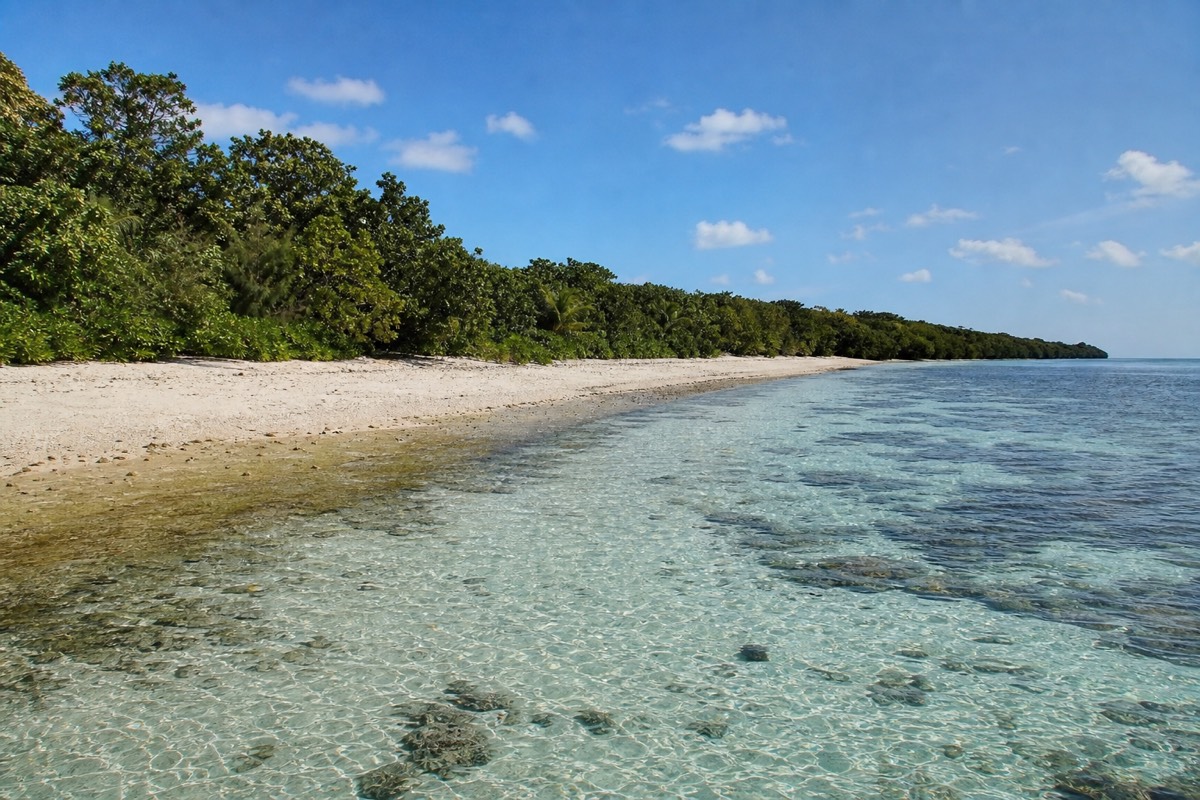
Yes, but only at specific inshore spots. The outer Great Barrier Reef sits roughly 1.5 to 2 hours offshore by boat from Cairns, so almost none of it can be reached under your own steam. Independent visits genuinely work at shore-access islands such as Green Island, or with a private boat that follows marine park rules. Everything beyond that requires a tour or a charter.
Price tables and review counts in the original comparison are historical examples, not live quotes or safety evidence. Use the booking options below for current totals, inclusions and restrictions.
Can You Visit The Great Barrier Reef Without A Tour?
The question gets asked constantly, usually by travelers staring at a $150-plus tour price and wondering whether the reef is something you can simply walk into. The honest answer splits in two, and the split depends entirely on which part of the reef you mean.
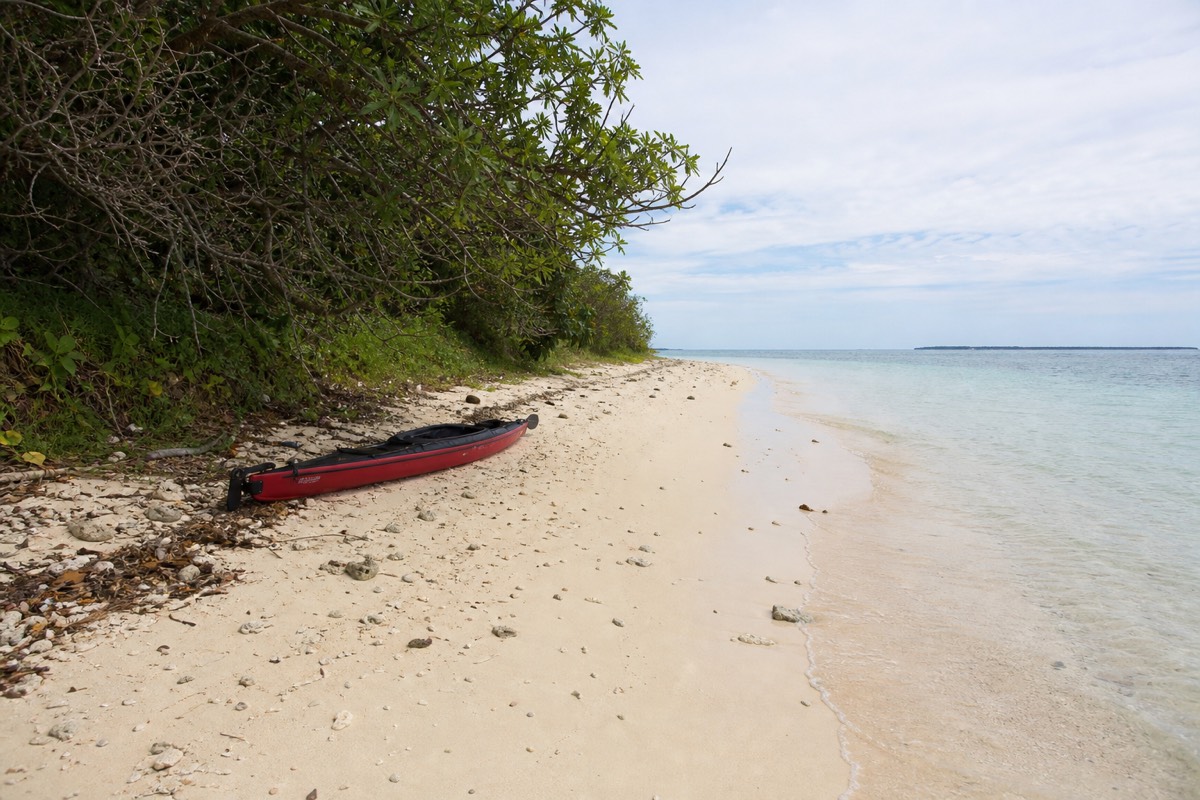
Yes, you can visit without a tour, in specific and limited places. Some islands along the coast carry fringing reef directly off their beaches, and at the right tide you can walk in from the sand and snorkel over coral with nobody's name on your ticket. Green Island, off Cairns, is the clearest example. Its reef flat is reachable straight from the beach, which is a large part of why a combined snorkel and glass-bottom boat experience there sells for $89 as a low-cost, low-commitment option. That is a genuine independent visit, or close enough to one that it functions the same way.
A private boat is the second legal route. A vessel you hire or own can lawfully take you snorkelling inside the marine park, provided it uses public moorings and stays clear of no-anchoring coral zones. People do this. It is not a loophole or a grey area.
But the word "reef" in that question is doing enormous work. The Great Barrier Reef is not one place. It is an enormous system of coral platforms, and the sites people picture when they imagine the trip, the ones with the best coral cover and the clearest water, are the outer reef sites. Moore Reef, Norman Reef, Hastings Reef, the Agincourt ribbon reefs. These sit miles off the coast, roughly 1.5 to 2 hours offshore by boat from Cairns, and no beach, no kayak and no swim from shore gets you there. The outer reef cannot be visited without a tour or a boat charter. That is not an opinion, it is geography, and Queensland's own tourism authorities state it plainly: the coral systems simply sit too far off the coast for any other access.
So the accurate framing is this: visiting the Great Barrier Reef without a tour is possible for the inshore fringe of the system, and effectively impossible for the outer reef that gives the place its reputation. Two different situations, two different answers.
There is also a middle category that trips people up. Certain sites are not just hard to reach independently, they are legally closed to independent access, because the only way onto them is through a licensed operator holding a site-specific permit. The Frankland Islands All-Inclusive Day Trip is the clearest case on record: its operator holds the only permit to land passengers on Normanby Island. No private vessel can land there at any price, no matter how well prepared the crew is. Technically legal and actually reachable are not the same thing on the reef.
One more distinction matters before the practicalities. Booking a spot on a tour boat without joining the group activity, essentially buying transport only, is rarely an option. Most operators sell the trip as a package: the boat ride, the guiding, the gear and usually lunch arrive bundled together, and there is no menu where you can order the crossing and skip the rest. Travelers hoping to use a tour boat as a ferry to a DIY snorkel spot will generally find that product does not exist.
Why You Need A Boat Or A Flight
Distance is the entire story. The outer reef sites with the healthiest coral and the best visibility sit far beyond the horizon, roughly 1.5 to 2 hours offshore by boat from Cairns. That is open-water crossing territory, the kind of water where conditions change and where a swimmer, a kayak or a small hire dinghy has no business being. There are only two machines that move a human body that far out: a boat and an aircraft.
Start with what does not work, because the failed routes get tried every year. Cairns itself has no fringing reef offshore. There is no swimmable route from the mainland, no reef you can see from the esplanade, no point where the coral comes close enough to reach on a paddleboard. The city is a departure point, not a reef destination. Travelers who arrive expecting to snorkel off a Cairns beach discover this quickly, and the question "can I just swim out to the reef from a Cairns beach?" gets asked often enough that the answer deserves stating plainly: no, not from there, not from any mainland beach in the region.
That kills the cheapest independent plan. What remains is paying for a vessel.
The boat option comes in two forms. The first is the commercial tour, which is what most people take. Day trips to the outer reef run from around $200 for a guided experience that already includes lunch, gear and a guide in the water, with simpler inshore options starting lower, around the $89 mark at Green Island. The second is the private charter or rental, which sounds like freedom until the arithmetic starts. A boat capable of the outer reef crossing is a serious vessel with serious fuel consumption. Then you need to find a legal mooring near Moore Reef, Norman Reef, Hastings Reef or the Agincourt ribbon reefs, which means knowing the zoning, and then you carry the skipper's responsibility for everyone aboard. By the time boat hire and fuel are tallied, the private route to the outer reef costs more than the guided tour that covers the same water with none of the homework.
The flight option is real but different in kind. Scenic flights over the reef exist, and they are extraordinary as a viewing experience, but they do not put you in the water. A flight gets you above the coral, not onto it, which makes them relevant to a different question covered later on this page about seeing the reef without snorkelling. They are not an independent access route in the sense of reaching the reef to swim; they are an alternative way of experiencing it entirely.
Worth saying too, because the related question gets typed into search bars constantly: can you swim in the Great Barrier Reef? Yes, absolutely, and swimming over the coral is the point of the trip for most visitors. But the swimming happens after the boat has already carried you there. Open water this far offshore is not a swimming environment on its own terms. The swimming is a destination activity, not a transit method.
There is no bridge, no ferry for foot passengers to a reef platform, no road, and no scheduled public transport to the outer sites. The marine park's geography does the filtering on its own. If you want the outer reef, someone with a licensed vessel takes you, whether that someone is a tour company or a charter skipper you have paid directly. The only real choice left is who drives and how much of the planning burden sits with you.
The Independent Options That Genuinely Exist
Strip away the myths and the independent options narrow to three. None of them is a scam and none is hidden, but each carries a set of conditions that decides whether it fits your trip.
Shore-Access Fringing Reef From An Island Beach
This is the option that most closely matches the dream of a tour-free reef visit. Certain islands have fringing reef you can walk into directly from the beach, no boat required after the ferry across. Green Island, off Cairns, is the clearest example: its reef flat is reachable straight from the sand at the right tide. You pay to get to the island, then you snorkel on your own schedule, in your own gear if you have it.
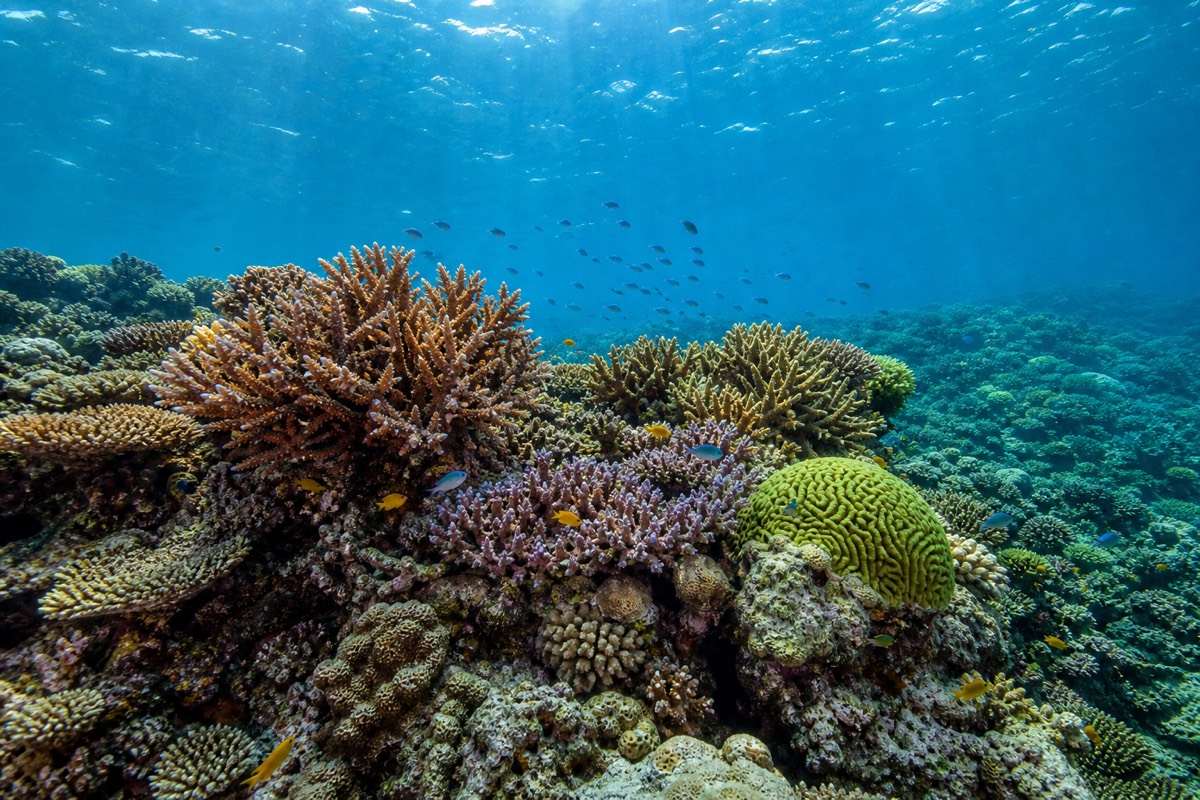
Two caveats keep this honest. First, the tide matters. Shore-access reef is genuinely accessible at the right tide, and a wrong tide can mean shallow water over dead coral or a long wade. Second, the coral quality is not outer reef quality. Green Island's reef is a legitimate option, and it holds real advantages for non-swimmers, nervous first-timers and anyone with only a few hours to spare. But it does not match the coral cover or the visibility of outer reef sites like the Agincourt ribbon reefs or Upolu Coral Cay. You are trading quality for independence and price.
Even at Green Island, plenty of visitors who could snorkel independently still book the guided glass-bottom boat component. The reason is simple. A glass-bottom boat ride turns a swim into a structured experience run by someone who knows exactly where the healthiest coral sits that day. That local knowledge is very hard to replace on your own, even with a good map and a full afternoon.
A Private Boat Inside The Marine Park
Marine park zoning and anchoring rules apply to private boats. The Environmental Management Charge applies to chargeable permitted operations; it is not a blanket entry tax on every private recreational visit.
The Marine Park Authority publishes responsible reef practices that spell out where anchoring, fishing and collecting are prohibited, and any private trip should start with those documents, not with a plan. The barrier here is rarely the law. It is cost and competence. A boat capable of the outer reef crossing, plus fuel, plus mooring knowledge, exceeds the price of a $200 guided tour that arrives with lunch, gear and a guide in the water. For the inshore islands, a private boat is occasionally practical. For the outer reef, the math almost never works.
Nothing At All For The Permit-Locked Sites
The third option is the non-option, and it deserves its own heading because people plan around it. Some sites are reachable only through a licensed operator holding a specific permit. Normanby Island is the case in point. The operator behind the Frankland Islands All-Inclusive Day Trip holds the only permit to land passengers there, which means no private boat can land, at any price, with any level of preparation. If your independent plan involves one of the permit-locked islands, the plan is already over. The tour is not one way in. It is the only way in.
Who Should Actually Consider Going Without A Tour
After laying out all three routes, the profile of the successful independent visitor is narrow. It suits travelers staying near a shore-access island such as Green Island, who are comfortable looking up marine park zoning themselves, and who are not chasing the outer reef's best coral. If that is you, the inshore option delivers real reef time for less money and on your own schedule.
Everyone else gets more reef, more safety cover and a lower total cost from a guided trip, once boat hire, fuel and permit hassle are counted honestly. And if outer reef quality is what actually matters to you, the gap widens further. The Outer Great Barrier Reef & Coral Cay Snorkel/Dive Tour, for instance, reaches sites no shore-entry spot can match, and its listing shows a 4.8 rating across more than 15,000 bookings, the kind of volume that reflects a lot of travelers concluding the same thing. For working out which operator suits your priorities, the guide to choosing the right reef tour goes into the detail, and the Cairns versus Port Douglas versus Whitsundays comparison explains how your departure point changes what is even possible.
The Great Barrier Reef For Non-Swimmers
Non-swimmers get told, wrongly, that the reef is not for them. The truth is more encouraging but it does steer the trip planning in a particular direction.
Start with what a non-swimmer can actually do in the water. Shore-access reef at a place like Green Island is shallow at the right tide, and the reef flat entry means you can stand, wade and see coral without ever leaving your depth. This is a genuinely different proposition from jumping off a boat into open ocean over 20 metres of water. For someone who is nervous in the sea, or who never learned to swim properly, the inshore islands are the single best fit on the whole reef. The trade, repeated from earlier because it matters here too, is coral quality: Green Island will not match the visibility or cover of the Agincourt ribbon reefs. Non-swimmers should go in knowing the swap they are making.
The glass-bottom boat is the second pillar. The Green Island Snorkelling & Glass Bottom Boat Experience pairs the two at $89, and the pairing is deliberate: swimmers snorkel the flat while non-swimmers ride the boat, or one person does both. The glass bottom turns reef viewing into a seated, dry, guided activity. Nobody has to swim, nobody has to get wet beyond the ankles if they would rather not, and the boat goes to coral you would struggle to find alone.
Outer reef day trips deserve a mention too, and this is where the framing surprises people. A non-swimmer can absolutely board a $200 outer reef day trip. What they cannot safely do is snorkel far from the vessel without water confidence. The saving grace of guided trips is that they include people whose whole job is watching guests in the water, and a guide in the water beside a nervous swimmer changes the risk picture substantially. A weak swimmer who wants to see Moore Reef or Norman Reef with support is better on a guided trip than on any private arrangement, precisely because the safety cover travels with the boat.
Seniors and travelers with limited mobility fit the same pattern, and it is worth being direct about it. The gentlest reef experiences are the seated and the shallow ones: a glass-bottom boat ride at Green Island, a wade over a reef flat, a guided trip with crew who brief passengers on conditions and stay attentive throughout. The hardest experiences for this group are long boat crossings with boarding ladders in open water, which some outer reef trips involve. Matching the trip to the body doing it matters more than matching it to the brochure.
One hazard note, kept short because another page owns it. Stinger season and the wider question of what in the water can hurt you, sharks included, is covered in the reef safety guide, and stinger season also feeds into the question of the worst time to visit, which the tour selection guide handles alongside the best months to go. Non-swimmers should read both before locking dates, since conditions in the water matter more to someone with less margin for surprise.
The short version for this section: non-swimmers should build the trip around Green Island's shore access and glass-bottom boat, or around a well-crewed guided trip, and should skip both the private boat idea and any plan that depends on swimming a distance. That is a workable reef holiday, not a compromise one.
Can You See The Great Barrier Reef Without Snorkeling?
Yes, and the answers range from cheap and cheerful to genuinely spectacular.
The glass-bottom boat is the entry point. At Green Island it forms half of the $89 combined experience, and it delivers coral viewing to anyone who stays dry: children too small for fins, travelers who dislike the sea, non-swimmers, people who simply prefer a seat to a swimmask. The captain positions the vessel over coral and the reef scrolls beneath the glass. It is a real reef experience, not a simulation of one.
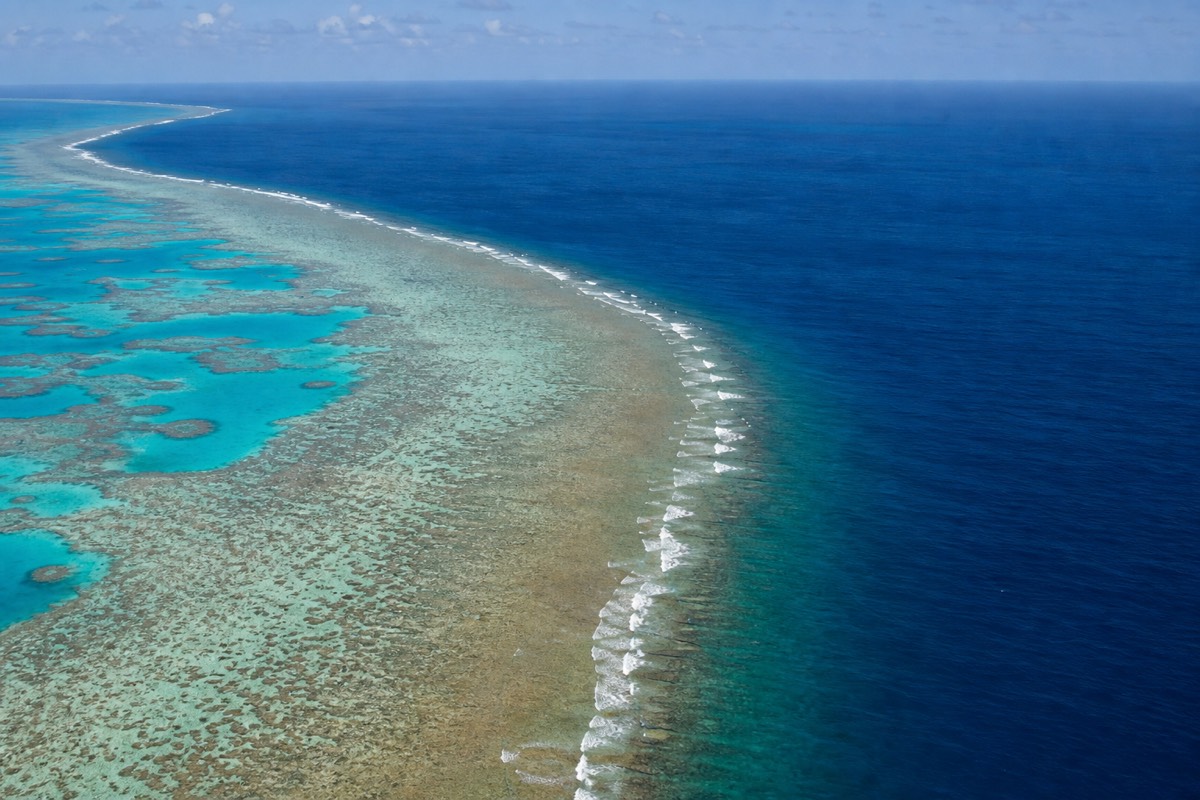
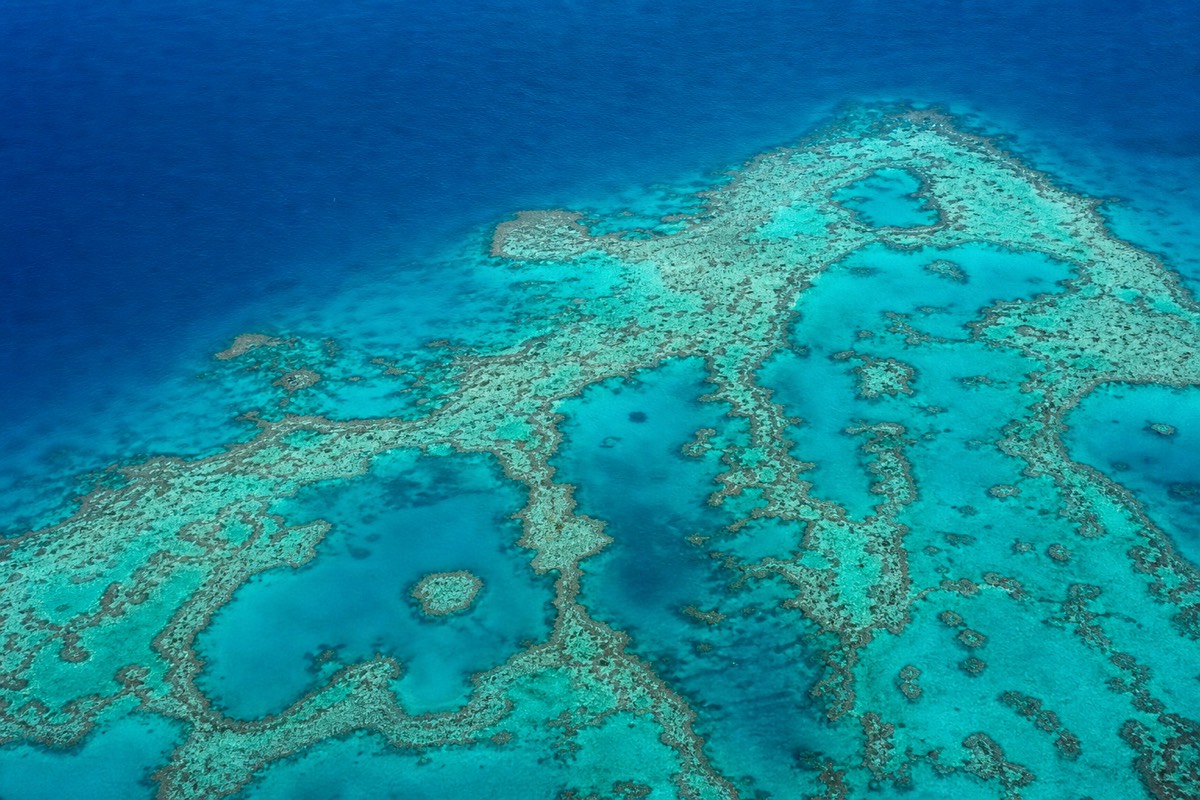
Scenic flights are the second route, and the one people underestimate. The reef from the air is a different animal entirely: the structure of the coral systems, the colour shifts from shallow turquoise to deep blue, the ribbon shape of the outer reefs, all of it reads at a scale no swimmer ever sees. Flights over the reef operate as a standalone product rather than a segment of a boat tour, which makes them the one genuinely independent way to experience the outer reef without joining a group. You are not in the water, but you are seeing the reef itself, and the parts of it boats cannot reach.
The third option is the weakest but worth naming so nobody books the wrong thing on a misunderstanding. Deck viewing, standing on a boat looking down, delivers far less than people expect. Water this clear hides nothing, but from above the surface, from a moving deck, you see fragments. Travelers who book a full outer reef day trip purely to look from the boat are usually better served by the glass-bottom boat or a flight. The deck is where you eat lunch and dry off, not where you see the reef.
Now the honest caveat, because this page owes readers the downsides. The non-snorkelling routes trade immersion for access, and the trade is uneven across the reef. A glass-bottom boat at Green Island shows you a fringing reef that, as established earlier, does not match the coral cover or visibility of sites like Agincourt or Upolu Coral Cay. If you cannot or will not snorkel, and outer reef quality matters to you, the flight is the better instrument: it captures the outer reef's scale, which is precisely its strongest quality.
For those who can swim but are weighing snorkelling against diving, that comparison has its own page in the snorkelling versus scuba diving guide, and the short version is that most travelers see more, more comfortably, on the surface. The choice matters less than people fear.
One last note on booking behaviour. Because most operators sell transport, guiding and gear as a package rather than separating the components, travelers who only want the boat ride and the deck view still generally buy the full product. That is not a rip-off. The glass-bottom components and the crew knowledge are part of what the ticket pays for, and non-snorkellers on a well-run trip usually get plenty out of the crew's briefings and the reef interpretation on the way out. But do check what the specific trip includes before assuming a dedicated viewing option exists on board.
Is It Ethical To Visit The Great Barrier Reef?
This question deserves a serious answer rather than a reflexive one, and the honest position is that visiting can be ethical, that the marine park is explicitly set up for visitation, and that the ethics live in how you go rather than whether you go.
Start with the system itself. The reef sits inside a marine park run by the Marine Park Authority, which maintains zoning that determines where anchoring, fishing and collecting are prohibited, and publishes responsible reef practices for everyone who enters the water, tour guest or private visitor alike. The framework exists because the reef is both an ecological asset and a tourism economy. Visiting is not trespass. It is a licensed, managed, taxed activity, and the management is the point.
Consider the money. Every commercial tour ticket builds in the Environmental Management Charge, the so-called reef tax, which exists to support the management of the marine park. Private visitors owe the same charge; it simply is not collected for them automatically, which is one reason the authorities take private compliance seriously. So the claim that tours are somehow extractive while private trips are pure does not survive contact with the fee structure. Both pay. The tour just pays on your behalf, visibly, on the receipt.
The permit system makes the strongest ethical case for licensed operators, and the Normanby Island example is the cleanest illustration anywhere on the reef. One operator holds the only permit to land passengers on that island. Whatever you think of exclusivity, the effect is control: a single accountable operator, a capped landing footprint, and an authority that can withdraw access if standards slip. Concentrated, permitted access is easier to police than open access. The same logic applies to public moorings, which private boats must use in place of dropping anchor: the moorings exist so that coral is not damaged by anchors, and the restriction binds everyone equally.
Then there is behaviour in the water. The responsible reef practices boil down to rules most readers can guess: do not touch or stand on coral, do not anchor in restricted zones, do not fish or collect where it is prohibited, do not chase or harass wildlife. A guided trip has crew who brief passengers on exactly these points and watch for lapses. A private trip depends entirely on the visitor having read the rules and following them unsupervised. For many travelers, honestly, the guided version is the more ethical of the two, not because independent visitors are villains but because supervision works.
There is a subtler argument that tourism itself builds the reef's political protection: an asset that earns its keep as a living reef has more defenders than one nobody ever sees. It is a real argument, though it should not be stretched into a licence for carelessness. Sightseeing does not confer virtue.
What this page will not do is bury the reef's actual problems here, because another page owns that question in full. Coral bleaching, the cumulative damage of recent mass bleaching events, and what genuinely threatens the reef's long-term future are covered in detail in the guide to whether the Great Barrier Reef is dying. Anyone weighing the ethics of their trip should read it before deciding, because the honest answer to "should I go" depends partly on the honest answer to "what state is it in".
Which Town Is Closest To The Great Barrier Reef?
It depends on which reef you mean, and the honest answer changes with the destination. Cairns is the region's main departure hub: the outer reef sits roughly 1.5 to 2 hours offshore by boat from Cairns, and Green Island sits close enough to the city to work as a half-day shore-access option. That combination of a major airport, the shortest widely offered crossings and the cheapest inshore option makes Cairns the default answer for most travelers. How the alternatives compare, and which town suits which style of trip, has its own full breakdown in the Cairns versus Port Douglas versus Whitsundays guide, which is the right place to settle that question. If you are starting even further afield, getting to the reef from Sydney or Brisbane is covered in the Sydney departure guide.
When A Tour Is Simply Cheaper Than Going Alone
The final irony of the DIY question is that most people ask it for financial reasons, and the financial answer usually lands the other way. Once you move past the shore-access islands, independence stops being the budget option and starts being the luxury one.
Run the arithmetic on the outer reef. A private charter capable of the 1.5 to 2 hour crossing to Moore, Norman, Hastings or the Agincourt ribbon reefs is a significant vessel, and its hire rate reflects that. Fuel for the round trip adds more. Then you need a legal mooring near your chosen site, which requires knowing the zoning map well enough to avoid anchoring in restricted coral zones, and the Environmental Management Charge still applies to the trip regardless of how private it is. Add the permit research time, the skipper or the burden of skippering yourself, and the fact that nobody aboard is watching for your safety in the water. Compare that pile against a guided tour at around $200 that already includes the crossing, lunch, gear and a guide in the water with you. The tour wins on price, and it wins before you count the risk.
Guided options span a wider band than the outer reef figure suggests. At the inshore end, the Green Island Snorkelling & Glass Bottom Boat Experience sits at $89. Full guided trips range up to roughly $250. That band is the real competitive set for a private boat, and the private boat loses to nearly all of it.
The package structure is the hidden engine of the value. Because operators bundle transport, guiding and gear rather than selling components separately, a tour ticket is not a boat ride with extras attached. It is the whole apparatus of a safe reef day, bought at scale. A private trip recreates the same apparatus piecemeal, at retail prices, with no group to share the fixed costs. Nine people on a tour boat split the fuel. One family on a charter pays for all of it.
There is an insurance angle too, worth a sentence even though this page cannot quote individual policies. Commercial tours operate under licensing and standards that a private arrangement does not automatically carry, and the crew on a licensed trip brief passengers on conditions and manage incidents when they happen. On a private boat, every one of those functions is yours. Travelers who weigh this properly usually find that the tour's price gap shrinks further still.
So when does going alone actually make sense? Only in the narrow case laid out earlier: you are staying near a shore-access island such as Green Island, you are comfortable reading the marine park's own rules, and you accept inshore reef quality. In that case the independent visit costs less and bends to your schedule, and nobody should talk you out of it.
For everyone else, the money question deserves a proper breakdown rather than a paragraph, and there is one at the real cost breakdown of a guided reef tour, including what pushes a day trip up or down inside that $89 to $250 band. Timing matters almost as much as price, and the question of the best month to go, along with the worst, stinger season included, is handled in the tour selection guide rather than here. And if the underlying question is not cost but value, whether one day at the reef justifies the whole trip, that argument has its own page at is the Great Barrier Reef worth it.
The last word on operators, for those now shopping rather than deliberating. The Outer Great Barrier Reef & Coral Cay Snorkel/Dive Tour carries a 4.8 rating across more than 15,000 bookings on its listing, and the Frankland Islands trip owns something no private boat can buy, the only landing permit for Normanby Island. Those two facts frame the choice neatly. One shows the volume of travelers who find guided outer reef trips worth repeating and rating. The other shows that some parts of the reef are, by design, only ever seen with a licensed operator. The independent dream has its place. It is a small place, with a beach on it.