Is The Great Barrier Reef Dangerous?
Short answer: no, not in the way most people imagine before they book. Here's the honest, quick version, with the full breakdown one click away if you want it.
The Great Barrier Reef is generally safe for visitors who use common sense and follow the safety rules. Commercial tours run thousands of trips a year, serious incidents are rare, and the animals people fear most, sharks and crocodiles, are a negligible risk at the outer reef sites tours actually visit. The real dangers sit in two separate boxes: minor, well-managed risks to swimmers such as stingers and sea state, and severe threats to the reef's own survival.
Price tables and review counts in the original comparison are historical examples, not live quotes or safety evidence. Use the booking options below for current totals, inclusions and restrictions.
Is The Great Barrier Reef Dangerous?
Every year a handful of headlines about a shark sighting or a box jellyfish sting scare off travellers who would otherwise have a completely uneventful day on the water. The honest version is much less dramatic than the news suggests. Commercial reef operators run thousands of trips annually across the Whitsundays, Cairns and Port Douglas departure points, and attacks on guests are essentially unheard of. The animals that genuinely worry first-time visitors, crocodiles and big sharks, live in different habitat from the pontoon and mooring sites where day tours actually go. The risks that do exist are known, seasonal and managed with standard equipment and briefings that every licensed operator is required to deliver.
The question "is the Great Barrier Reef dangerous" really contains two different questions, and mixing them up is where most confusion starts. One question is about you: could a snorkelling trip hurt you? The short answer is that a guided tour carries a low, well-controlled level of risk, far closer to a beach holiday than to the wildlife documentary your imagination is playing. The other question is about the reef itself: is the Great Barrier Reef in danger? That answer is unfortunately yes, and seriously so. The reef faces severe environmental threats, and the two-part split matters because a reef can be perfectly safe for you on the day you visit while still being under enormous long-term pressure.
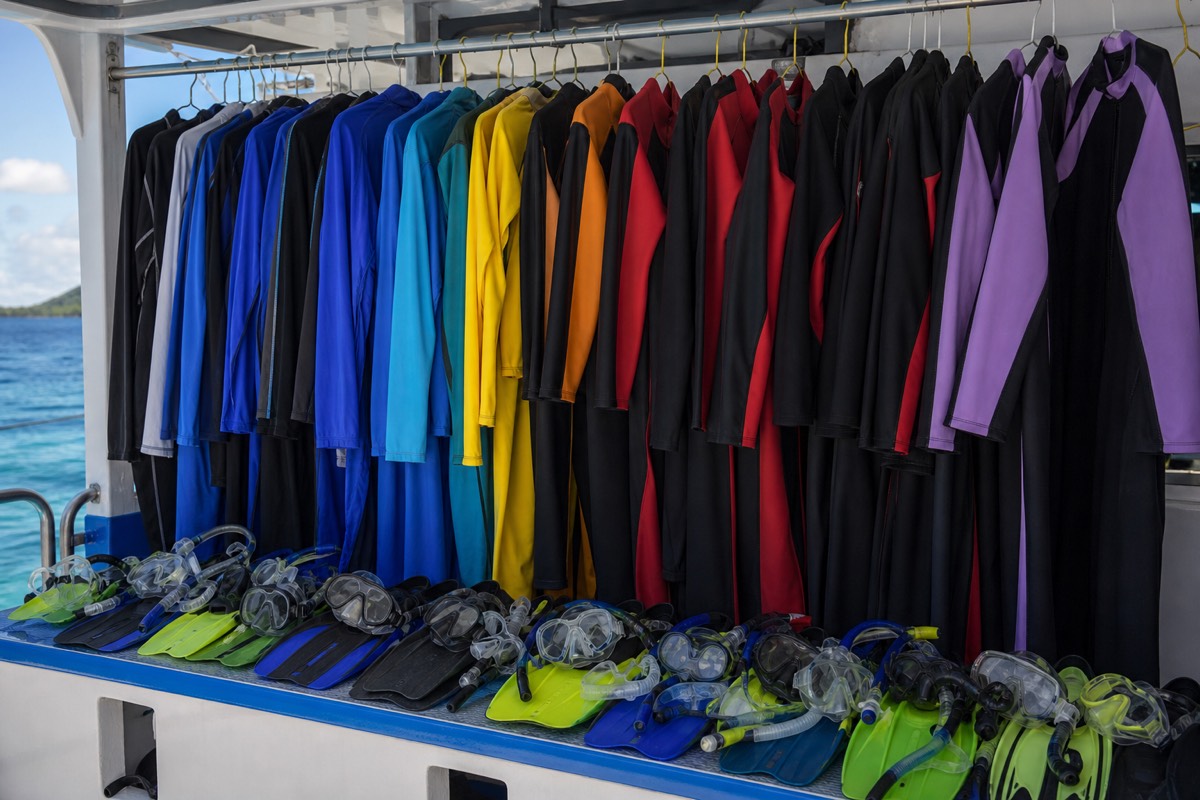
It is worth being precise about what "safe for you" means here, because vague reassurance is worthless. It means the sharks you are likely to see are small reef species that avoid people. It means that during the November-to-May stinger season, every operator puts a full-body stinger suit in your hands before you get in, at no extra charge. It means crew stay in the water with guests, flotation aids go to anyone who asks, and boats simply do not sail into weather that would make the day unsafe. None of that makes the ocean a swimming pool. Open water always carries some risk. But the documented record of the commercial reef tourism industry, thousands of departures a year with rare serious incidents, is the kind of evidence people actually need before booking, and it points one way.
This page works through both halves in that order. First the human side: crocodiles, sharks, jellyfish, sea state and what operators actually do about each. Then the reef side: the environmental pressures that dominate the science and the reporting. If your real question is narrower, whether a specific month is risky, what a trip costs, or whether one day is enough, those pages are linked in the relevant sections below.
Dangers To Humans: What Is Real And What Is Not
A useful habit when judging reef risk is to sort hazards into three piles: the imagined ones, the real-but-managed ones, and the boring ones that actually cause most incidents. Most people's mental image of reef danger sits almost entirely in the first pile, which is why the question gets asked so often in the first place.
The Imagined Ones
Crocodiles top this list. Saltwater crocodiles are genuinely one of Australia's most dangerous animals, and people are right to take them seriously in the places they live: river mouths, estuaries and mangrove coastlines. But they are a coastal and estuarine species, not an outer reef one. The pontoon sites, moored reefs and sand cays that day tours visit sit well offshore, kilometres from crocodile habitat. Sightings at these sites are so rare that when one occurs it makes the news precisely because it is news. The Great Barrier Reef Marine Park Authority's animal guide is the reliable reference for which species are found where, and it places crocodiles firmly in the coastal zone. There is more detail, including the estuarine habits that explain the separation, in the full sharks, stingers and crocodiles safety guide.
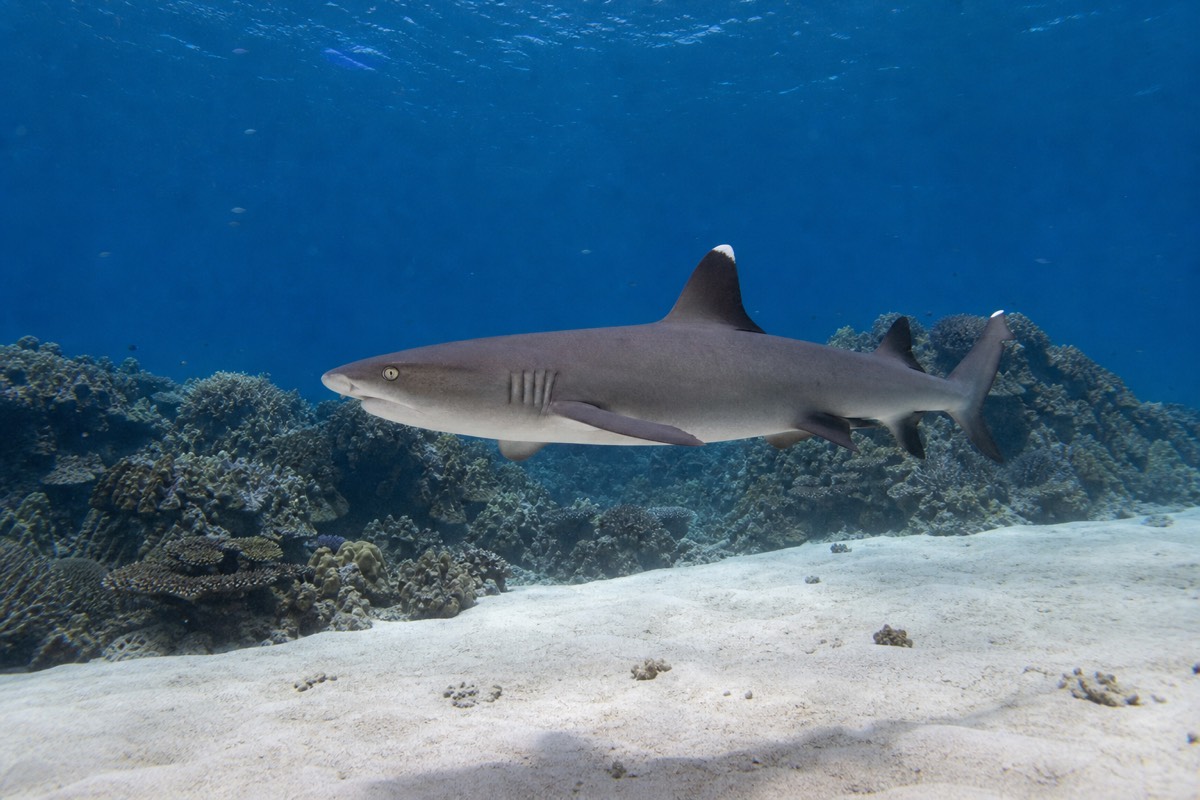
Great white sharks belong in the same pile. People ask about them constantly, partly because shark coverage in Australia tends to run footage of big whites breaching somewhere cold and southern. Great whites prefer cooler, temperate waters well to the south of the tropical reef, and the sharks snorkellers actually encounter on reef tours are almost always whitetip or blacktip reef sharks: small species, typically around the length of a child, that avoid humans and pose no real threat to swimmers. A reef shark sighting is treated by crews and guests as a highlight of the day, not an emergency. Operators report that the most common reaction is people asking how to get closer, not further away. If the fear came from a Great Barrier Reef shark attack headline somewhere, it is worth checking which waters the incident actually happened in; the answer is almost never the tropical outer reef where tours run.
The Real But Managed Ones
Box jellyfish and Irukandji jellyfish are a genuine hazard and the single best reason to pay attention to the calendar. Stinger season runs November through May, overlapping the wetter summer months. The risk is concentrated in coastal waters and drops at offshore sites, but it does not drop to zero, which is why every commercial operator issues full-body stinger suits during that window as standard practice, not as an upsell. Wearing one removes almost all of the practical risk. The suits are thin, do not significantly affect comfort in warm water, and are handed out to everyone, strong swimmers and nervous floaters alike. Nobody on a commercial tour is asked to make a judgement call about whether the water looks "stingery"; the equipment decision is made for you by people who make it every day.
Outside stinger season, from June through October, the sting risk drops sharply, and this window also happens to carry the best water visibility of the year. Basic first aid is standard safety-briefing content on every boat: vinegar, not fresh water, if someone is stung. Fresh water can trigger further discharge from remaining stinging cells, which is why the instruction is so specific and so repeated. Surf Life Saving Australia's marine stinger guidance and Healthdirect's page on sea creature stings are the authoritative references for what to do in the unlikely event of an encounter. The timing question, which month balances stinger risk against visibility and weather, has its own full treatment in how to choose a Great Barrier Reef tour, including the stinger season trade-offs in detail.
The Boring Ones That Actually Ruin Days
Sea state is the honest answer to "what is the most likely thing to go wrong on a reef trip". Rough conditions cause far more cancelled days and queasy passengers than any animal ever has. November through May brings wetter, rougher weather than the June-to-October dry season, and operators manage this the only sensible way: they reschedule or cancel rather than run a boat through conditions that make snorkelling unsafe or unpleasant. That is a bigger factor in whether your day goes smoothly than anything living in the water. If your itinerary is tight and you are travelling in the wetter months, build in a backup day, because the operator calling off a departure is a real possibility and always the right call when it happens.
The other honest entry in this pile is your own swimming confidence. Open water is different from a pool: there is no wall, the water is deep, and some people feel unsteady the first time. This is the most common genuine discomfort on reef tours, and it is also the best-handled one. Guides stay in the water with guests, flotation aids are handed out freely, and nobody is pushed beyond their comfort. Confidence in open water matters more than raw swimming ability, and crews treat nervous swimmers as a normal part of the job, not an inconvenience.
Two smaller items complete the honest list. Coral itself can cut: it is sharp, some of it stings on contact, and a careless hand placement or an attempted stand on a shallow bommie can leave a scrape that takes a week to heal. Every briefing therefore includes a version of "look, don't touch", and the instruction is about physics as much as ecology. And sunburn, unglamorous as it is, ruins more reef days than the entire animal kingdom combined; the tropical sun is fierce, and the water doubles the exposure. Neither item is dangerous in the way the headlines mean, but both belong in an honest answer.
It is also worth addressing the places people go to sanity-check these fears. The "is the Great Barrier Reef dangerous" question gets asked a lot on forums like Reddit, and the replies from people who have actually been tend to converge on the same points this page makes: the sharks are small, the stinger suits are provided, nobody saw a crocodile, and the boat ride was rougher than expected. Visitor-reported experience and operator-reported incident rates line up. The fear is mostly imported from elsewhere.
Are There Crocodiles In The Great Barrier Reef?
Yes, saltwater crocodiles live in the Great Barrier Reef region, but not on the reef itself where tours go. They are a coastal and estuarine species found near river mouths and mangroves, and the outer reef sites, pontoons and sand cays that day trips visit sit far from that habitat. The Great Barrier Reef Marine Park Authority's animal guide documents this distribution. For the full breakdown of crocodile habitat, behaviour and how estuary tours differ from reef tours, see the dedicated crocodiles and reef wildlife safety guide.
Are Sharks Dangerous At The Great Barrier Reef?
Not the ones you will meet. The sharks snorkellers encounter on reef tours are almost always whitetip or blacktip reef sharks, small species that avoid humans and pose no real threat to swimmers. Great white sharks, the species behind most shark-attack headlines, prefer cooler temperate waters south of the reef region. Operators like ABC Reef Safaris, running small groups capped at 24 guests with a marine-biologist guide in the water, treat a shark sighting as a highlight of the trip rather than a risk to manage. The species-by-species breakdown, including which larger sharks pass through the wider reef region, is covered in the full shark safety guide.
What Is The Deadliest Animal In The Great Barrier Reef?
By venom, the box jellyfish: it is widely regarded as one of the most venomous marine animals in the world, and its relative the Irukandji is dangerous in a much smaller package. By reputation, the saltwater crocodile, but crocodiles are a coastal species and not a factor at outer reef sites, as covered above. In practice, the deadliest-animal question is answered by the stinger suit in your hands: the venomous animals are a seasonal, well-managed risk, not a reason to stay on the boat. The full treatment of box jellyfish, Irukandji and first aid belongs to the stingers and dangerous animals guide.
Is It Safe To Swim In The Great Barrier Reef?
Yes, on a commercial tour, for almost everyone. The safety record of the guided reef tourism industry supports that claim: thousands of trips a year run across the region, and serious incidents are rare enough that they make national news when they occur. But "safe" deserves a proper answer rather than a one-word one, because the honest version has conditions attached, and a reader deciding whether to book deserves to know them all.
Snorkelling Versus Diving
Both are safe on guided tours, but they carry different demands. Snorkelling requires no certification, keeps you at the surface where flotation is easy, and is the format most beginners choose. Diving requires a medical questionnaire and, for certified dives, a licence, but it puts you inside the reef structure with a guide close by. Neither format has a meaningful wildlife risk profile that the other lacks. The trade-offs between the two, including beginner intro dives, are laid out in snorkelling versus scuba diving on the Great Barrier Reef.
The Conditions That Actually Matter
Four things determine whether your swim goes well, and none of them is a shark. The first is season. November through May means stinger suits and a wetter weather pattern; June through October means calmer, clearer conditions and effectively no stinger concern. The second is sea state on the day, which operators control by cancelling or rerouting rather than pushing through. The third is your own comfort in open water, which flotation aids and in-water guides offset. The fourth is listening to the briefing, which covers entry and exit, what to avoid touching, and what to do if you feel unsteady.
It helps to be concrete about what those conditions look like in practice. A well-run day in the dry season goes like this: a briefing on the deck, a lycra suit offered even off-season as sun protection, a guide in the water before the first guest, and a ladder or platform entry that never requires you to jump unless you want to. A wet-season day adds the full stinger suit, checked by crew for proper seal at wrists and ankles, and possibly a reroute to a more sheltered site if the wind has shifted. Neither version involves anyone improvising. The system is the same every day, which is precisely why the record is so consistent.
The one honest caveat worth stating plainly: open water always carries some risk, and no operator can reduce it to zero. People do occasionally feel seasick, panic briefly, or get a small coral scrape. What the guided format does is shrink the serious end of the risk distribution to a level comparable with any ordinary beach holiday. The documented risk on a guided reef tour is low enough that it should not be the reason you skip it.
If the bigger question is not safety but value, whether the travel time and ticket price justify a single day on the water, that calculation is covered in whether the Great Barrier Reef is worth the trip and how many days to give it.
What Operators Actually Do To Keep You Safe
The safety story on the Great Barrier Reef is not about brave crews wrestling with wildlife. It is about a standardised system that every licensed operator must follow, applied the same way on every trip, which is why incidents are rare across the whole industry rather than just at the careful operators.
The Briefing
Expect a briefing before entering the water, and follow the crew’s instructions on entry, exit, swimming boundaries and wildlife. Ask what in-water assistance and flotation equipment your specific trip supplies. Offshore reef sites should not be assumed to have beach-style stinger nets.
Equipment And Guides In The Water
Three practices do most of the protective work. First, stinger suits: during the November-to-May window, every operator issues full-body suits at no extra cost, as standard equipment rather than an upsell. Second, guided snorkelling: staff stay in the water with guests, and operators like ABC Reef Safaris run small groups capped at 24 with a marine-biologist guide alongside swimmers, so a nervous guest is never far from a professional. Third, flotation for anyone who wants it: pool noodles and extra aids are handed out freely, regardless of swimming ability, which removes the social pressure to tough it out.
At sites where they exist, crews point out stinger-resistant enclosures or netted swimming areas. Where a guide spots something worth avoiding, from a jellyfish to a congregation of something bigger, they reroute the group before it becomes an issue. This is also part of the answer to "will the crew tell me what to do if I see a shark": yes, it is standard briefing content, and the in-water guide is the live backup. Guides also keep a headcount on the water and a watcher on the deck, so a guest drifting away from the group is noticed in seconds rather than minutes.
The Rules Behind The Practice
All of this sits on top of a regulatory framework. Commercial operators must follow the Great Barrier Reef Marine Park Authority's responsible reef practices, which set out prohibited activities, wildlife interaction rules and site-use standards. Compliance is a condition of operating in the marine park, so the baseline is set by the regulator rather than by each operator's discretion. That is the structural reason the system works: a lazy operator is not free to skip the briefing or the suits. The same rulebook protects the reef from guests as much as it protects guests from the reef, which is why touching, chasing or standing on coral is prohibited on every licensed tour, not merely discouraged.
What The Ratings Say
Customer feedback is a decent proxy for whether safety is handled well, because safety failures show up in reviews as complaints, cancellations and one-star descriptions of feeling abandoned in the water. The operators listed on this site carry ratings in the 4.6 to 4.9 range on their GetYourGuide and Viator listings, across large booking volumes. The listing detail, including live prices, hotel pickup and free-cancellation windows, sits on the operators' own booking pages. A rating pattern like that, sustained across thousands of guests, is not compatible with safety being an afterthought. It is also worth reading the negative reviews on any listing you consider: on well-run reef tours, the complaints cluster around seasickness, weather cancellations and crowds, not near-misses.
What Operators Cannot Control
Honesty cuts both ways. Operators cannot control the weather, which is why they cancel, and a cancelled day is a real possibility in the wetter months. They cannot make the ocean a swimming pool, and guests who expect flat, bath-warm conditions every day of the year occasionally leave disappointed. They cannot make open-water anxiety disappear, only manage it well. Anyone who tells you a reef trip is risk-free is overselling; anyone who tells you it is dangerous has confused the headlines with the record.
Threats To The Reef Itself
The second half of the "dangerous" question, and the half with the grimmer answer. The Great Barrier Reef is safe for you. It is not safe from us, and from the broader forces acting on it. The World Wildlife Fund and the Great Barrier Reef Marine Park Authority, among the institutions that study the reef, document a set of pressures that have degraded significant portions of it over recent decades. Understanding why the reef matters in the first place makes these threats easier to grasp: it is the largest coral reef system on earth, a structure visible from space, home to thousands of species, and an economic engine for the Queensland coast. When people say the reef is important, they mean all of that at once, which is also why its decline draws global attention.
Climate Change And Warming Waters
Rising ocean temperatures are the headline threat. Heat stress causes coral bleaching, in which corals expel the algae they depend on and turn white, and severe or repeated bleaching kills coral. The reef has experienced repeated mass bleaching events in recent years, and the trend line matters more than any single event: recovery windows between bleaching events have shortened, which means corals get less time to regrow before the next heatwave arrives. This is the biggest killer of coral on the reef, and the question of how much of the reef remains alive and viable has its own detailed treatment, including the current assessment of the reef's overall health, in is the Great Barrier Reef dying.
Water Quality And Runoff
Sediment, fertiliser and pesticide runoff from coastal agriculture and development cloud the water and feed outbreaks of crown-of-thorns starfish, a coral predator whose population booms are linked to nutrient-rich runoff. Cloudier water also blocks the sunlight corals need, and poorer water quality slows coral recovery after bleaching, which compounds the climate problem rather than running parallel to it. The Marine Park Authority's responsible reef practices, the same rulebook that governs operator behaviour, are part of the management response, and broader water quality programs target what flows off the land and down the catchments.
The Three Main Threats, Plainly
People searching for the reef's biggest problems tend to converge on the same shortlist, and the scientific institutions that study the reef largely share it. The three main threats to the Great Barrier Reef are, in rough order of severity: climate change and the warming-driven bleaching it causes, poor water quality from catchment runoff, and outbreaks of crown-of-thorns starfish. Direct physical damage, from shipping, anchoring and coastal development, sits behind those three. There is no serious disagreement about the top of that list, and the order rarely changes between the major reef reports.
Solutions, And Why Visiting Still Makes Sense
What solutions exist for these threats? Several are active. A large share of the marine park is zoned as no-take protected area, restricting fishing and extraction. Water quality improvement programs target catchment runoff at its source. Starfish control programs cull crown-of-thorns at high-value sites. Tourism operators participate in monitoring, and the industry's economic weight is one of the political arguments for protection. Individual operators follow the regulator's responsible reef practices, which is why touching, feeding or standing on coral is prohibited on every tour. None of this yet reverses the climate-driven trend, and honest reporting does not pretend otherwise.
Should that danger to the reef stop you from visiting? The institutions involved, including the Marine Park Authority, treat well-managed tourism as compatible with, and even supportive of, reef protection: visitor revenue and public attachment are part of the case for funding conservation. The threat to the reef is an argument for choosing a licensed, compliant operator, not for staying home.
One last practical note for planning: the reef is vast, and the base you choose, Cairns, Port Douglas or the Whitsundays, changes which reef sites you reach and what the trip looks like. That comparison lives in Cairns versus Port Douglas versus the Whitsundays. If you are still weighing whether the reef is worth the journey at all, that case, including the one-day-versus-more question, is made in is the Great Barrier Reef worth it. And if you are starting from further afield, getting there from Sydney or Brisbane is covered in how to get to the Great Barrier Reef from Sydney. The full cost breakdown, including what the ticket price does and does not include, is in what a reef tour really costs.