Great Barrier Reef Liveaboards And Multi-Day Tour Packages: Is An Overnight Trip Worth It
A single night on the water changes what a Great Barrier Reef trip can show you, and what it costs. Here's the real math on this site's one liveaboard product against its eight day trips.
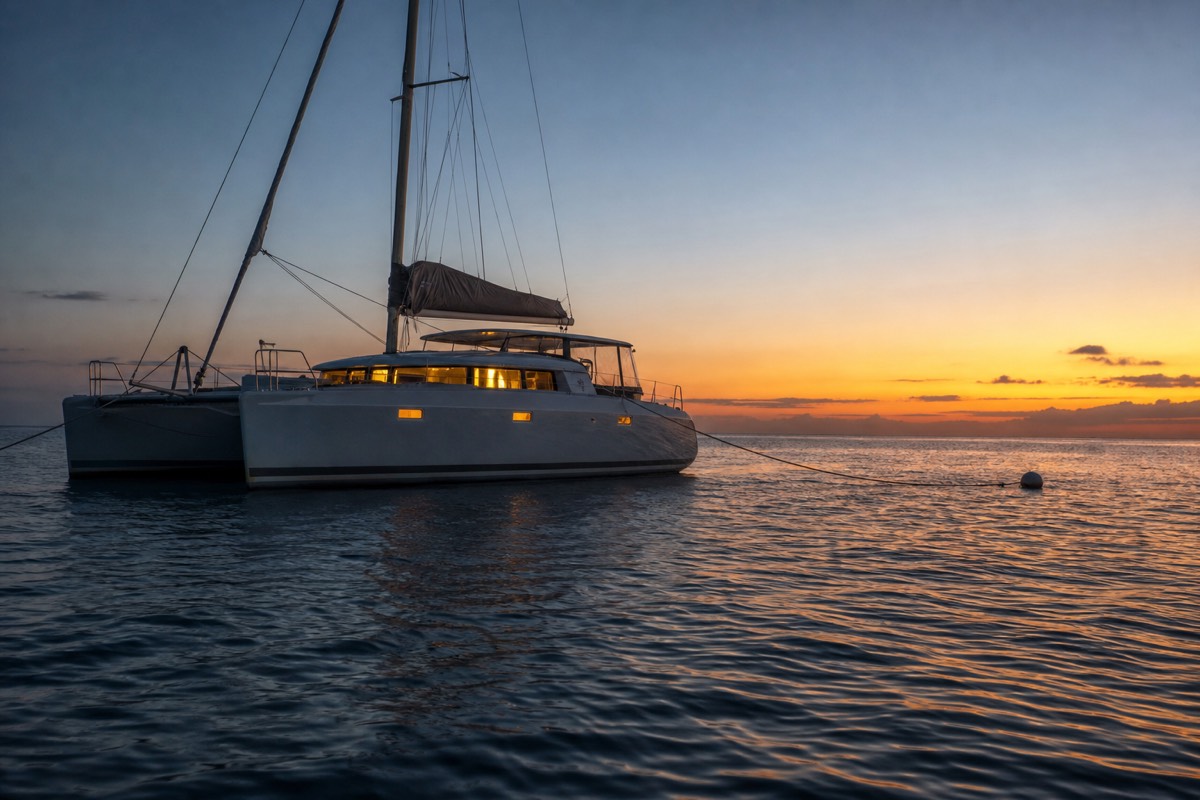
A Great Barrier Reef liveaboard means sleeping on the boat overnight, anchored on the reef itself, instead of returning to shore each evening. The one liveaboard-style trip this site tracks is the 2-Day Great Barrier Reef Snorkeling Experience Twin Share: $521 for two days and one night on the OceanQuest catamaran, visiting Saxon, Norman and Hastings Reefs with a night snorkel included.
Price tables and review counts in the original comparison are historical examples, not live quotes or safety evidence. Use the booking options below for current totals, inclusions and restrictions.
What Is A Great Barrier Reef Liveaboard?
A liveaboard is a multi-day reef trip where the vessel itself is your accommodation. Instead of motoring back to a marina in Cairns or Port Douglas at the end of each day, the boat stays anchored out on the reef overnight, and you sleep aboard in a cabin. That single structural difference defines the category and separates it from every day tour operating from the same departure points. Everything else people associate with liveaboards, the night snorkels, the dawn water access, the escape-the-crowds framing, follows mechanically from that one decision to keep the boat on the reef past sundown.
The mechanics matter more than the name. A standard day boat spends a large share of its schedule in transit: steaming out from the marina before breakfast, reaching the reef around mid-morning, then turning back in the afternoon to be home before dark. On an 8 to 10 hour door-to-door day tour, the actual in-water time is a fraction of the headline duration, because transit eats both ends of the day. A liveaboard removes the return leg entirely. Once it anchors, it stays. That buys two things a day trip structurally cannot offer: access to the water during the hours when day boats are gone, namely late afternoon, evening and early morning, and a second consecutive day of reef time that starts at the reef rather than two hours of sailing away from it.
It helps to picture the two schedules side by side. A day-trip passenger's reef experience is a plateau in the middle of the day: board early, steam out, get two or three hours of water time sandwiched around lunch, steam home, disembark in the early evening. A liveaboard passenger's experience is a continuous arc. The outbound crossing is the same, but then the clock effectively stops mattering. The afternoon stretches out without a departure deadline. Sunset happens with the boat still anchored. Sleep happens a few metres above the coral. Dawn breaks with the water right there, no marina in sight, and the second day begins with the whole crew already positioned at the reef rather than in transit toward it. Travellers who have only ever taken day tours often describe the liveaboard format as a different category of trip rather than a longer version of the same one, and the schedule is the reason.
The specific product this site tracks is the 2-Day Great Barrier Reef Snorkeling Experience Twin Share. It departs Cairns aboard the OceanQuest, a 35-metre catamaran, and runs 48 hours in total: two full days and one night. Over that time it reaches three named reef systems, Saxon Reef, Norman Reef and Hastings Reef, which overlap with the same general reef systems some Cairns day tours visit, but spread across two days rather than compressed into one. Its listing shows a 4.2 rating from 520 bookings, the smallest booking count of any tour on this site, which reflects the reality that a two-day overnight commitment appeals to a far narrower audience than a tour anyone with a free morning can book.
The words "twin share" carry real weight in that product name. You are not booking a private cabin. You bunk with a travel companion, generally whoever you booked alongside, and that shared-cabin structure is standard for this type of overnight reef vessel. It is also part of how the trip keeps its price down relative to a private charter, which is worth knowing before you book rather than after. Travellers who book solo and expect their own space are the ones most likely to be surprised by this detail, and no amount of reef quality compensates for an accommodation mismatch over 48 hours. If you are travelling with a partner or a close friend, twin share is a non-issue. If you are travelling alone and hoping for a single cabin, read the listing carefully before committing, because the product name is doing exactly what it says.
The signature inclusion is the "Fish After Dark" night snorkel. Reef fish behaviour genuinely shifts after sunset, with different species active than during daylight hours, and that shift is the entire premise of a dedicated night-snorkel product. No day tour can offer it, because every day boat on the reef has to be back at the marina before dark. If the night snorkel is the thing drawing you to the liveaboard, that instinct is sound: it is the single hardest element of the trip to replicate any other way, and it is the reason many travellers searching for liveaboard packages and reviews end up circling back to this product specifically rather than a longer day tour.
It is also worth being clear about what a liveaboard is not. It is not a cruise ship with a reef itinerary, and it is not a floating resort. The OceanQuest is a working reef vessel, and the rhythm of the trip is built around water time rather than onboard luxury. Travellers arriving from liveaboard content about other parts of the world, particularly the famous dive liveaboards of the Red Sea or the Coral Triangle, sometimes expect dive-focused itineraries with certification requirements and multiple tanks per day. This product sits at the accessible, snorkelling end of the liveaboard spectrum instead, which changes who it suits and who it does not. That distinction matters enough that this guide devotes a full section to it further down, and it is the single most common mismatch between what travellers imagine when they search for the best liveaboard Great Barrier Reef trips and what this particular product delivers.
One last framing point before the value discussion. Within the liveaboard category worldwide, trips range from two-night introductory products to week-long expeditions to remote atolls. The Great Barrier Reef's Cairns-based market sits at the short, accessible end of that spectrum. The trip tracked here, at one night, is about the gentlest possible introduction to the liveaboard format: long enough to get the night snorkel and the dawn water access that define the category, short enough that almost any Cairns itinerary can absorb it. Travellers wanting the expedition end of the spectrum, multiple nights and remote ribbon reefs, would need to look at specialist dive operators elsewhere in the region, and should verify those itineraries and their prerequisites directly with each operator.
Are Liveaboards Worth It?
Whether a liveaboard earns its price depends on what you are comparing it against, and the honest answer requires actual numbers rather than sticker shock. At $521 total, the liveaboard costs 5.9 times more than the cheapest day tour on this site, the $89 Green Island Snorkelling and Glass Bottom Boat Experience, and 2.6 times more than the most-booked day tour, the $202 Outer Great Barrier Reef and Coral Cay Snorkel/Dive Tour. Those are the two comparison points most travellers actually weigh: the budget floor and the popular default.
Those gaps look stark at first glance. But there are two fairer ways to slice the price, and they tell different stories.
Per day of reef access, the liveaboard works out to $260.50 across its two days. That figure sits between the $202 Outer Great Barrier Reef and Coral Cay day tour and the $456 ABC Reef Safaris day tour. Read that way, the liveaboard is not the outlier in the lineup at all. The single-day ABC Reef Safaris rate is actually higher. The $521 total buys two consecutive days of reef access, an overnight stay and a night snorkel bundled into one price, which is a different kind of value question than a straight line-by-line price comparison.
| Tour | Total Price | Days Of Reef Access | Price Per Day |
|---|---|---|---|
| Green Island Snorkelling & Glass Bottom Boat Experience | $89 | 1 | $89.00 |
| Outer GBR & Coral Cay Snorkel/Dive Tour | $202 | 1 | $202.00 |
| Quicksilver GBR Snorkeling Adventure | $241 | 1 | $241.00 |
| 2-Day GBR Snorkeling Experience Twin Share | $521 | 2 | $260.50 |
| ABC Reef Safaris GBR Adventure | $456 | 1 | $456.00 |
Time aboard is not the same as time snorkeling. Compare the full overnight quote with two day trips plus accommodation, using the same inclusions and party size.
So is it worth it? The honest verdict splits cleanly by traveller type. If you have already done a standard reef day trip and want more, the liveaboard is worth the premium, because it offers things no day tour can structurally match: the night snorkel, the quiet reef after the day boats leave, and a second morning on the water starting at the reef itself. If you have never spent a full day on a boat, or you only have one day free in your itinerary, it is probably not worth it, and the sections on cost and on who should not book cover exactly why.
One more data point tempers the enthusiasm slightly. With 520 bookings, the liveaboard is the least-booked tour on this site by a wide margin. Its 4.2 rating is solidly positive, but it is also the lowest rating among the tours tracked here. That is not proof of a problem: smaller niche products always collect fewer reviews, and a couple of bad experiences move the average more when the base is small. Compare the volume with the 15,089 bookings logged by ABC Reef Safaris, a premium day tour at a similar price point, and the difference is entirely about the overnight commitment rather than the money. A niche product with hundreds of bookings rather than thousands will also have thinner recent review coverage to check, so anyone who leans heavily on reviews before booking should read what exists rather than rely on the headline number alone. It is, however, a signal that this is a specialist product rather than the safe default choice.
There is also a question worth asking before the value question: whether a multi-day reef format is right for you at all, independent of this specific boat. Plenty of travellers conclude after reading liveaboard reviews that they want more reef time but would rather take two separate day tours than commit to one vessel for 48 hours. The arithmetic there is real. Two mid-priced day tours, at roughly $200 each, cost around $400 in total, less than the liveaboard's $521, and return you to your hotel bed both nights. What that option cannot buy at any price is the night snorkel and the after-dark hours on the water. So the choice is not really $400 versus $521 for the same experience with a different wrapper. It is two daylight experiences versus one daylight experience plus a night experience plus a dawn experience. Which side of that trade wins depends entirely on how much the after-dark reef matters to you, and that is a question about curiosity, not arithmetic.
Forum threads and community discussions, the kind travellers find when researching liveaboard Great Barrier Reef options on Reddit and similar sites, tend to converge on the same conclusion from the other direction. The most common regret reported by multi-day reef travellers is not the money. It is booking a day trip when more time was available and spending the evening in a Cairns restaurant wishing they were still on the water. The second most common regret is the inverse: travellers who committed to an overnight boat without ever having tested their sea legs, and spent the second day counting hours. Both regrets are avoidable, and the sections below are built to help you land on the right side of each.
Liveaboard Cost And What Is Included
The liveaboard's $521 price covers the full 48-hour package: two days and one night on the OceanQuest, twin-share cabin accommodation, access to three named reef systems, Saxon, Norman and Hastings, and the "Fish After Dark" night snorkel. The listing specifies these inclusions directly, so there is no guesswork about what the money buys at the headline level. What the listing cannot tell you is whether those inclusions match your priorities, which is what the rest of this section is for.
To put that price in context across the lineup tracked on this site, here is every tour against the liveaboard baseline.
| Tour | Type | Price | Gap Vs Liveaboard |
|---|---|---|---|
| Green Island Snorkelling & Glass Bottom Boat Experience | Day trip | $89 | $432 cheaper |
| Ocean Safari GBR Experience | Half-day trip | $155 | $366 cheaper |
| From Cairns: GBR Full-Day Adventure Tour | Day trip | $196 | $325 cheaper |
| Outer GBR & Coral Cay Snorkel/Dive Tour | Day trip | $202 | $319 cheaper |
| Quicksilver GBR Snorkeling Adventure | Day trip | $241 | $280 cheaper |
| ABC Reef Safaris GBR Adventure | Day trip | $456 | $65 cheaper |
| 2-Day GBR Snorkeling Experience Twin Share | Liveaboard | $521 | Baseline |
Two rows deserve attention. First, notice that ABC Reef Safaris, a day tour that returns you to shore the same evening, sits only $65 below the liveaboard. That single row is the clearest evidence that price alone does not separate liveaboards from day tours; what you get for the money does. Two travellers could spend within $65 of each other and have structurally different experiences: one sleeps in their Cairns hotel that night, the other is anchored on the reef with a night snorkel ahead. Second, the booking counts behind those prices tell a related story: ABC Reef Safaris, at nearly liveaboard pricing, has logged 15,089 bookings, close to the top of the entire lineup. The liveaboard sits at 520. Travellers will pay premium day-tour prices all day long. What shrinks the audience is the overnight commitment, not the dollar figure.
What The Extra Money Buys Over A Day Trip
Comparing the liveaboard's own listed inclusions against what a typical Cairns day tour includes, three things stand out that a single-day trip structurally cannot match.
| What You Get | Typical Cairns Day Trip | 2-Day Liveaboard |
|---|---|---|
| Total time near the reef | 8-9 hours, door to door | 48 hours, 2 days / 1 night |
| Reef sites visited | 2-3 sites | 3 named sites: Saxon, Norman, Hastings |
| Night snorkeling | Not offered | Included: "Fish After Dark" |
| Overnight accommodation | None, returns to shore | Twin-share cabins on the OceanQuest |
| Crowd levels after 4pm | Boat has departed the reef | Anchored on the reef after day boats leave |
| Vessel | Varies by operator | OceanQuest, 35m catamaran |
The quiet-reef point deserves a short explanation, because it is a real benefit rather than a marketing flourish. A standard day tour runs 8 to 10 hours door to door, which means the last day boats are typically pulling away from the reef by mid-to-late afternoon to make it back to Cairns or Port Douglas before evening. Once those boats leave, a liveaboard anchored at Saxon, Norman or Hastings Reef effectively has that stretch of water to itself until the next morning's day boats arrive. Nothing extra has been purchased to make that happen. It is simply what remains once everyone else has gone home, and it is the benefit most often cited by travellers in liveaboard reviews who felt their day trips were crowded.
Think about what a crowded reef site actually looks like in the middle of the day. At peak times, a popular outer-reef site can have several large vessels moored or drifting nearby, each with dozens or hundreds of passengers cycling through the water in rotations. That is not a criticism of the day-tour industry; it is the simple consequence of the reef's most accessible sites being world-famous. The liveaboard does not purchase a private reef. But by being on the water during the hours when the rotations stop, it experiences the same sites in a state day-trip passengers never see: the water quiet, the moorings mostly empty, the fish behaving as they do when hundreds of humans are not swimming overhead. Travellers on liveaboard tours frequently describe this as the moment the format clicked for them, and it costs the operator nothing to provide, which is why it rarely appears in marketing copy.
A cost caveat belongs here too, because bundling cuts both ways. The $521 covers the trip's listed inclusions, but a two-day reef trip carries secondary costs a day trip does not: you are away from your accommodation for a night, which may or may not save money depending on what your hotel night costs, and any incidentals or optional extras beyond the listed package are on top. The honest framing is that the per-day figure of $260.50 is the fair comparison number, while the $521 sticker is the number your holiday budget actually has to absorb at booking time. Both are real; they just answer different questions.
There is one more cost angle worth naming, because it affects budget travellers specifically. A liveaboard is a single large payment, and unlike day tours, it cannot be split, deferred or swapped for a cheaper alternative on the morning of departure without forfeiting the whole thing. A traveller with $200 to spend can choose among four day tours on this site at or below that price. A traveller with $200 cannot book any part of the liveaboard. So for anyone whose budget is genuinely fixed rather than flexible, the liveaboard cost is not just higher, it is all-or-nothing in a way day-tour pricing is not.
For the fuller picture of reef tour pricing across all nine tours on this site, including the budget and mid-range day options, see what a Great Barrier Reef tour really costs.
Where Can You Stay Overnight On The Great Barrier Reef?
Genuinely overnight options on the reef itself are rare, and most travellers assume wrongly that they are plentiful. There are effectively two ways to sleep "on" the Great Barrier Reef rather than beside it on the mainland: a liveaboard vessel anchored on the reef, and a permanent pontoon with accommodation.
The liveaboard route is the one this page covers. The OceanQuest stays anchored at the reef between its first and second day rather than returning to Cairns overnight, and that is the entire mechanical reason the trip can offer a night snorkel and early water access the next morning. The vessel is already there when the sun comes up, not still steaming out from the marina. Among the tours this site tracks, this is the only product in that category: eight of the nine tours get you home in time for dinner, and this is the one that does not.
The pontoon option works differently and suits a different traveller. Rather than a boat, you stay on a fixed platform permanently stationed on the reef, with the sleep experience closer to a small floating hotel than a working reef vessel. The trade-offs between the two, plus how each compares against a well-chosen day trip, are covered in the pontoon comparison section below. If you are still deciding which region to base yourself in at all, Cairns versus Port Douglas versus the Whitsundays breaks down the departure points.
Everything else marketed as "reef accommodation" sits on islands or the mainland. Island resorts such as those on Green Island or the Frankland Islands put you near reef water but not anchored on the outer reef systems where liveaboards and premium day tours operate. That distinction matters when you are comparing prices: a night at an island resort is a land-based stay with reef access attached, not an overnight reef experience in the sense this page discusses. The confusion is common because booking platforms group these products together, but a resort room on an island and a twin-share cabin on a catamaran anchored at Norman Reef are different products with almost no overlap in what they deliver.
A practical way to test which of the three you actually want: ask yourself what you want to be doing at 9pm. If the answer is a restaurant and a proper bed, book the island resort or a mainland hotel with a day trip attached. If the answer is floating over a coral wall under the stars, only the liveaboard delivers it. If the answer is being on the water overnight but with maximum stability, the pontoon is the match. That single question filters the field faster than any price table, and it costs nothing to answer honestly.
How Many Dives Do You Need For A Liveaboard?
For the liveaboard tracked on this site, the answer is none. The 2-Day Great Barrier Reef Snorkeling Experience Twin Share is a snorkelling product, not a scuba diving product, and its listed inclusions centre on surface snorkelling plus the night snorkel. You do not need any certification, any logged dives or any prior experience to book it.
That surprises people who arrive at liveaboard content expecting diving prerequisites, and the confusion is understandable. In the broader liveaboard world, diving vessels commonly require an open water certification or a minimum number of logged dives, particularly for trips reaching deeper or more exposed sites. Forum discussions about liveaboard trips, the kind of threads travellers find when researching across travel communities, frequently assume certification is part of the deal. The Cairns-based liveaboard market is friendlier than that norm, and this specific product sits at the accessible end of it: swimmers who are comfortable snorkelling are the target audience, not certified divers. For snorkellers who have felt shut out of liveaboard packages elsewhere, that accessibility is one of this trip's genuine selling points.
A few honest caveats follow. Snorkelling is still physically demanding over two days. You will be in the water multiple times across 48 hours, and the second day arrives whether or not your shoulders recovered from the first. Confidence in the water matters more than fitness on paper: a swimmer who is comfortable floating and duck-diving in open sea will get far more from the trip than a strong pool swimmer encountering open water for the first time. The night snorkel adds another layer, since swimming over a reef after dark is a different sensory experience from daylight snorkelling, and some travellers find it eerie where others find it the highlight of the trip. If you are still weighing surface snorkelling against diving as activities in general, snorkelling versus scuba diving on the Great Barrier Reef covers the comparison properly.
For certified divers who want a liveaboard structured around diving rather than snorkelling, the practical advice is to check each operator's listing for its certification requirements before booking, since requirements vary by vessel and itinerary. But for this specific trip, the only prerequisite that matters is being a confident swimmer with two free days.
Liveaboard Versus Day Trip Versus Pontoon Sleep
Three overnight-adjacent options compete for the same traveller, and each solves a different problem. Here is how they stack up on the factors that actually decide bookings.
| Factor | Day Trip | Liveaboard | Pontoon Sleep |
|---|---|---|---|
| Total time on the reef | 8-12 hours | 48 hours | Overnight, platform-based |
| Where you sleep | Mainland hotel | On the boat, anchored at the reef | On a fixed pontoon |
| Night snorkel | No | Yes, "Fish After Dark" | Depends on operator |
| Reef sites | 2-3 | 3 named systems | One fixed location |
| Mobility during trip | Boat moves between sites | Boat moves between sites | Static |
| Seasickness exposure | Single day | Two days, no early exit | Stable platform |
The day trip's advantage is optionality. You can sample multiple operators across a week, you keep your hotel bed, and if the weather turns or the seasickness hits, the worst case is one uncomfortable afternoon. Among the eight day trips on this site, prices run from $89 to $456, ratings from 4.3 to 5.0, and durations from 4 to 12 hours, so the day-trip category alone offers enormous range before the liveaboard even enters the picture. A traveller could take the $89 Green Island trip and the $202 Outer GBR and Coral Cay tour on consecutive days, see two different reef environments, and still spend less than the liveaboard's $521 while sleeping ashore both nights. That is the strongest argument the day-trip column has, and it deserves to be stated at full strength rather than buried.
There is a subtler version of that argument too. Two day tours on consecutive days give you two separate crews, two sets of equipment, two briefings and two chances to learn. If the first day reveals that your mask leaks or that you get queasy in a swell, you can adapt, choose a calmer operator, or skip the water entirely on day two and take the glass-bottom boat instead. The liveaboard format has no such adjustability. Everything rides on one vessel, one crew and one itinerary. Travellers who like redundancy in their plans, a fallback if conditions disappoint, will feel that difference even on a good trip. Travellers who like immersion and continuity will not miss the optionality at all. Neither preference is wrong, but knowing which one you hold before booking saves the second-guessing afterwards.
The liveaboard's advantage is depth. Three reef systems instead of two or three sites in one hit, the after-dark hours nobody else gets, and a second morning that starts on the reef. Its cost per day of reef access, $260.50, is only modestly above the most-booked day tour's $202. The liveaboard also concentrates the whole experience under one crew and one itinerary, which suits travellers who would rather go deeper on a single reef system than collect a survey of sites across multiple boats. Repeat reef visitors often report that their second day on the water was qualitatively better than their first, because the initial day is spent adjusting: to the equipment, to the motion, to the sheer scale of the reef. A day trip ends just as that adjustment completes. A liveaboard runs straight through it and comes out the other side.
The pontoon sleep's advantage is stability, which is another way of saying it suits travellers whose priority is not being on a moving boat overnight. The compromise is that a pontoon does not move. You get one fixed reef location rather than a route across multiple systems, which trades variety for a calmer night. For travellers prone to motion sickness, that trade can be decisive, and it is one of the core reasons the "who should not book" section below exists.
One further question sits above all three: whether one day on the reef is enough at all, or whether the multi-day instinct is right even for travellers who end up choosing day trips. How many days you need on the Great Barrier Reef covers that decision on its own terms.
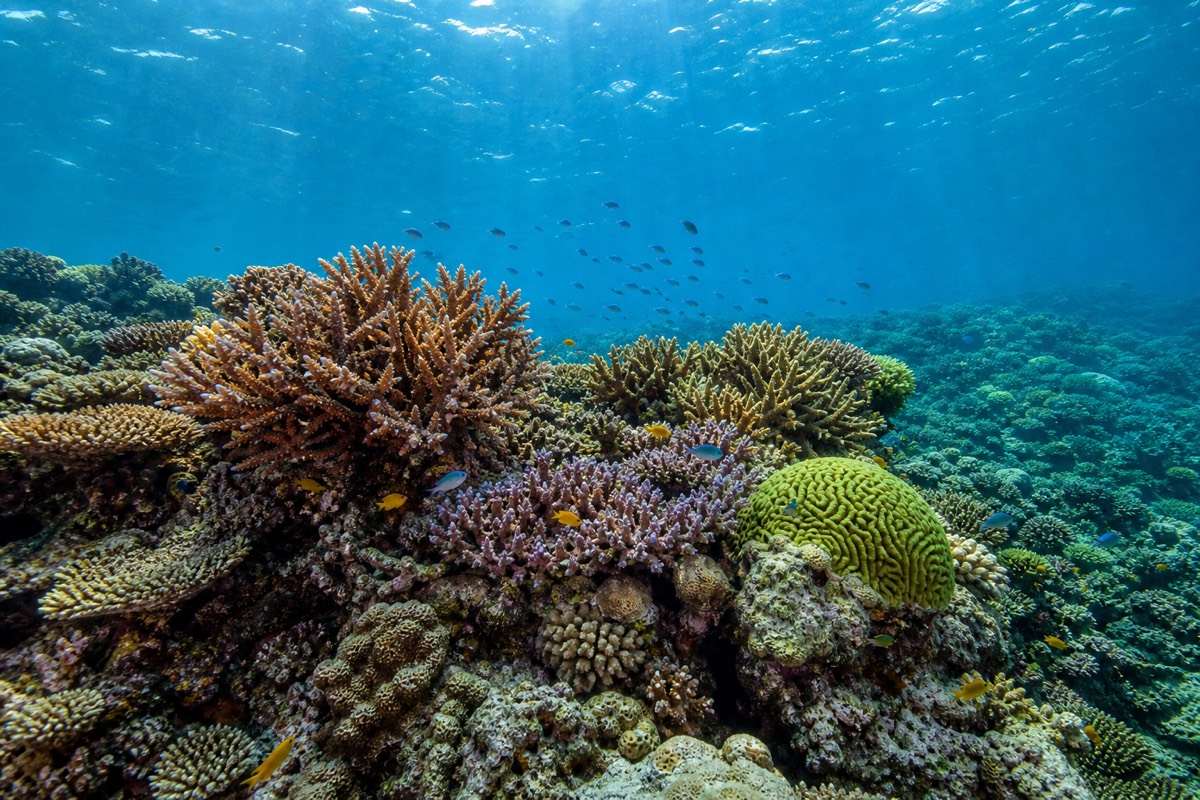
What The Two-Day Twin Share Trip Actually Involves
This section walks through the one overnight product this site tracks in full detail, because the day-by-day reality is where booking decisions are actually made. The listed facts first, then the honest texture of each stage.
| Detail | 2-Day GBR Snorkeling Experience Twin Share |
|---|---|
| Price | $521 |
| Rating | 4.2 |
| Bookings | 520 |
| Duration | 48 hours (2 days / 1 night) |
| Departure | Cairns |
| Vessel | OceanQuest, 35m catamaran |
| Reef sites | Saxon Reef, Norman Reef, Hastings Reef |
| Signature extra | "Fish After Dark" night snorkel |
| Cabin type | Twin-share |
Day One: Out To The Reef
The trip departs Cairns and heads out to the reef systems it calls home for the next two days: Saxon, Norman and Hastings Reefs. These are the same general reef systems some Cairns day tours visit, which is worth stating plainly because it counters a common assumption. The liveaboard is not necessarily reaching remoter or more pristine reef than the best day tours. What it gets is more time at those reefs, in conditions day tours never see them in, specifically the late afternoon, the night and the early morning. Travellers hoping the extra dollars buy a different, more untouched section of the reef should recalibrate: the value is in the hours, not the geography.
A 35-metre catamaran is a substantial vessel, and catamarans are chosen for this kind of work for a reason: their twin-hull design is more stable in open water than a monohull of similar length. That does not make the crossing calm in all conditions, but it does mean the boat is built for the sea state it encounters rather than being a converted day cruiser. The practical implication for passengers is that the boat handles the open-water crossing to the outer reef with a design intended for it, which matters most on day one, when every passenger aboard is adjusting to the motion.
Day one also sets the social tone for the trip. On a day tour, your fellow passengers are a rotating crowd you share a deck with for hours. On a two-day trip with twin-share cabins, the same small group is with you through dinner, through the night snorkel, through breakfast the next morning. For some travellers that is a feature: liveaboard trips have a reputation for producing friendships, and a 520-booking niche product tends to attract people who chose the trip deliberately rather than defaulted into it. For travellers who prize privacy and downtime, the same intimacy can feel inescapable. Neither reading is wrong, but the format is what it is, and it is worth going in with eyes open rather than discovering your own preference 24 hours from shore.
The Night: Fish After Dark
The night snorkel is the trip's defining feature. Once the day boats have all departed, the reef enters a different rhythm. Reef fish behaviour shifts after sunset, with different species active than during daylight, and "Fish After Dark" is built entirely around that shift. Snorkelling over a reef at night, with the water lit from above or by torch, is a genuinely different experience from the daylight version, and it is the single element of this trip that no day tour, including the highest-rated ones, can replicate. Every day operator has to be back at the marina before dark. Travellers comparing liveaboard tours almost always land here: if the night snorkel does not excite you, the rest of the premium gets much harder to justify.
It is worth describing what changes after dark, because the phrase "fish behaviour shifts" is easy to skim past. Daylight reef life is dominated by the visible, active food chain: grazing fish on the coral, hunters in the open water, everything lit and legible. After sunset, the cast changes. Nocturnal species emerge that daytime snorkellers never encounter, and the experience of the water itself changes too, with your sightline contracted to the reach of the light and everything beyond it reduced to sound and sense. Some travellers describe the effect as the most atmospheric hour of their entire reef trip. Others describe it as disorienting, and the honest advice is that both reactions are common on the same boat, on the same night. Anyone who has never snorkeled at night but is drawn to the idea should treat the first hour as an experiment and the second as the reward.
Then you sleep in a twin-share cabin. Set expectations honestly here: this is functional accommodation on a working vessel, not a cruise-ship stateroom. The twin-share structure means you bunk with a travel companion, generally the person you booked alongside. The trade for the lower price relative to a private charter is shared space, and knowing that before booking prevents the most common form of disappointment with this class of trip. Cabin space on a working reef boat is compact by land standards, and the things that matter ashore, generous storage, a private bathroom, room to spread out, should not be assumed.
Sleep quality is the detail no listing can promise and no reviewer can predict for you. Some travellers sleep better than usual, rocked by the gentle motion of a vessel at anchor. Others find the sounds of a working boat at night, the water against the hull, the generator, the crew's movements, impossible to tune out. If you are a light sleeper, pack earplugs and go in expecting the first night to be an adjustment. If you are the sort who sleeps anywhere, you will likely wake up to one of the more memorable sunrises available in Australian travel, with the reef right there beyond the rail.
Day Two: Waking Up On The Reef
The second morning is the quiet structural payoff of the whole format. A day boat leaving Cairns spends the first two or more hours of its schedule simply getting to the reef. The OceanQuest wakes up already there. Day two begins with the vessel anchored at the reef and the water available immediately, and the trip continues across its named sites before the return leg to Cairns completes the 48 hours. In practical terms, day two gives you water time at an hour when day-trip passengers are still on a bus to the marina, and that early window is often when conditions are calmest, before the afternoon wind picks up.
The second-day effect is worth spelling out for anyone whose only reef experience so far has been a day tour. First days on any reef trip involve overhead: fitting gear, learning the briefings, acclimatising to the water and the swell, deciding what to look at. By the afternoon of day one, most travellers have just about got the hang of it, and by then the day tour is packing up. Day two of a liveaboard starts with all of that already handled. Your mask is fitted. You know where the platforms are. You recognise which fish you have already seen and which you have not. The water time is therefore richer per hour, not because the second day's reef is better, but because you arrive at it competent. This is the argument that two separate day tours cannot quite match: they reset the overhead each morning, while a liveaboard amortises it across 48 hours.
The Honest Assessment
Putting the pieces together: $521, a 4.2 rating, 520 bookings, two days, one night, three reef systems, a night snorkel and twin-share cabins on a 35-metre catamaran. The rating is the lowest among tours on this site and the booking count is the smallest, and both facts belong in any honest account of the trip. So does the counterweight: measured per day of reef access, the trip costs $260.50, sitting inside the normal day-tour price range, and it bundles an overnight stay and a night snorkel that no day tour offers at any price.
The verdict this site's own numbers support is conditional rather than absolute. For travellers who have done a standard day trip and want past its ceiling, this trip is priced fairly for what it delivers. For travellers fitting the profiles in the next section, it is the wrong product regardless of price, because no amount of per-day arithmetic makes a two-day commitment fit a one-day itinerary.
Read the 4.2 rating with the same conditional eye. The tours this site tracks with the biggest booking counts, products logging thousands of bookings, serve a general audience with mostly general expectations, and their ratings reflect mass satisfaction. This product serves a niche audience, and a niche audience books with specific hopes: the night snorkel, the quiet reef, the dawn swim. When those hopes are met, the reviews write themselves. When the reality of a working boat, a shared cabin or a rough night disagrees with a traveller's imagination, the disappointment is sharper for being rarer. Before booking, read the negative reviews first rather than the positive ones. They tell you what the floor of the experience looks like, which is the more useful number for a two-day, no-early-exit commitment.
Who Should Not Book A Liveaboard
The liveaboard is a specialist product, and specialists exclude by design. Several traveller profiles are better served by the day-trip category, and none of the following is a knock on the liveaboard itself. It is a matter of matching trip shape to circumstance.
- Budget-conscious travellers. The $89 Green Island trip is under a fifth of the liveaboard's price and still gets you in the water. If the goal is one good reef experience at minimum cost, the liveaboard's premium buys things you may not value, and that money might serve the rest of the trip better elsewhere.
- Time-limited travellers. The liveaboard needs two full days plus a night. The 4½-hour Ocean Safari from Cape Tribulation fits into a single afternoon and still reaches reef water. If your itinerary has exactly one free day in Cairns, the decision is already made for you.
- First-time or nervous snorkelers. A day trip lets you test how you handle boat time and open water before committing to an overnight stay away from shore. There is no reliable way to test that on the liveaboard, because once the boat leaves Cairns, turning back early is not an option.
- Anyone prone to motion sickness. Shorter time on the water means a shorter window for it to become a problem, and the Frankland Islands day trip specifically routes through a calm river crossing for exactly this reason. Two days on a vessel is the maximum-exposure choice, not the cautious one, and there is no shore to retreat to if the second night looks worse than the first.
- Travellers who want variety. If you would rather sample multiple operators and multiple reef styles across your trip than commit both your reef days to one boat and one crew, two separate day tours will give you more range than one liveaboard, potentially for less total spend.
- Travellers who value private space. Twin-share is the only cabin structure on this product. If sharing a compact cabin with anyone other than a chosen companion sounds like a cost too far, no reef experience will offset it over 48 hours.
Two of these deserve a little more honesty than a list can carry. The motion sickness point in particular is the one most often rationalised away in the booking phase. Travellers tell themselves they will take medication, that the water will be calm, that a catamaran hardly moves. Sometimes all three are true and the trip is glorious. But the risk asymmetry is brutal: a day tour that turns rough costs you one afternoon, while a liveaboard that turns rough costs you two days with no exit, spent on the one environment where you feel worst. Any traveller who has ever been genuinely seasick, not queasy for an hour but properly ill, should weigh that asymmetry heavily before choosing the two-day format.
The first-timer point works the same way. A liveaboard is a poor place to discover whether you like boat-based reef trips at all, because the discovery and the commitment happen together. The cheapest possible test on this site is the $89 Green Island day, or the $155 half-day Ocean Safari if half the time is enough signal. Either one answers the underlying question, can you handle a full day of boat and open water, for a fraction of the liveaboard's price, and the answer transfers. If the day tour leaves you wanting more, the liveaboard is waiting and you will book it with confidence. If it leaves you counting minutes to shore, you have just avoided an expensive mistake.
Who should book it, for contrast: repeat visitors who have already covered the standard day-trip sites, anyone curious about night snorkelling specifically since no day tour on this site offers it, couples or friends comfortable with twin-share cabins who want a different trip shape rather than a longer version of the same day, and travellers with two free days who would rather spend both on the reef than split them. The common thread is intent, not income. Plenty of budget-conscious travellers choose the liveaboard specifically for the night snorkel, and the roughly $300 premium over a mid-priced day tour is a decision about what the after-dark hours are worth, not a statement about how much money is available.
Seasonality matters too, briefly, and then defers to a fuller treatment: stinger season and month-by-month conditions change what any reef trip is like, liveaboard or not, and choosing the right reef tour for the season covers that decision properly. Safety questions about what swims alongside you, from sharks to stingers, get a full treatment in the reef safety guide. If you are travelling from a distance, getting to the reef from Sydney or Brisbane handles the logistics of actually reaching Cairns.