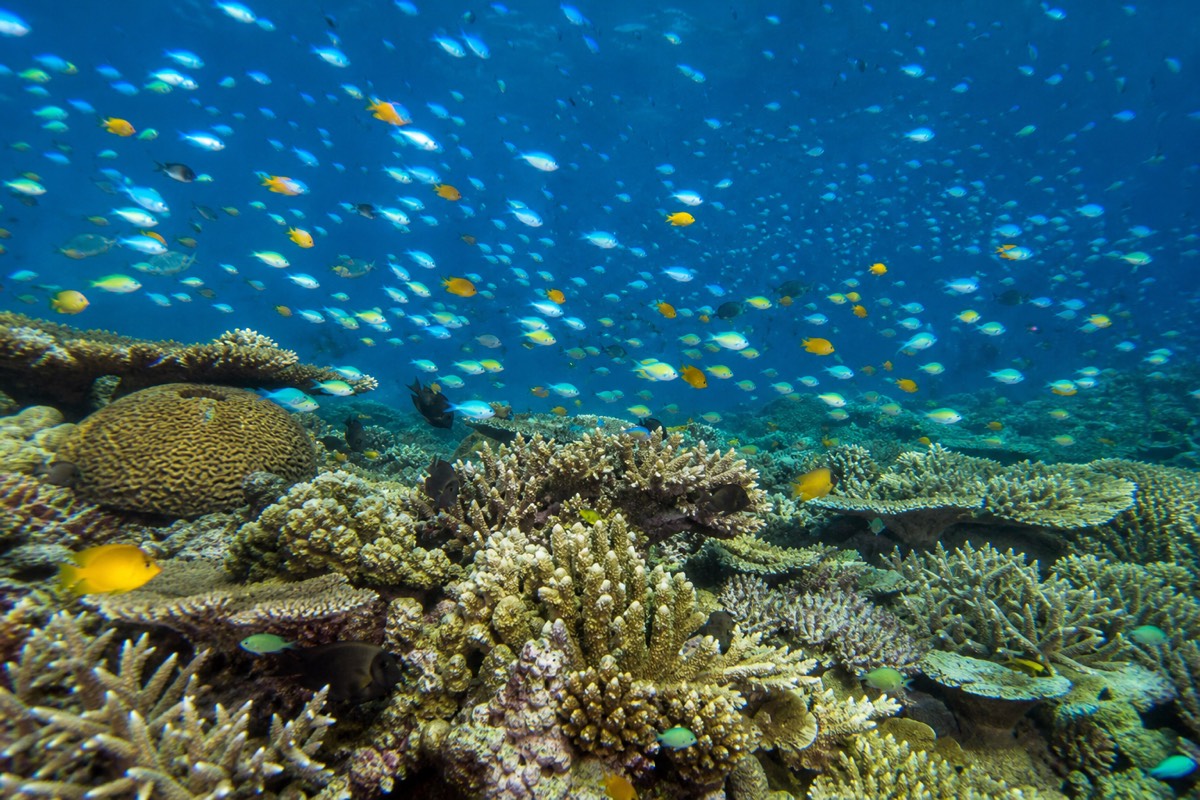
What You'Ll See Snorkeling On The Great Barrier Reef
Nine different tours run out to nine different stretches of reef, and what shows up under the water depends heavily on which one you pick. Here's what's actually down there, organized by what you're most likely to see rather than by tour brochure copy.
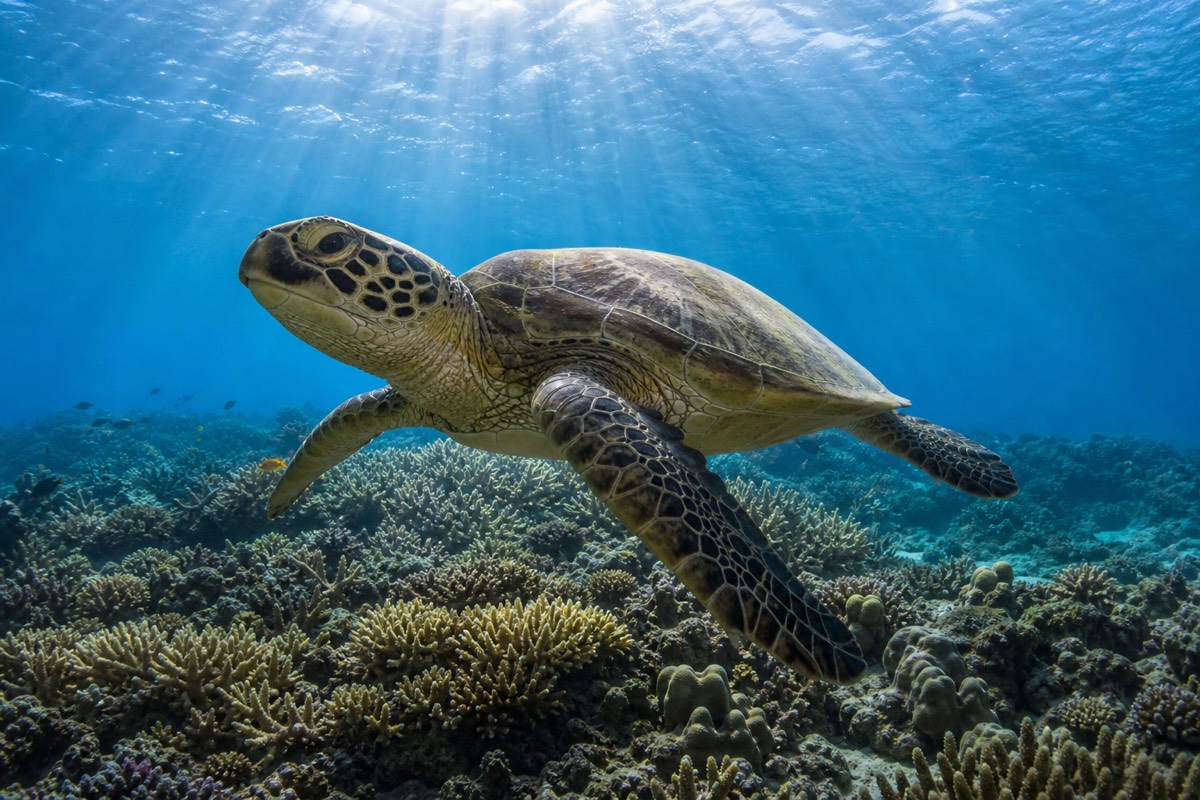
Expect turtles on most trips, coral gardens on nearly all of them, and reef sharks and rays mainly at outer-reef sites. Across the nine reef tours this site compares, sea turtles appear on seven listings, giant clams on four, and reef sharks on just three. It is a wild system of thousands of reefs over more than 2,300 kilometres, so every sighting is a probability, never a promise.
Price tables and review counts in the original comparison are historical examples, not live quotes or safety evidence. Use the booking options below for current totals, inclusions and restrictions.
What Will You See Snorkeling The Great Barrier Reef?
Ask ten people what they saw on a Great Barrier Reef snorkel trip and you will get ten overlapping but different answers, because "the reef" is not one place. It is a system of thousands of individual reefs stretching more than 2,300 kilometres along the Queensland coast, and every tour boat works a different slice of it. A turtle sighting on one operator's usual reef means nothing for the boat moored 20 kilometres away. This guide breaks down what is actually down there, species by species and feature by feature, using the nine tours this site compares as the evidence base, because those operators' own listings are the most honest record of what a paying guest can realistically expect.
The short version looks like this. Sea turtles turn up on almost every tour compared here: seven of the nine listings name them specifically. Giant clams and clownfish cluster around a smaller group of shallower, coral-garden sites. Reef sharks and rays show up more at outer-reef and wall sites, where the reef drops into deeper water. Non-swimmers have their own path through the glass-bottom boat at Green Island, and the only after-dark marine-life viewing among these tours belongs to the two-day liveaboard.
One caveat belongs right at the top, before any species list. Operators describe these as regular sightings, not guarantees. It is a wild reef system, not an aquarium, and a listing that names a species is telling you the crew finds it often at those sites, not that it will be waiting at the back of the boat. Weather, season, water temperature and plain luck all matter. A calm morning at a healthy site regularly beats a windy afternoon at a famous one. Tide matters too: many reef sites are at their best on the top half of the tide, and crews time their moorings accordingly, which is one reason the same site can feel lifeless at 9am and busy at noon.
It also matters what kind of trip you are on. A drift snorkel over a wall covers far more reef than a fixed mooring, but you pass the coral rather than lingering, so small resident animals are easier to miss. A small-group guided snorkel with a marine biologist does the opposite: less ground, more detail. A pontoon trip sits in the middle, with fixed infrastructure and multiple ways to view the water. None of these formats is better in the abstract. They each tilt the odds toward a different kind of sighting, and knowing which way each format leans is half the battle when choosing.
The table below shows how the nine tours' own listings handle each major sighting. A blank cell does not mean the animal is absent from that operator's reef sites. It means the tour's own description does not name it as a highlight, which is a meaningful distinction when you are booking around a specific animal.
| Tour | Turtles | Giant clams | Reef sharks | Clownfish | Rays | Maori wrasse |
|---|---|---|---|---|---|---|
| From Cairns: Full-Day Adventure | Yes | - | Yes | - | Yes | Yes |
| ABC Reef Safaris | Yes | Yes | Yes | Yes | Yes | - |
| Frankland Islands | Yes | Yes | - | - | Yes | - |
| Green Island (glass-bottom boat) | Viewable via boat | Viewable via boat | - | - | - | - |
| Outer GBR & Coral Cay | Yes | - | - | - | Yes | - |
| From Port Douglas: Outer Reef (Calypso) | Yes | Yes | Yes | Yes | Yes | Yes |
| From Port Douglas: Quicksilver | - | - | - | - | - | - |
| Ocean Safari (Cape Tribulation) | Yes | Yes | - | - | Yes | - |
| 2-Day Twin Share liveaboard | Yes | - | Fish After Dark | - | - | - |
Read the table with the blank-cell rule in mind. Quicksilver's listing, for instance, leans on its Agincourt Reef location and infrastructure, a permanent pontoon and the Ocean Walker helmet dive, rather than naming individual species. That tells you something useful: if a specific animal is the priority, a listing that names it beats a listing that names a facility. It does not tell you Quicksilver's reefs are empty of turtles. Agincourt hosts turtles like most healthy outer-reef sites do. It tells you that operator sells location and infrastructure, while ABC Reef Safaris sells specific animals its guides can find on demand.
The two counts worth pausing on are the ones at the extremes. Seven of nine for turtles is a striking level of agreement across operators who otherwise compete on very different things, and it reflects the biology: green and hawksbill turtles graze in shallow, sunlit water all along the reef, exactly the water snorkelers work. Three of nine for reef sharks reflects the opposite pattern: sharks patrol edges, and only some tours work edges. The gap between those two numbers is the clearest single argument for matching your tour to the animal you most want to see rather than assuming the reef delivers everything uniformly.
Corals: What Is Actually Down There Now
Coral is the backdrop for every tour on this list, and it is also the part of the reef most changed in recent decades. Two operators here build their trips specifically around named coral-garden sites: the Outer GBR & Coral Cay tour around its Wonder Wall and Upolu Coral Cay, and Quicksilver around its permanent pontoon at Agincourt Reef. The rest work whichever of their rotating sites suits the day's conditions, which is worth understanding as a feature rather than a flaw. A rotating operator can follow the clear water; a fixed-pontoon operator cannot move, and trades that flexibility for stability, shelter and non-swimmer access.
Reading Coral By Shape, Not By Species
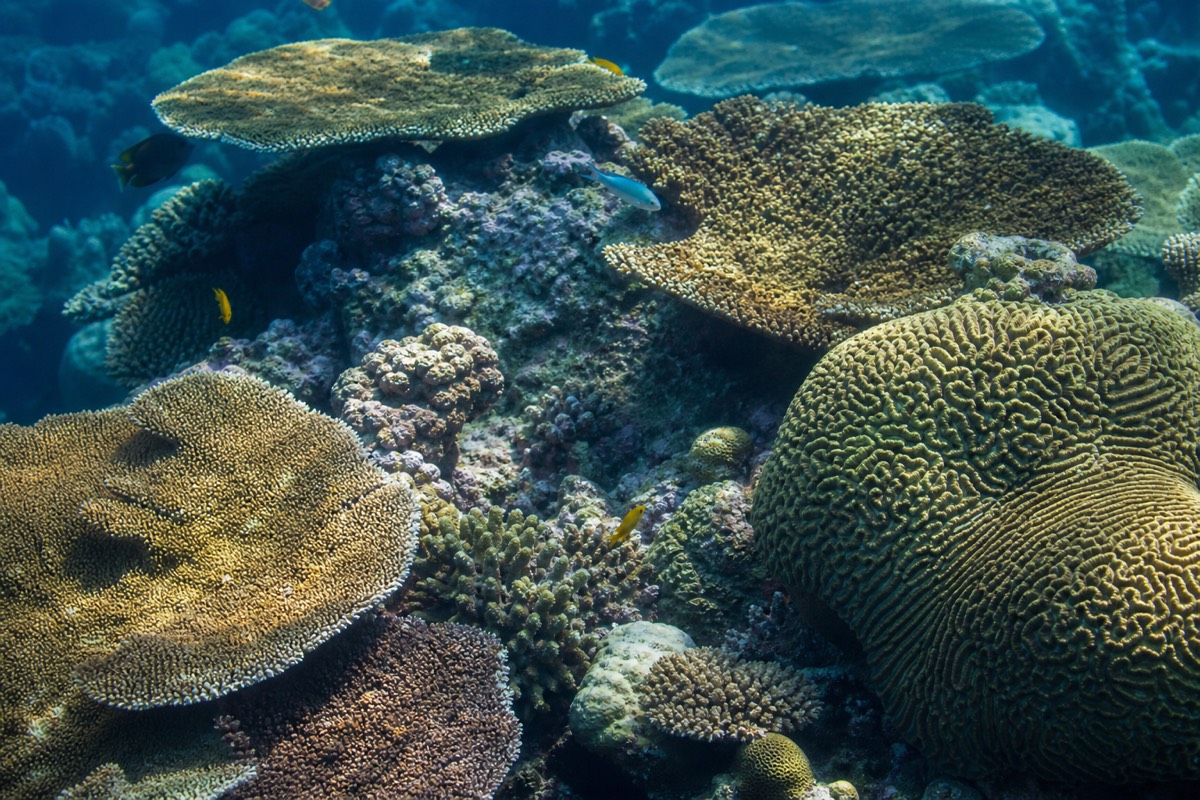
Coral gets much easier to identify the moment you stop hunting for Latin names and start reading shapes. NOAA's coral tutorial sorts reef-building corals into a handful of growth forms: branching, digitate, table, foliose, encrusting and massive. Those six shapes account for most of what passes underneath a snorkeler on the Great Barrier Reef, and learning them takes about a minute of reading before you get in the water. It changes what a reef looks like for the rest of the trip, because the reef stops being "coral" and starts being a landscape with distinct structures doing distinct jobs.
| Growth form | What it looks like | How you spot it |
|---|---|---|
| Branching | Tree-like, with primary and secondary branches | The classic staghorn silhouette, often the busiest with small fish sheltering inside |
| Digitate | Fingers or clumps of cigars, no secondary branching | Stubbier and denser than branching coral, growing in tight clusters |
| Table | Flat, elevated platforms formed from fused branches | A horizontal tabletop, often with fish hovering in the shade underneath |
| Foliose | Broad plate-like sections rising in whorls | Looks like layered leaves or petals stacked on each other |
| Encrusting | A thin layer growing over rock rather than outward from it | Reads as coloured rock until you look closely |
| Massive | Ball-shaped or boulder-like colonies | Round boulders that can be decades old and grow slowly |
Branching staghorn thickets are where the fish action concentrates, because the structure gives small fish somewhere to hide. Hover over a healthy branching patch for a minute and you will see the water appear to shimmer as juvenile damselfish dart in and out of the branches. Table corals work the opposite way: their shade attracts fish hovering underneath them, and the flat top is easy to pick out from the surface, often the first coral shape a snorkeller learns to name on sight. Encrusting and massive forms are the ones most people swim straight past, which is a shame, because massive colonies in particular are the long-lived backbone of the reef and a healthy boulder can be older than the snorkeler looking at it.
A practical tip from the shape approach: colour is the least reliable signal and shape is the most reliable. A bleached branching coral still looks branching. A recovering massive colony still looks like a boulder, with fresh living tissue growing back over the dead skeleton in pale bands. Snorkellers who know the six forms can read a reef's history off its structure, which patches have recovered, which are still struggling, in a way that colour alone never reveals.
The Two Named Coral-Garden Trips
The Outer Great Barrier Reef & Coral Cay tour is the highest-booked operator in this entire comparison, with the listing showing 15,633 bookings and a 4.8 rating. It runs a 20-metre catamaran out to its named Wonder Wall site and Upolu Coral Cay, using a drift snorkel format that covers more coral ground per trip than a fixed-mooring site would. The drift format has a trade-off: you see more reef, but you pass it rather than lingering, so it suits confident snorkelers more than nervous ones. It also concentrates the experience on the wall itself, a reef edge dropping into deeper water, which is a specific kind of coral scenery rather than a general one. Walls favour the animals that patrol edges, and the coral on a wall face grows vertically in a way flat reef gardens do not.
Quicksilver, the largest and most established operator in the region, works Agincourt Reef from a permanent pontoon. The pontoon model is the opposite philosophy: the reef comes to a fixed platform, and a semi-submersible plus the Ocean Walker helmet dive offer ways to see the coral without full snorkeling gear. That matters for anyone in the group who cannot or will not snorkel, and it is the reason a pontoon trip is often the choice for mixed-confidence families. The fixed site also means the crew knows every bommie and coral patch within swimming distance of the platform, which makes guided snorkel tours off the pontoon unusually precise about what they point at.
What Monitoring Bodies Actually Say
Healthy coral cover varies by site and by year, because reefs respond to water temperature and weather the way any living system does. The Great Barrier Reef Marine Park Authority and research bodies such as AIMS track reef condition on an ongoing basis rather than treating it as fixed, and their published surveys show that condition varies sharply between sectors and between years. A site that was badly bleached one summer can be recovering two years later, and a site famous for its coral can go through a bad patch. This is why no honest guide can tell you the coral will be spectacular at any specific location on any specific date, and why any page that does so is guessing.
For what the monitoring actually shows, in plain terms and without spin in either direction, this site keeps a dedicated guide: is the Great Barrier Reef dying? The short answer for a snorkeler is that you will still see genuinely beautiful coral on these trips, and you will also see dead or recovering patches at some sites, sometimes on the same snorkel. The two experiences are not in conflict. The reef is a living system mid-recovery in places and mid-decline in others, and a snorkeller with open eyes sees both.
Fish And Marine Life You Realistically Encounter
The headline animals get the marketing, but the actual texture of a reef snorkel is smaller fish: parrotfish, butterflyfish, damselfish, and dozens of other species that fill out any healthy coral garden. These are present at essentially every site on this list even when a tour never mentions them by name. They are the constant background of a snorkel, the layer of life you notice once the initial thrill of the first turtle wears off, and for many people they end up being what the trip is remembered by.
That gap between the marketed animals and the everyday ones is worth planning around. If your mental picture of the trip is one turtle, one shark and one ray, you are setting up a day measured in minutes of contact with maybe four animals. If your picture includes the branching thickets full of damselfish, the parrotfish audible as they scrape at coral, the butterflyfish moving in pairs across the reef face, then you are setting up hours of interest. The tours that lean into this, small groups with guides who point at the small stuff, are the ones that get the highest ratings in this comparison, and that is probably not a coincidence.
Clownfish And Anemone Fish
Clownfish and their host anemones are listed by two of the nine tours: ABC Reef Safaris and the Calypso-operated Port Douglas outer reef trip. Both run smaller groups to coral-garden-style sites where anemones cluster in shallower, more sheltered coral. Clownfish live in a genuine symbiotic relationship with their host anemone, immune to its sting, and that interaction is easy to miss on a fast drift snorkel but straightforward to spot when a guide points the group toward a known anemone patch. Once you have found one anemone, you have usually found the whole neighbourhood, because they settle in clusters where the shelter and light suit them.
That is exactly the model on the ABC Reef Safaris tour, which caps groups at 24 guests with a six guests per guide and includes a marine-biologist-guided snorkel around Rudder Reef and the outer reef near Port Douglas. It is a format built for finding smaller, camouflaged residents rather than just the big obvious ones, and the listing carries a 5.0 rating, the highest of any tour in this comparison. The anemone fish and giant clams it is known for are a large part of the reason.
The Calypso outer reef trip lists clownfish alongside giant clams and turtles across its three-site itinerary at Agincourt and Opal Reef, backed by guided reef talks that help snorkelers know what they are looking at once in the water. Working three separate reef sites in a single day raises the odds of finding a specific small animal, simply by covering more ground. That math deserves emphasis: for territorial, site-bound animals like anemone fish, the number of sites visited matters more than hours in the water, because each new site is a fresh roll of the dice on whether anyone local knows where the anemones are.
Giant Clams
Giant clams are among the largest living shellfish on the reef and a genuine visual highlight because of their size and often vividly coloured mantles. They are named sightings on four of the nine tours: ABC Reef Safaris, Frankland Islands, Ocean Safari from Cape Tribulation, and the Calypso Port Douglas trip. Because they are immobile once settled, embedded in the reef structure, they are among the easiest animals for a guide to reliably point out, unlike anything that swims away. If you miss it the first time, the guide can take you straight back. For a nervous or first-time snorkeller, that reliability has real value: the clam is the one headline animal on this list that cannot be absent on the day because it swam off.
The Frankland Islands day trip deserves a specific mention here. It is the only operator in this comparison permitted to land on Normanby Island, and its beach-entry setup, calm water reached by a river crossing followed by a short ocean hop, is a genuinely easier environment for spotting a stationary giant clam than a drift snorkel in open water. It is also the trip most often recommended to snorkelers prone to motion sickness, for the same calm-water reasons. On the short end of the spectrum, the Ocean Safari half-day trip lists giant clams among its regular sightings too, alongside eagle rays and Daintree coastal views on the ride out.
Maori Wrasse And The Big Reef Fish
Maori wrasse are one of the largest reef fish species and instantly recognisable by their size and distinctive humped forehead. They are a named sighting on two tours, the full-day Cairns adventure and the Calypso Port Douglas outer reef trip. Where a Maori wrasse is specifically flagged as a highlight, it usually signals that a tour spends real time at established, healthy coral sites rather than moving fast between spots. Both of those tours pair it with turtles and rays as part of a broader "expect a mix" list rather than promising one showpiece animal, which is a more honest way to set expectations than a listing that leads with a single species.
Around the wrasse and the headline names sits the everyday cast. Parrotfish scrape algae from coral with a beak you can sometimes hear underwater. Butterflyfish move in pairs along the reef face. Damselfish defend small territories so aggressively that a palm-sized fish will chase off a snorkeller many thousand times its size. None of these appear in the table above, because no tour needs to list them, the way no restaurant needs to advertise that it serves water. They are the guarantee the marketing never makes, because they are the one part of the reef that comes closest to actually being guaranteed.
Where Each Zone Delivers What
| Zone | What you are likely to see | Example tours |
|---|---|---|
| Shallow, near shore or beach entry | Turtles grazing seagrass, small reef fish, occasional rays | Frankland Islands, Green Island shore snorkel |
| Mid-reef, boat or pontoon-based | Turtles, coral gardens, reef fish, giant clams | From Cairns Full-Day, ABC Reef Safaris, Ocean Safari |
| Outer reef and reef walls | Turtles, reef sharks, rays, Maori wrasse, drop-offs into deeper water | Outer GBR & Coral Cay, Port Douglas Outer Reef, Quicksilver |
For readers weighing fins versus a tank, there is a separate comparison covering snorkeling versus scuba diving on the Great Barrier Reef, since most of what is described on this page sits in the top few metres anyway, which is precisely why snorkelling works so well here.
Turtles, Rays And Reef Sharks
Sea Turtles: The Most Reliable Sighting
Sea turtles are the single most commonly reported sighting across the nine tours, named on seven of the nine listings, from shallow beach-entry sites to the outer reef and even on the overnight liveaboard. Green turtles and hawksbill turtles are the species most associated with the Great Barrier Reef generally. They graze on seagrass beds and reef structure close enough to the surface that a snorkeler with reasonable luck and a calm morning has a real shot at one. This is the sighting to build a trip around if you want the highest-probability memorable moment, and it is the sighting that most often ends up in the photos people take home.
The spread across tour types tells you how reliable it is. The Outer GBR & Coral Cay tour lists turtles as a named highlight around its Wonder Wall and Upolu Coral Cay sites. The full-day Cairns adventure tour, rotating between Norman, Saxon and Hastings reefs depending on conditions, lists turtles alongside stingrays and Maori wrasse as regular finds. The Calypso Port Douglas trip works three separate sites around Agincourt and Opal Reef in one day. Even the extremes see them: the half-day Ocean Safari out of Cape Tribulation lists turtles as a regular sighting despite running just 4½ hours door to door, and the two-day liveaboard reports them across its extended time on Saxon, Norman and Hastings reefs. The glass-bottom boat at Green Island even lists turtles as viewable from the boat itself, without getting wet.
That last row of the evidence is worth dwelling on, because it shows the range of commitment levels at which turtles become realistic. Four hours door to door from Cape Tribulation with a beach-adjacent reef. A full-day catamaran to a wall on the outer shelf. Two days and a night on a liveaboard. A boat you never leave. All four formats report turtles. Few animals on the reef survive that kind of format test, and it means the question is rarely whether a turtle sighting is possible on your trip, only how likely and how close.
What that consistency does not mean: a guarantee. Turtles move, and a site that hosts six on Tuesday can host zero on Thursday morning. It means the crew knows where they usually are, and seven of nine operators are confident enough to put them in writing. Behaviour matters too. A turtle grazing seagrass in two metres of water is relaxed and viewable for minutes at a time; a turtle mid-transit in open water passes in seconds. Shallow, calm sites like the Frankland Islands and Green Island produce the longer encounters, which is a real consideration if the sighting is the point of the trip rather than a bonus.
Stingrays And Eagle Rays
Stingrays and eagle rays are named sightings on three tours: the full-day Cairns adventure, Ocean Safari from Cape Tribulation, and the Calypso Port Douglas outer reef trip. They generally turn up over open sand patches between coral bommies rather than in the coral itself. Eagle rays in particular are more often seen gliding through open water than resting, which makes them one of the more dramatic mid-water sightings on a good day: a dark shape moving with real speed, wing tips breaking the surface rhythm.
The full-day Cairns tour lists stingrays alongside its turtle and Maori wrasse sightings across its Norman, Saxon and Hastings rotation. The Ocean Safari trip specifically names eagle rays among its regular finds despite being the shortest tour in the comparison, a reminder that trip length and wildlife density are different variables. Sand-patch sightings are also where a guided reef talk earns its keep, because a ray resting flat on pale sand can be very easy to miss without someone pointing it out. A resting stingray buried to the eyes is nearly invisible until it moves, and a group swimming three metres above it will pass without ever knowing.
The behavioural split between the two ray types is worth knowing before you get in. Stingrays rest, so they reward slow swimming over sand and careful looking down. Eagle rays cruise, so they reward being in open water at the right moment and there is little a guide can do to stage it. That is why eagle ray sightings feel like luck even on tours that list them, while stingray sightings feel like competence, and why a group that wants the former should not be disappointed when it gets the latter.
Reef Sharks
Reef sharks are a named sighting on three of the nine tours: ABC Reef Safaris, the full-day Cairns adventure, and the Calypso-operated Port Douglas outer reef trip. In every case these are the small, reef-associated species that are wild animals whose behavior should never be assumed safe, not anything resembling the shark of popular imagination. They are typically spotted cruising reef edges and drop-offs rather than open water, which is part of why the outer-reef and wall-adjacent tours report them more consistently than shallow beach-entry sites do. Guides on the ABC Reef Safaris trip regularly point them out along Rudder Reef as part of its marine-biologist-guided format, and the full-day Cairns tour pairs reef sharks with Maori wrasse as a standard combination sighting across its rotation.
The habitat logic explains the three-of-nine count. Reef edges and drop-offs are where current meets structure, which is where the sharks' food gathers, and only a minority of tours in this comparison work sites with that edge character for long periods. A tour that moors mid-reef can host plenty of fish and still produce no sharks, because the sharks are at the wall half a kilometre away. If the sighting matters to you, the tour's site type matters more than its price or its boat.
Anyone weighing whether sharing water with reef sharks is something to be cautious about rather than simply curious about is better served by this site's dedicated guide to reef safety around sharks and stingers than by a single reassuring paragraph here. The one-line version: the species involved are small, shy of people, and a sighting is considered a lucky moment by the crews, not a hazard.
Which Part Of The Great Barrier Reef Is Best For Snorkelling?
There is no single best part, because the reef's 2,300-kilometre length means the answer depends on what you want to see and how you want to see it. Broadly, the comparison splits into three access points. Cairns is the main hub, with the widest range of tour types from glass-bottom boats to liveaboards, and trips to mid-reef sites like Norman, Saxon and Hastings reefs roughly 40 kilometres offshore. Port Douglas sits closer to the outer ribbon reefs, so its boats, Calypso and Quicksilver among them, reach Agincourt and Opal Reef with shorter travel times to genuinely outer-reef water. Cape Tribulation, the most remote departure on this list, runs the Ocean Safari half-day trip to the Undine Reef area of the Daintree coast, and the Frankland Islands trip leaves from the south, combining a river crossing with a short ocean hop.
Each departure suits a different traveller. The full comparison, including the Whitsundays side of the question and how snorkeling from Airlie Beach differs from the Cairns and Port Douglas options, lives on the Cairns versus Port Douglas versus Whitsundays page. For readers starting further south, there is also a separate piece on getting to the reef from Sydney or Brisbane, since the reef itself starts well north of both cities and the trip always begins with a flight to one of the coastal gateways. Readers asking whether it is possible to see the reef without joining a tour should note that most offshore sites are simply too far from shore to reach independently, and that the realistic no-tour options, Green Island and a handful of island beaches, deliver the shallow inner-reef experience rather than the outer-reef one described elsewhere on this page.
What You Will Not See
This section exists because most reef content is written by people selling reef trips, and an honest expectations guide has to cover the gaps. Here is what you should not expect.
Untouched coral everywhere. The Great Barrier Reef has suffered repeated mass bleaching events in recent years, driven by marine heatwaves, and the reef you snorkel over reflects that history. At many sites you will swim over genuinely vibrant coral in one section and dead, algae-covered or recovering coral in the next, sometimes within the same 50 metres. The marine park authority's own reporting, along with AIMS survey data, shows condition varies enormously between sectors and years, and no operator's marketing shows you the bleached patches. That does not mean the trips are not worth taking. It means the mental picture of a uniformly pristine underwater paradise, the one most visitors arrive with, is wrong, and being prepared for it makes the genuinely healthy sections land better, not worse.
Guaranteed wildlife. Nothing on a wild reef is guaranteed. Turtles, the most reliable sighting at seven of nine tours, still miss days. Reef sharks appear on only three of the nine listings for a reason: they are the least predictable of the headline animals. A listing that names a species means the crew finds it regularly at those sites, and that is the strongest assurance available anywhere in the system. Any operator promising a specific animal with certainty is either exaggerating or feeding it, and the latter is prohibited in the marine park.
Whales while snorkelling. Humpbacks pass through these waters on their annual migration, and some boat journeys coincide with the season, but whales do not feature as a named snorkelling sighting on any of the nine tours compared here. Expect them, if at all, as a surface sighting from the boat, not as part of the in-water experience.
Crocodiles on the reef. Crocodiles are an estuarine animal in this region. They live in the river mouths and coastal waterways of the tropical coast, not on the offshore reef sites where every tour on this list operates. The reef trips themselves run in crocodile-free water; the concern applies to swimming in mainland rivers and unpatrolled coastal stretches, which is a different activity entirely.
Everything, in one day. A single day trip is two or three snorkel sites at best. The reef is thousands of them. The two-day liveaboard exists precisely because one day is a sample, not a survey, and readers asking whether one day is enough have a dedicated answer in is the Great Barrier Reef worth it?
None of this is a case against going. It is a case for booking with expectations that survive contact with the water, which, in this site's experience of reading hundreds of listings, is the difference between a good trip and a disappointed one.
How Visibility Changes Through The Year
Visibility on the reef follows the seasons in ways that directly shape what you see. The dry winter months, roughly June to October, typically bring the clearest water on the outer reef, because calmer weather means less sediment stirred up and runoff from land is minimal. The wet summer months bring warmer water, which is when stinger season runs and when plankton blooms can cut visibility at inshore and mid-reef sites, though the outer reef generally stays clearer than the coast year-round simply by distance from river runoff. Trade winds and tides shift conditions week to week regardless of season, which is why operators rotate sites rather than committing to one.
Visibility also interacts with what you came to see, in ways the season tables rarely mention. Clear winter water helps you see the wall and the sharks at distance, but cooler water means less time in the water before you get cold, and warm summer murk can actually concentrate the small stuff close to the coral, where light is already filtered and the fish live anyway. Turtles do not care much either way: seagrass grazers work in shallow water year-round. The one animal group where visibility genuinely changes the odds is the mid-water patrol layer, eagle rays and reef sharks, which you notice at range only in clear water.
Month-by-month detail, including stinger season timing and the answer to when not to visit, is covered on how to choose a Great Barrier Reef tour, and a broader look at the worst time to visit sits there too. The practical rule for visibility alone: winter offers the most reliably clear water, summer offers the warmest.
Inner Reef Versus Outer Reef
The single most useful thing a snorkeller can understand before booking is the difference between inner and outer reef, because it predicts more about the day than any other choice, including which operator you pick. The Great Barrier Reef is not a wall but a lagoon system: a shallow continental shelf where coral has grown into thousands of individual reefs at varying distances from the coast. The inner reefs sit closer to shore, inside the sheltered lagoon. The outer reefs sit at the shelf edge, where the sea floor drops away and open-ocean water flushes through.
Inner and mid-reef sites, such as Green Island, the Frankland Islands, and the Norman, Saxon and Hastings reef group worked by the Cairns full-day tour, are defined by shelter. The water is calmer, the trips are shorter, the snorkelling is often shallower and easier, and beach entry is sometimes possible, which is exactly the Frankland Islands model. The wildlife skews accordingly: turtles grazing seagrass, small reef fish among the coral, occasional rays over sand, and giant clams embedded in the shallower structure where guides can reliably point them out. The trade-off is visibility and variety. Inshore water carries more sediment, especially after wet-season rain, and the species list is narrower than what the shelf edge offers.
Outer reef sites, such as Agincourt Reef and Opal Reef off Port Douglas and the wall sites worked by the Outer GBR & Coral Cay tour, are defined by exposure. Open-ocean water brings clearer visibility, more consistent coral health in many areas because of the constant flushing, and the bigger-animal layer: reef sharks patrolling the drop-offs, eagle rays crossing mid-water, Maori wrasse at established sites, turtles riding the current line along the wall. This is where the reef-shark-listing tours concentrate, and the pattern is not a coincidence. Sharks, rays and the largest fish prefer edges, because edges are where food and current meet.
The costs of the outer reef are time and motion. Boats from Cairns and Port Douglas spend 90 minutes to two hours or more reaching these sites, and the open water on the way can be rough for anyone prone to seasickness. Conditions occasionally close outer sites altogether, and every operator holds the right to substitute a more sheltered reef when the forecast turns, which means the "outer reef" ticket you buy is really an "outer reef unless weather says otherwise" ticket. Pontoon-based operators like Quicksilver sit in a middle position on this: the permanent platform at Agincourt makes the outer reef accessible to non-swimmers and nervous snorkellers, which a drift-snorkel format never can.
How to choose between them comes down to three honest questions. Can everyone in the group handle a longer, potentially rougher boat ride? Is the priority calm, easy water, or maximum wildlife variety? And does anyone in the party need the non-swimming viewing options, the glass-bottom boat, semi-submersible or helmet dive, that the pontoon and Green Island models provide? Shallow water and calm conditions favour the inner reef. Species list and visibility favour the outer. A mixed group that cannot agree is exactly the market the pontoon trips were built for.
Whichever way the decision points, the comparison of specific departure towns, including snorkeling from Airlie Beach on the Whitsundays side, is handled on the Cairns versus Port Douglas versus Whitsundays page, and the cost differences between inner and outer trips, which are real, are broken out in what a reef tour actually costs.